When Your Teenager Wants to Quit Riding (And What’s Really Going On)
You know the exact sound of the crunching gravel as you pull into the barn driveway. You know the smell of sweet feed, fly spray, and dusty leather that hits you as soon as you step out of the car. For years, this has been your shared sanctuary. You have spent countless weekends waking up before the sun, hauling hay bales, wiping boots, and standing nervously at the rail watching your child do the thing they love most in the world. Being a “horse kid” isn’t just a hobby; it is a lifestyle, an identity, and a profound commitment that shapes entire families.
So, when your teenager—who has loved horses their entire life, who once begged to sleep in the stall and drew ponies on every school notebook—suddenly sits in the passenger seat, stares out the window, and quietly says, “I don’t want to ride anymore,” it feels like a literal gut punch.
For a barn mom, this moment is incredibly disorienting. A rush of thoughts floods your mind: But we just bought the new custom boots! What about the lease agreement? Is it the trainer? Did something happen at the show? Are you just tired today? And underneath all those logistical panics lies a deeper, quieter heartbreak: But this is our thing. Who are we if we aren’t doing this together?
If you are standing in the middle of this difficult transition right now, taking a deep breath and wiping away tears in the tack room, please hear this loud and clear: You are not alone, this is incredibly common, and it is absolutely not a failure on your part. Raising a horse kid is an intense journey, and navigating the teenage years adds a layer of complexity that can make even the most dedicated young equestrian question their path.
In this guide, we are going to dive deep into what is really going on beneath the surface when a lifelong horse kid suddenly wants to quit. We will explore the hidden pressures of adolescence, how to decode the signs of burnout, and how to hold space for your teenager without pushing them entirely away from the animals that have shaped their childhood. Grab a cup of coffee (or a glass of wine), and let’s walk through this together, from one barn mom to another.
The Initial Shock: When “I Love Horses” Turns into “I Don’t Want to Go”
The transition rarely happens overnight, even if the announcement feels sudden to you. When a teenager expresses a desire to quit a sport they have been dedicated to for years, it is usually the culmination of weeks, months, or even years of internal processing that they haven’t known how to articulate. As parents, we often miss the subtle shifts because we are so deeply entrenched in the routine of lessons, shows, vet bills, and barn drama.
It is perfectly natural to feel a profound sense of grief when your child wants to walk away from the barn. You have invested massive amounts of time, money, and emotional energy into their equestrian dreams. You have likely sacrificed family vacations to pay for board or show fees. You have stood in freezing rain holding a lunge line, and you have celebrated their hard-won blue ribbons as if they were your own.
Furthermore, our own identities often become intertwined with our child’s riding. We become “Barn Moms.” Our social circles revolve around the other parents sitting in the viewing room. Our weekend schedules are dictated by the show calendar. When our child says they want out, we suddenly face the terrifying prospect of losing our own community and our established role within it.
The first and most important step in navigating this phase is to separate your own feelings of loss from your teenager’s experience. It is vital to recognize that their desire to step back is not a personal rejection of you, nor is it a sign that all the years of effort and money were “wasted.” Those years built character, taught them responsibility, and gave them a foundation of empathy and hard work that they will carry for the rest of their lives. Now, they are simply trying to navigate the overwhelming, chaotic, and heavily pressured season of adolescence, and sometimes, the things that used to bring them joy suddenly feel like an incredibly heavy weight.
Recognizing the Signs Before the Breaking Point
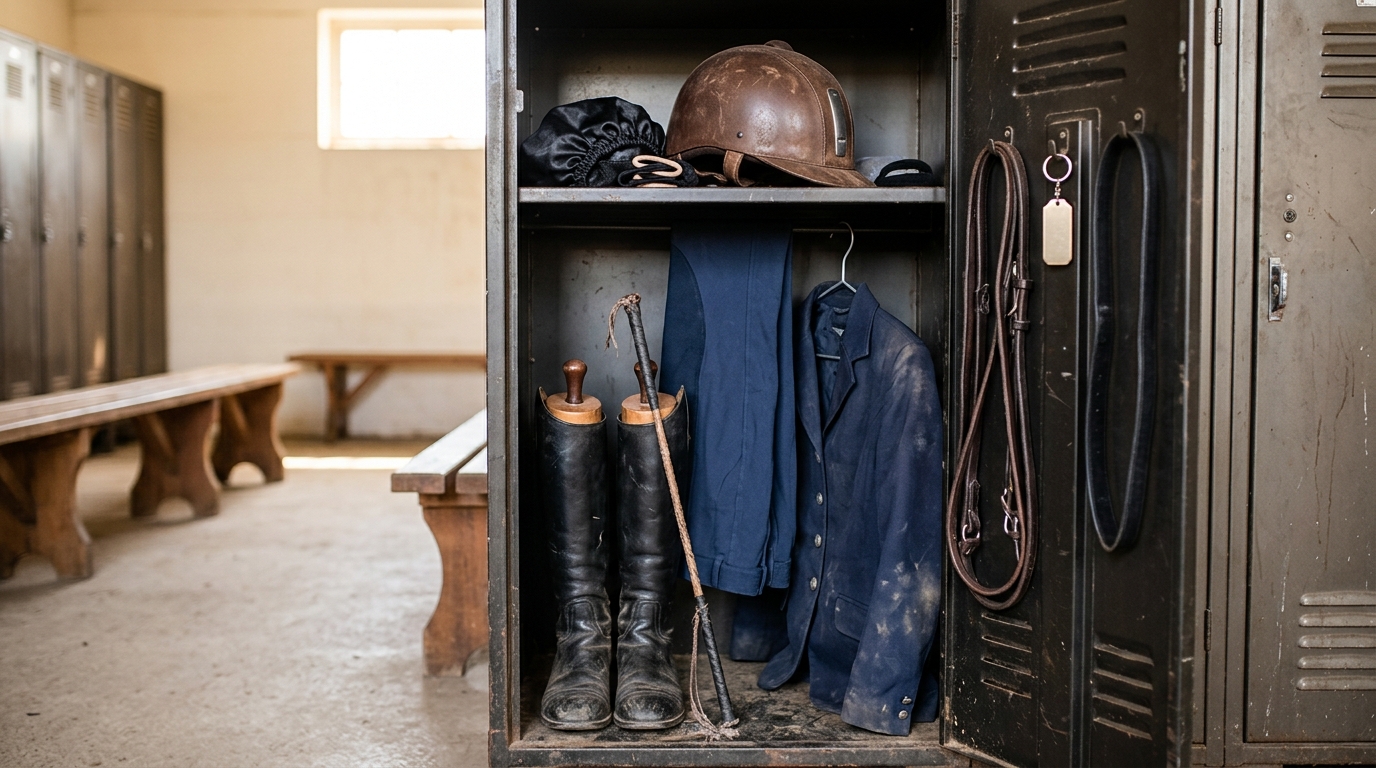
Before the definitive “I want to quit” conversation ever happens, teenagers usually leave a trail of behavioral breadcrumbs indicating that their relationship with riding is fracturing. Because teens lack the fully developed emotional vocabulary to say, “I am experiencing acute burnout and performance anxiety,” their distress often leaks out in other, more confusing ways.
Here are some of the common signs that your horse kid might be struggling, losing their motivation, or buckling under the pressure of the sport:
The “Phantom” Illnesses
Suddenly, they have a headache every Tuesday before their jumping lesson. Or they feel nauseous on Saturday mornings before going to the barn. These somatic symptoms are often a physical manifestation of severe anxiety or dread, not a conscious attempt to deceive you.
Extreme Irritability at the Barn
A kid who used to happily chat while grooming might become sullen, snappy, and angry while tacking up. They might pick fights with you in the car on the way there, or snap at their horse for minor infractions, projecting their internal frustration outward.
Rushing the Process
Remember when you had to drag them away from the barn after four hours of just hanging out? Now, they arrive exactly on time, ride as fast as possible, throw the horse back in the stall with a cursory brush, and immediately ask to leave. The joy of the “process” is completely gone.
Avoiding Barn Friends
They stop texting their barn friends or actively try to avoid the busy times at the stable. If they are feeling inadequate or disconnected from the sport, the presence of enthusiastic, highly competitive peers can make them feel even more isolated and inadequate.
When you start noticing these patterns, your instinct might be to push harder. You might remind them of how much money you are spending on board, or threaten to sell the horse if they don’t start showing more gratitude. While these reactions are entirely understandable from a frustrated parent’s perspective, they usually backfire spectacularly, driving the teenager further away from the sport and creating a massive rift in your relationship.
What’s Really Going On? Unpacking the Teen Experience
To truly support your child through this phase, we need to look beneath the surface. When a teenager says “I want to quit,” they are rarely talking about a sudden dislike for horses. Instead, the horse and the sport have become entangled in a complex web of adolescent struggles. The barn, which used to be their safe haven, has somehow transformed into a source of stress. Let’s break down the major hidden factors that drive this desire to walk away.
1. The Crushing Weight of Burnout and Perfectionism
The equestrian world is notoriously intense. Many of our kids start riding when they are very young, happily bouncing around on fat ponies and eating popsicles at summer camp. But as they grow older, the sport naturally becomes more demanding. The jumps get higher, the dressage tests become more complex, and the stakes at horse shows are suddenly real. They transition from an environment of pure play into an environment of rigorous athletic training.
If your child is a high achiever, they may have placed impossible expectations on themselves. The culture of competitive riding often glorifies the “grind”—riding multiple horses a day, never complaining, pushing through pain, and dedicating 100% of one’s life to the sport. By the time a dedicated rider hits 15 or 16, they may have essentially been working a part-time, high-stress job for several years. They aren’t just tired; they are experiencing profound, systemic burnout. They have lost the joy of simply being with the horse because every ride is now a metric of their self-worth and a test of their progress.
2. Shifting Identities and Severe Social Pressures
Adolescence is fundamentally about figuring out who you are apart from your parents. For a kid who has always been “the horse girl” or “the equestrian guy,” their entire identity has been wrapped up in this one extremely niche world. As they enter high school, their world expands. They see their non-riding peers going to Friday night football games, attending school dances, sleeping in on Saturdays, and getting part-time jobs at the mall.
FOMO (Fear Of Missing Out) is an incredibly powerful force in a teenager’s life. The equestrian schedule is notoriously punishing when it comes to a normal social life. When your kid realizes they are the only one in their friend group who can never go to the movies on a Friday night because they have to be at the barn at 6:00 AM on Saturday, resentment builds. They begin to wonder who they might be if they weren’t tied to the barn schedule. Wanting to quit riding is often less about hating horses and more about desperately wanting to experience a “normal” teenage life before their youth slips away.
3. The Unrelenting Squeeze of Academic Stress
We cannot understate the intense academic pressure placed on modern teenagers. The workload required to maintain competitive grades, participate in school clubs, prep for SATs or ACTs, and build a college resume is staggering. Many teenagers today are functioning on chronic sleep deprivation.
When a teenager is drowning in AP chemistry homework, the thought of driving forty-five minutes to the barn, saddling up, enduring an hour-long physically demanding lesson, untacking, and driving home feels impossible. The cognitive load is simply too high. If they feel they must choose between failing a class and giving up their sport, the anxiety can paralyze them. Sometimes, quitting the barn feels like the only tangible way they can reclaim a few hours of their week just to breathe and sleep.
4. Body Image, Changing Shapes, and the Equestrian World
This is perhaps one of the most sensitive and rarely discussed reasons why teenage girls, in particular, suddenly want to quit riding. The equestrian world—particularly English disciplines like hunter/jumper, dressage, and equitation—is incredibly focused on aesthetics and tradition. The attire leaves absolutely nothing to the imagination. Tailored breeches, tucked-in show shirts, and form-fitting coats are the standard.
As a young girl transitions into a young woman, her body changes rapidly. Hips widen, chests develop, and weight redistributes. Navigating these changes is hard enough in oversized hoodies at school, but doing so in front of a giant arena mirror in tan breeches can be excruciatingly painful. The sport often, subconsciously or explicitly, rewards a very specific, linear body type. If a teenager suddenly feels that her changing body doesn’t “fit” the equestrian ideal, or if she has received offhand comments from a trainer or judge about her appearance, she may develop deep shame and body dysmorphia. The barn transforms from a place of empowerment to an arena of intense physical judgment.
5. Mental Health Struggles vs. Riding Slumps
Sometimes, losing interest in a deeply beloved hobby is a giant red flag for underlying mental health issues. Adolescence is a prime time for the onset of anxiety disorders and clinical depression. One of the hallmark symptoms of depression is anhedonia—the inability to feel pleasure in activities that were once enjoyable.
If your teenager is wanting to quit riding, take a broader look at their life. Are they also quitting other activities? Are their grades suddenly slipping? Are they withdrawing from their friends, isolating in their bedroom, or showing significant changes in their eating and sleeping habits? If the desire to quit horses is part of a larger pattern of withdrawal, you may be dealing with a clinical mental health struggle rather than just a phase of barn burnout. In these cases, the horse is not the problem; the apathy toward the horse is merely a symptom of a much deeper internal pain.
How to Talk to Your Teen Without Pushing Them Away
When your teen finally drops the bomb that they want to quit, or if you decide to initiate the conversation because you have noticed all the warning signs, how you handle that exact conversation will dictate the future of your relationship and their relationship with the sport.
Your immediate instinct will probably be defensive. You might feel a surge of panic about the financial implications or a deep sadness about losing your shared hobby. You must take a deep breath, mentally step back, and remove your own ego from the equation. This conversation needs to be entirely about them, not about your sacrifices or your disappointment.
Do not enter the conversation with the goal of talking them out of quitting. If they sense you have an agenda, they will shut down. Enter the conversation with the genuine goal of understanding their pain points.
- Validate Their Feelings First: Start by acknowledging their courage in bringing it up. “I know it must have been really hard for you to tell me that, especially knowing how long we’ve been doing this. Thank you for being honest with me.”
- Ask Open-Ended, Curious Questions: Avoid leading questions. Instead of saying, “Are you just mad about your bad round on Saturday?” say, “Can you tell me more about what riding has been feeling like for you lately?”
- Separate the Animal from the Sport: A crucial distinction needs to be made early on. Ask them, “Are you feeling tired of being around the horses, or are you feeling overwhelmed by the lessons, the shows, and the schedule?” Often, teenagers still deeply love the animal, but they despise the competitive environment.
- Check on the Social Dynamics: Gently inquire about the barn environment. “How are things feeling with the other girls at the barn? How are things feeling with your trainer?” Give them permission to tell you if they are being bullied or if the coaching style is breaking them down.
- Do Not Weaponize the Finances: This is the hardest rule for parents to follow, but it is the most critical. Do not say, “Do you have any idea how much money we just spent on that saddle?” Throwing financial guilt at a teenager who is already struggling will only create resentment and teach them that your love and support are conditional on their performance. If you need to make financial decisions regarding the horse, make them logically, but do not use the money as an emotional battering ram.
Remember that teenagers process things slowly. You might have this conversation, and they might shrug and say, “I just don’t want to do it.” That’s okay. Leave the door open. Let them know they have a safe space to talk about it without judgment, and that their worth as your child is not tied to whether or not they ever put a foot in a stirrup again.
Stepping Back: Redefining Their Relationship with Horses
If you determine that your teenager still loves horses but is severely burned out by the pressure, the greatest gift you can give them is the permission to redefine what it means to be an equestrian. The horse world often pushes a very narrow narrative: you take lessons, you lease a horse, you buy a horse, you show, you move up the levels, you win medals. We rarely teach young people that it is perfectly valid to simply enjoy the company of a 1,200-pound animal without asking it to perform.
We need to teach our teens that they don’t have to quit completely; they can simply change the terms of the relationship. Taking the pressure off can completely revitalize a teenager’s mental health and restore the pure joy they felt when they were seven years old brushing a pony.
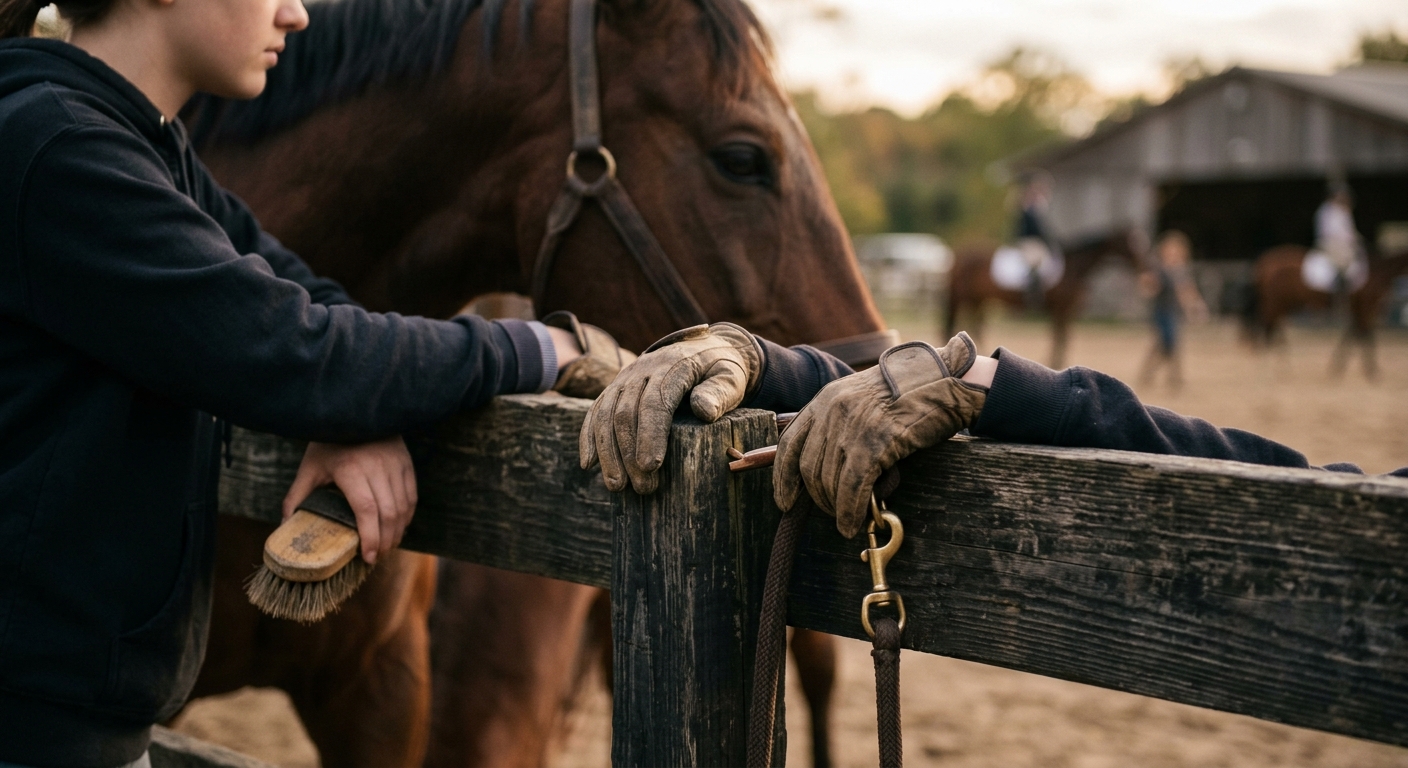
Consider stripping away all the expectations. What happens if they stop taking lessons for six months? What if they just go to the barn twice a week in their sweatpants, pull their horse out of the field, groom them, hand-graze them, and go home? There is profound therapeutic value in this kind of unstructured, non-demanding time with animals. Horses are incredibly intuitive creatures. They do not care about equitation medals or perfect lead changes. They care about presence, safety, and connection.
For a teenager who is navigating the treacherous waters of high school—where they are constantly being judged on their grades, their appearance, and their social standing—the horse can become the ultimate non-judgmental therapist. If we allow the barn to transition from an “arena of performance” to a “place of refuge,” we can actually use the horse to support their mental health during these critical years.
Encourage them to try liberty work on the ground. Let them take the horse on a loose-rein trail ride through the woods with no destination in mind. Let them sit in the stall and read a book while the horse eats hay. Remove the stopwatch, cancel the show entries, and let them breathe. Very often, once the crushing weight of expectation is lifted, the natural desire to ride gently returns on its own timeline.
Practical Steps When They Ask for a Break
If your teenager explicitly asks for a break or wants to quit entirely, you will have to deal with the practical, logistical side of the equestrian lifestyle. You can’t simply put a horse on a shelf in the closet like a pair of soccer cleats. There are living, breathing animals, monthly board bills, and trainer relationships to manage.
Here is a practical breakdown of how you might handle the logistics of a teenager wanting to step back, depending on your ownership situation:
When making these decisions, involve your teenager in the process as much as is appropriate. If you own the horse, explain the reality of the situation without guilt. “I understand you need a break, and I fully support that. Because keeping Charlie is expensive and he needs to be exercised, we are going to look for someone to lease him for the next six months while you take some time off.” This teaches them that their decisions have practical outcomes, but it also reassures them that you are handling the adult logistics so they don’t have to carry the burden of the horse’s welfare on top of their own stress.
Navigating the Trainer and the Barn Community
One of the most anxiety-inducing parts of your teen quitting is having to tell the trainer. Trainers are heavily invested in their students. A good trainer will understand and support your child’s need for a break, recognizing that teenage burnout is part of the sport. A toxic trainer, however, might use guilt, try to bypass you to talk the teen out of it, or act offended.
When you have the conversation with the professional, be clear and definitive. Do not leave room for debate. “Sarah has decided she needs to step back from riding to focus on school and give herself a mental break. We so appreciate everything you’ve done for her, but we are going to be pausing lessons indefinitely starting next month.”
Then, there is the rest of the barn community. The barn aisle is notorious for gossip. Other moms will undoubtedly approach you and say, “We haven’t seen Emily in weeks! What’s going on? Is she okay?”
You do not owe anyone your child’s mental health history. You are the guardian of their privacy. Keep your answers light, positive, and firm. “She is doing great! She’s just taking a season off to focus on high school and try some other things right now. We miss seeing everyone, though!” This shuts down the gossip mill and protects your teenager’s reputation, ensuring that if they ever do decide to return, they won’t feel like the subject of barn rumors.
When to Seek Professional Support
As parents, we have to carefully distinguish between a teenager who is simply outgrowing a childhood hobby and a teenager who is suffering from a mental health crisis. Quitting a sport is a normal part of development; losing the will to engage in life is not.
If your teenager steps back from the barn, takes a deep breath, and immediately starts thriving in other areas—joining the school play, spending time with friends, looking more relaxed at dinner—then the barn was indeed the source of the stress, and stepping back was the right call.
However, if they quit riding and continue to spiral downward, you must intervene. Look for persistent sadness, extreme lethargy, changes in appetite, withdrawing from their non-barn friends, dropping grades, or sudden outbursts of anger. If the spark goes out in their eyes and doesn’t return after the pressure of the barn is lifted, it is time to seek professional counseling.
Therapists who specialize in adolescents can help your teen untangle the complex web of identity, self-worth, and anxiety they are experiencing. Interestingly, if your teen still feels connected to horses, equine-assisted psychotherapy might be a phenomenal bridge. It allows them to interact with horses in a purely healing, non-riding capacity under the guidance of a licensed mental health professional.
A Note for You, Mama: Navigating Your Own Barn Mom Identity
Finally, we need to talk about you. When your kid walks away from the barn, it is okay for you to mourn. You are losing your weekend routine. You are losing the quiet moments watching them cool out their horse in the golden hour light. You might be losing the friend group you built in the viewing lounge.
Give yourself permission to feel sad about the end of this era. It is a transition for you just as much as it is for them. But remember, the incredible traits your child developed at the barn—resilience, compassion, grit, and responsibility—are permanent. They will take those traits into college, into their careers, and into their own relationships. The horse did its job, and you did yours.
Now is the time to pivot. Use those freed-up Saturday mornings to reconnect with your own neglected hobbies. Drink your coffee while it’s still hot. Take a deep breath. Your role as a mother is shifting, but it is not diminishing. Your teenager needs your steady, supportive presence now more than ever as they figure out who they are outside of the arena.
Some barn moms find that this is exactly the moment they finally pick up the reins themselves — if that’s calling to you, it’s never too late to become a horse person in your own right. And if you’re further back in this journey with a younger rider just starting out, here’s what those early years actually look like.
Summary: Holding Space for Their Journey
When your teenager wants to quit riding, it is rarely a simple loss of interest. It is usually a complex reaction to burnout, social pressure, academic stress, body image struggles, or the overwhelming demands of adolescence. By taking a step back, separating your own emotions from their experience, and removing the pressure of performance, you can help them navigate this difficult transition. Whether they take a short break, pivot to pleasure riding, or hang up their boots for good, your unwavering support is the safety net they need to move forward with confidence.
Are You Navigating a Transition with Your Horse Kid?
You don’t have to go through the emotional rollercoaster of being a barn mom alone. Join our community of supportive parents who get it.