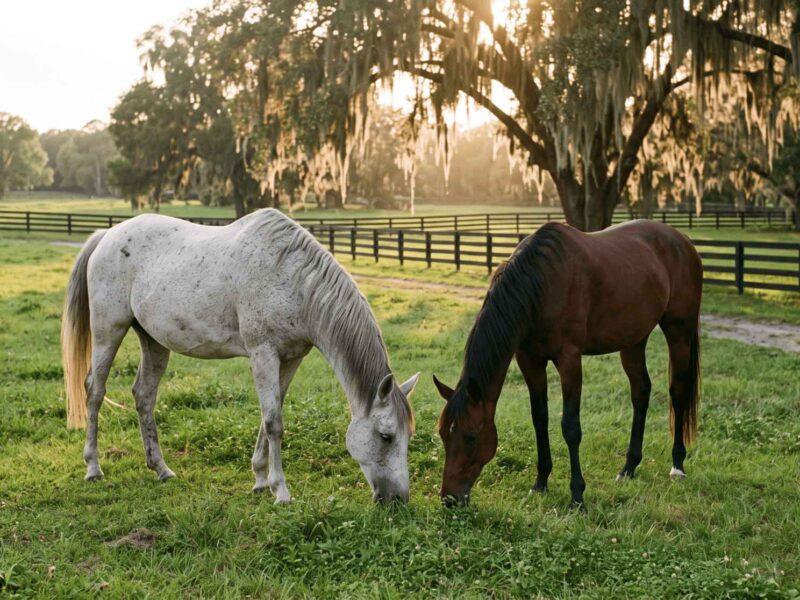
If you’re new to horse life — maybe your kid just started lessons, or you’re seriously considering buying a horse property (no judgment, we’ve all been there) — one of the most basic questions is also one nobody really explains well: what do horses actually eat day to day?
I get asked this a lot, usually by non-horse friends watching me load fifty pounds of hay into my car like it’s completely normal. So here’s the real, unglamorous breakdown of what’s actually in a horse’s diet.
Forage Is the Foundation — Always
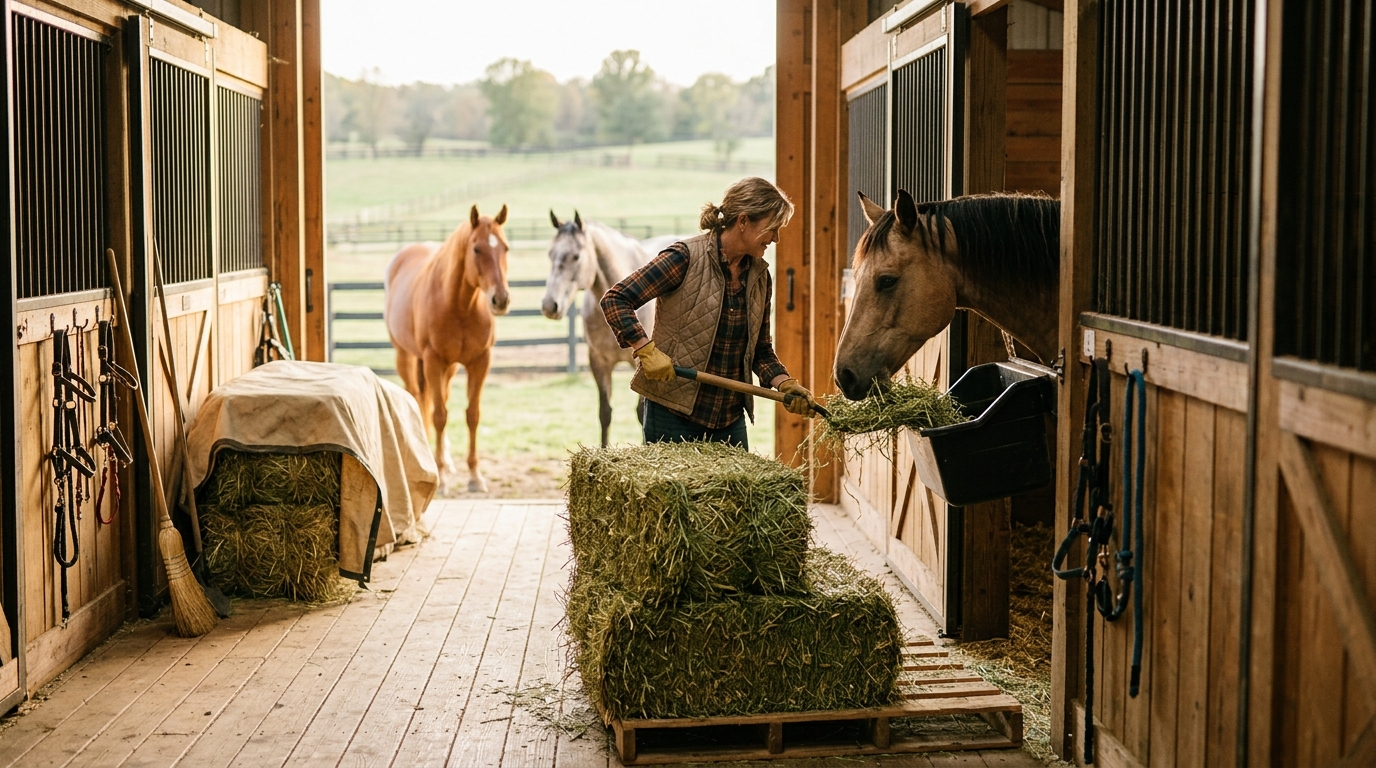
Hay (or pasture grass) makes up the bulk of a horse’s diet, and it should. Horses are designed to graze almost constantly — their digestive systems actually function best with a steady trickle of forage throughout the day, not big meals a couple times a day like we eat.
Most horses eat somewhere between 1.5% and 2.5% of their body weight in forage every single day. For an average 1,000-pound horse, that’s 15-25 pounds of hay or pasture grass, every day, no days off.
Grain and Concentrates — Not Always Needed
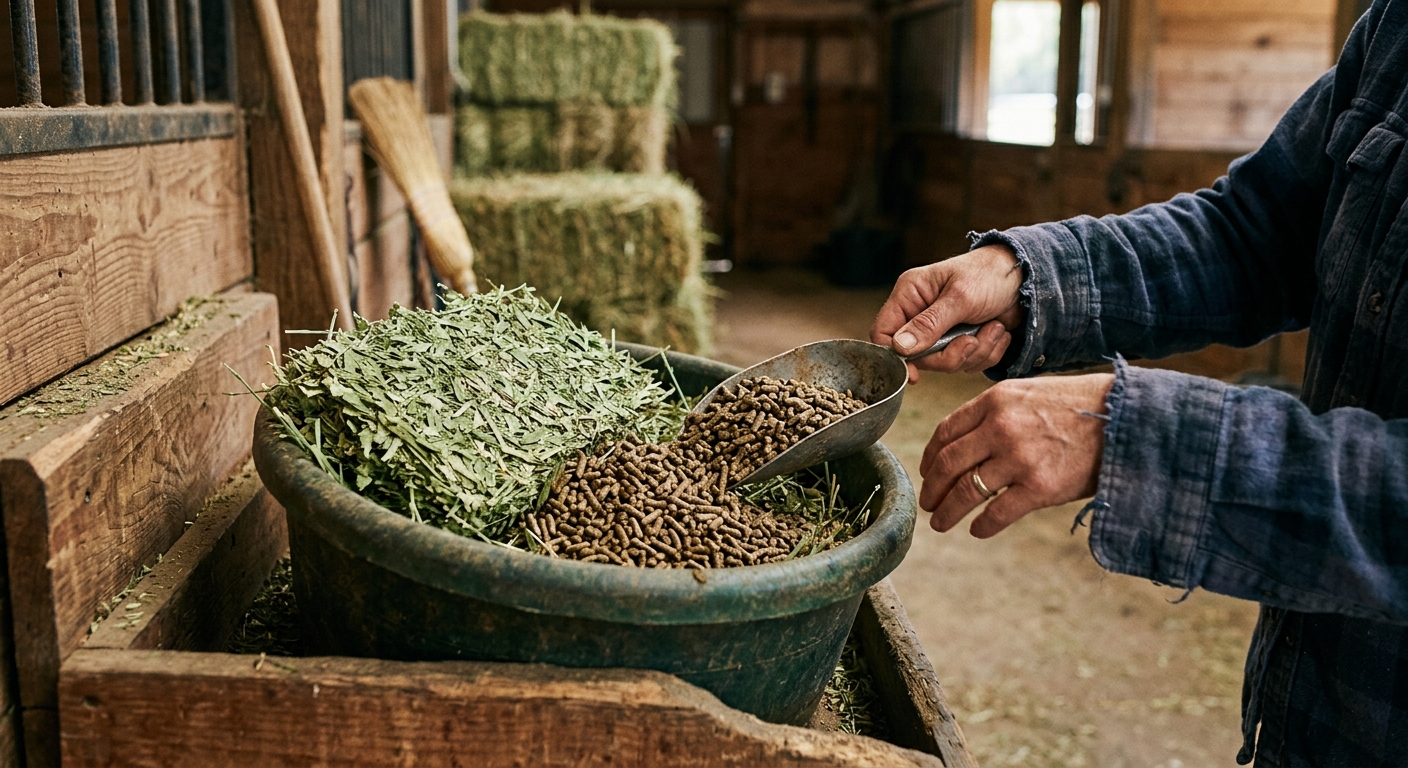
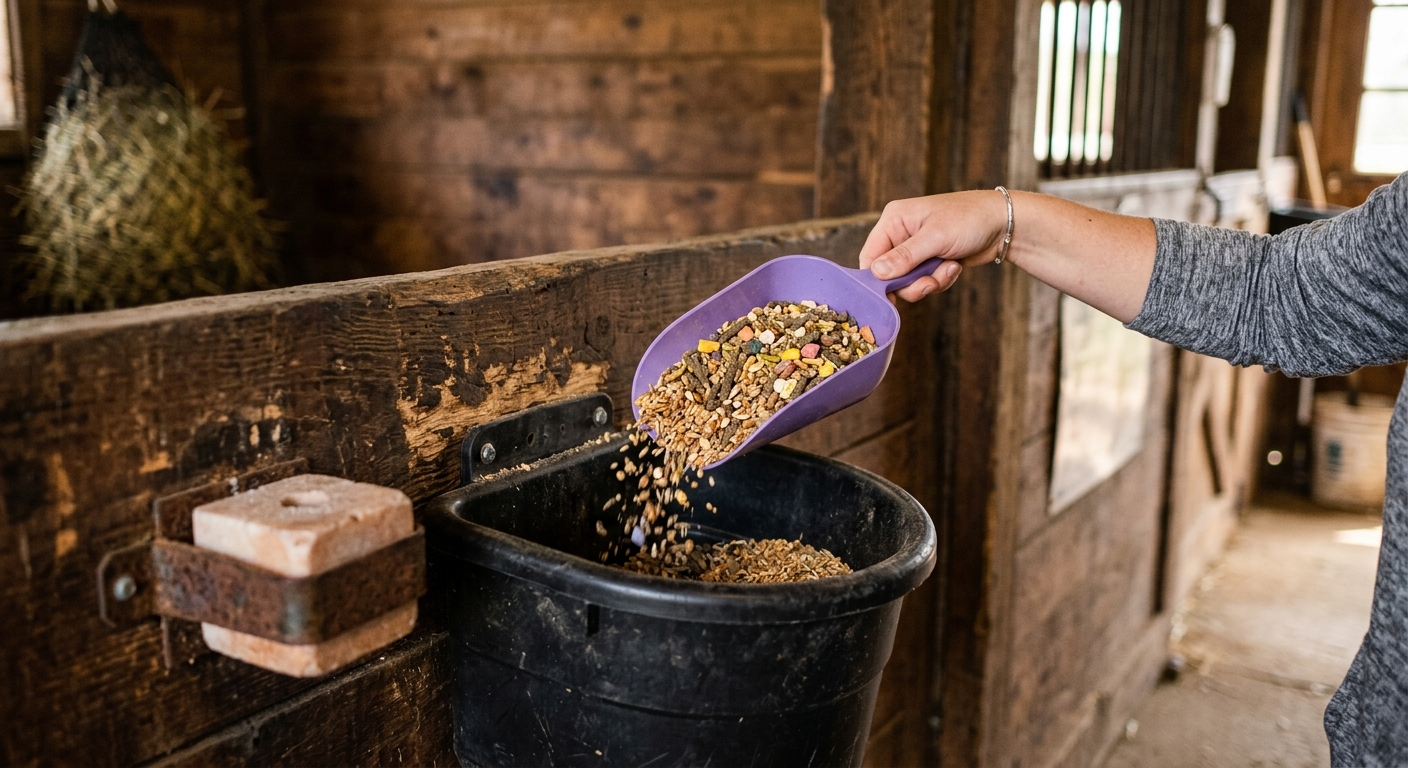
Here’s something that surprises people: not every horse needs grain. A horse in light work with access to good-quality pasture or hay might not need any grain at all. Grain (or “concentrate” feed) comes into play when a horse needs extra calories or nutrients that forage alone can’t provide — performance horses in heavy training, hard keepers who struggle to maintain weight, growing youngsters, or senior horses who can’t chew hay as efficiently anymore.
Supplements: Filling in the Gaps
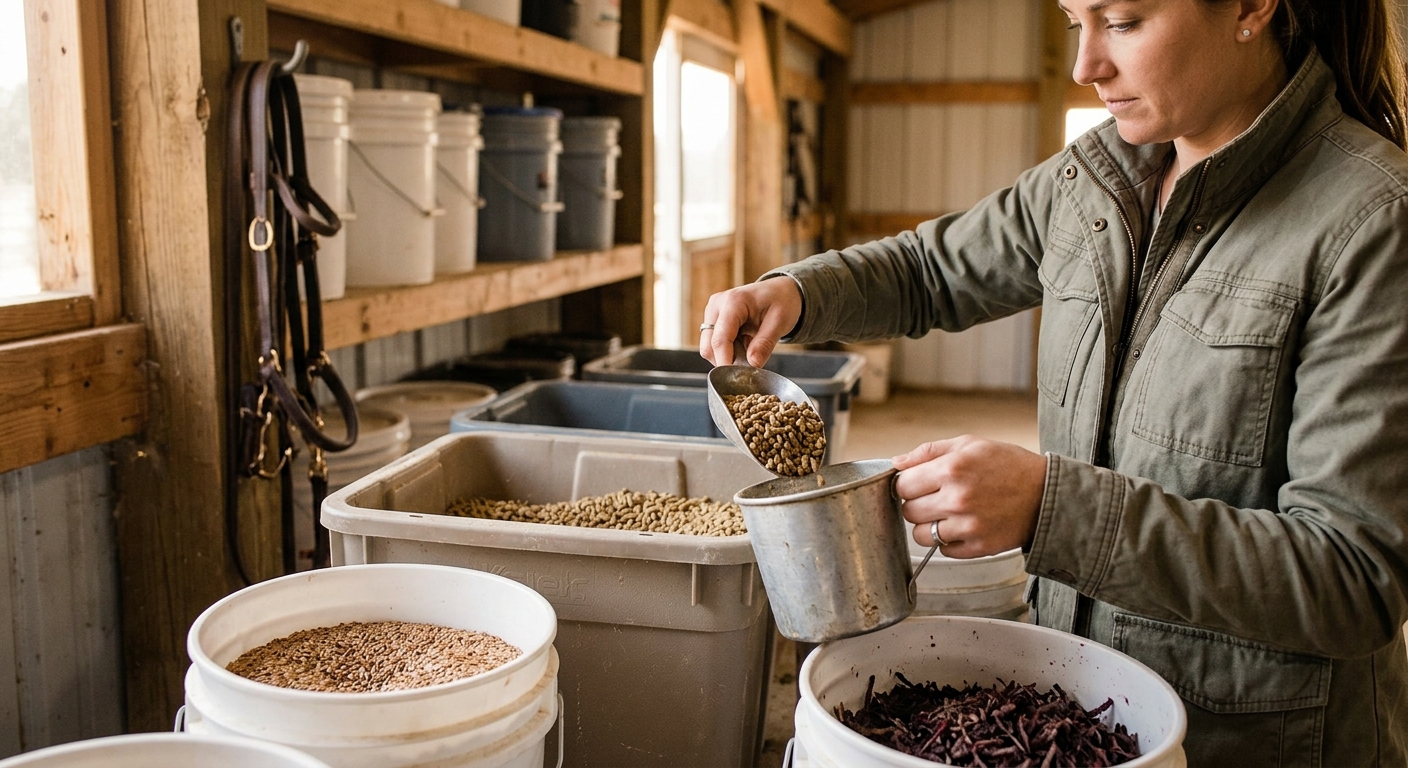
Depending on the horse, you might also see supplements added to their feed — things like joint support, hoof supplements, vitamins, or digestive aids. These aren’t a replacement for good forage and feed; they’re more like filling in specific nutritional gaps for an individual horse’s needs.
🐴 Barn Mom Tip: Always introduce any new feed, hay, or supplement gradually over a week or two. Horses have sensitive digestive systems, and sudden diet changes are one of the most common causes of colic.
Water — More Important Than People Realize
An average horse drinks 5 to 10 gallons of water a day, more in hot weather or with heavy work. Clean, fresh water access at all times isn’t optional — dehydration leads to impaction colic faster than almost anything else.
Treats and Extras
Yes, horses can have treats in moderation — carrots, apples, and commercial horse treats are all popular. Just like with people, moderation matters; too many sugary treats can cause issues, especially for horses prone to metabolic problems.
What Horses Should NOT Eat
- Chocolate
- Avocado
- Nightshade family plants (tomatoes, potatoes)
- Bread (not toxic, but not good for them either)
- Lawn clippings
- Anything moldy — when in doubt, throw it out
Daily Feeding Checklist
- Forage available most of the day (hay or pasture) — 15-25 lbs for an average 1,000 lb horse
- Fresh, clean water at all times — 5-10 gallons daily minimum
- Grain or concentrate only if your horse’s workload or condition calls for it
- Any supplements fed consistently, at the same time each day
- New feed, hay, or supplements introduced gradually over 1-2 weeks
- Treats kept to a small, occasional amount
The Bottom Line
Forage first, grain only if needed, fresh water always, and treats in moderation. It sounds simple because it mostly is — the complexity comes in tailoring it to your specific horse’s age, workload, and health needs, which is exactly why “ask your vet or a nutritionist” isn’t a cop-out answer, it’s genuinely the right one for anything beyond the basics.
What does your horse’s daily feed routine look like? I’d love to hear what’s worked for your barn — drop it in the comments, and share this with anyone newer to horse life who’s still figuring out the feed room.