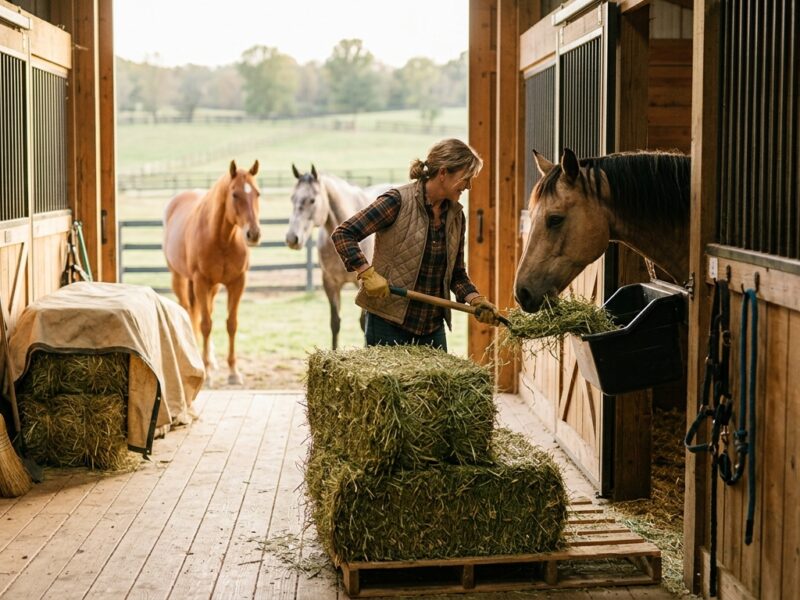
Walk into any tack shop and the boot wall alone can make your head spin. Open fronts, sports medicine boots, brushing boots, bell boots — they all look kind of similar hanging on the hook, and none of them are cheap. So which ones does your English horse actually need?
Here’s what a lot of boot guides skip: most of these boots protect your horse’s legs, not their hooves. The tendons and ligaments running down the back of the lower leg do a huge amount of work, and they’re surprisingly easy to knock — especially when a horse clips himself with his own hoof over a fence or in a tight turn. The right boot depends on what you’re doing that day. Here are the five worth knowing, and when to reach for each one.
This post contains affiliate links. If you buy through them, I may earn a small commission at no extra cost to you.
Watch: Protective Boots for English Riders
I made a quick video on these boots — watch it here, then keep reading for when to use each one.
1. Open-Front Boots
Open-front boots are the classic jumper boot. A hard, padded shell wraps around the back and sides of the front leg to protect the tendons, but the front of the cannon bone is left open. That’s on purpose: if a horse gets careless and rubs a rail, he’ll feel it, which encourages him to pick his feet up more cleanly next time.
Best for: Jumping and schooling over fences. They’re usually paired with fetlock boots (also called ankle boots) on the hind legs, which protect the inside of the hind fetlock from being struck by the opposite hind hoof.
2. Sports Medicine Boots
Sports medicine boots are the everyday workhorse of the boot world. They’re made of neoprene with a support strap that wraps under the fetlock, covering the lower leg from just below the knee down around the fetlock joint and helping absorb the concussion of hard work. They go on fast, clean up easily, and come in front and hind sets.
The pair I recommend is the Professional’s Choice Sports Medicine Boots — a brand you’ll spot in just about every barn.
Best for: Flatwork, lunging, and general schooling. One heads-up for us Florida riders: neoprene holds heat, and heat isn’t great for tendons. Take them off as soon as you’re done riding instead of leaving them on while your horse stands tied.
3. Brushing Boots
“Brushing” is when a horse’s hoof knocks the inside of the opposite leg as he moves. It happens more than you’d think — with young horses still figuring out their legs, horses doing lateral work, or any horse moving with a little less balance on a tired day. Brushing boots are simple, lightweight boots with a padded strike zone on the inside of the leg that takes the hit instead of your horse’s skin.
Best for: Everyday riding, lunging, green horses still finding their balance, and horses who tend to interfere.
4. Cross-Country Boots
Cross-country boots (you’ll also hear them called galloping boots) are built for speed and solid fences. They’re tougher than everyday boots, with a reinforced strike plate over the tendons and materials designed not to soak up water, mud, or sand when you gallop through a water complex. Cross-country fences don’t fall down like show jumps do, so a knock costs more — which is exactly why eventers don’t head out on course without them.
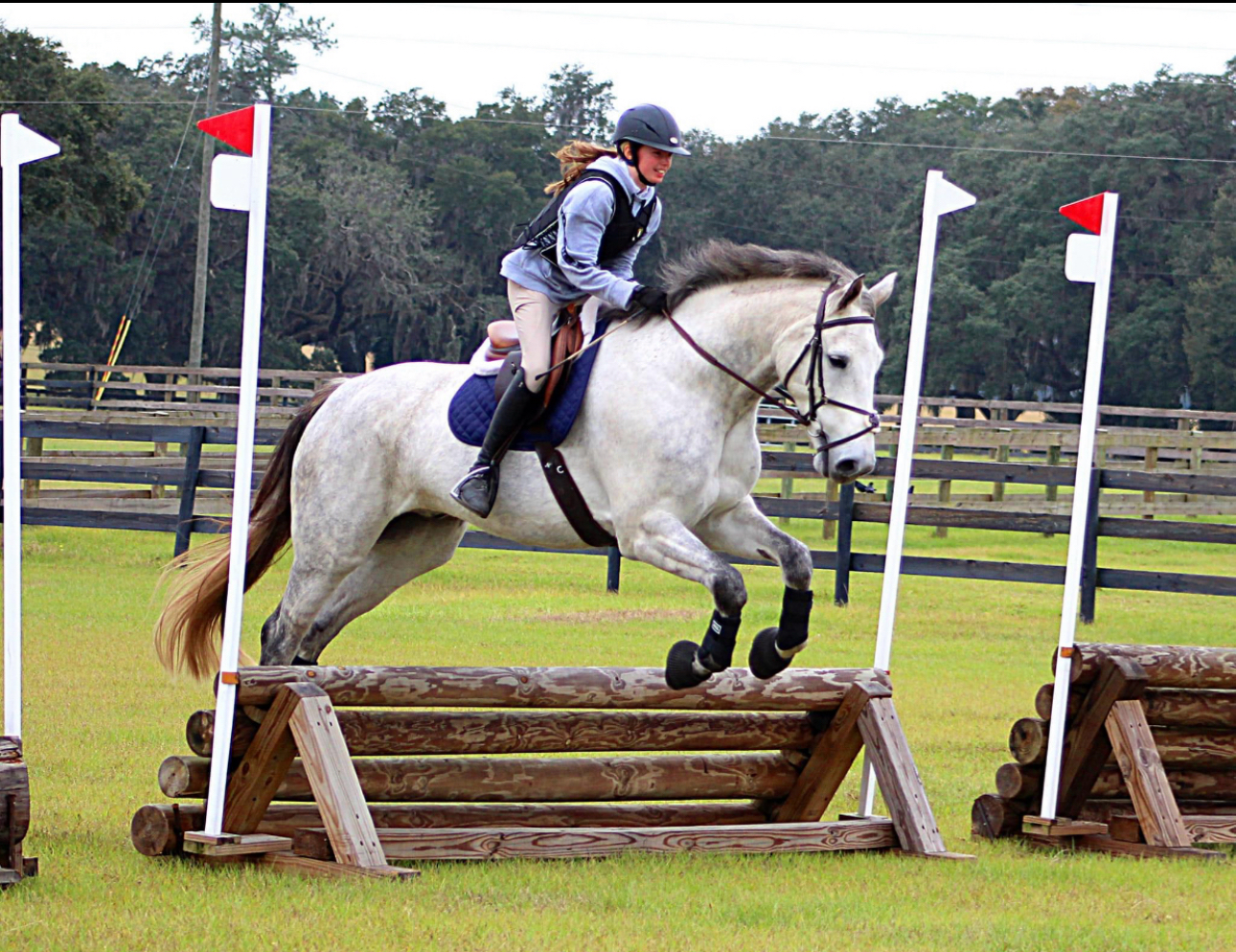
Best for: Eventing, cross-country schooling, and any riding over solid fences or uneven ground.
5. Bell Boots
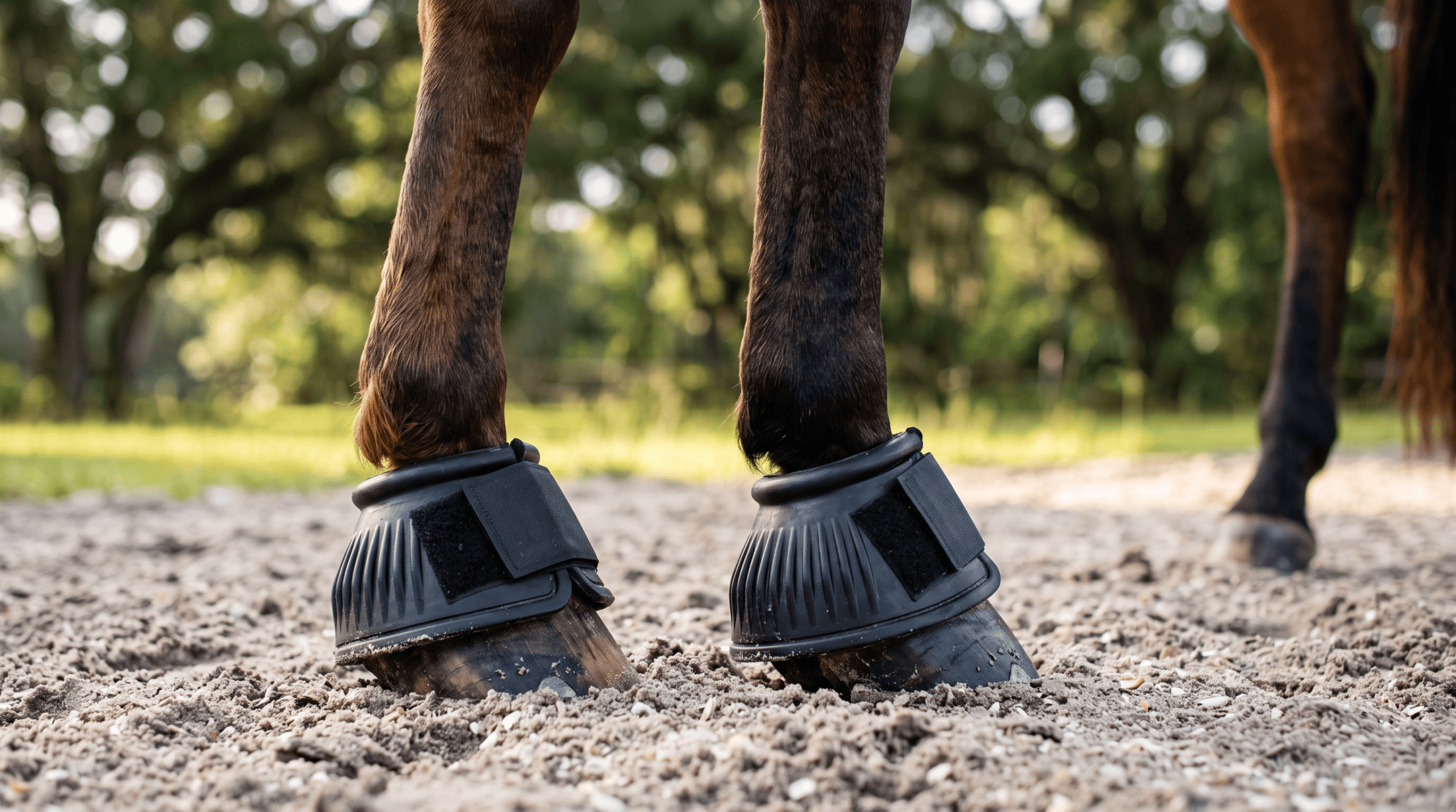
Bell boots are the one boot on this list that actually protects the hoof. They’re bell-shaped rubber or padded boots that sit around the pastern and cover the heel bulbs and coronary band. They guard against overreaching — when a hind hoof catches the back of a front foot — which can bruise the heel bulbs or pull a shoe right off. If you’ve ever walked a field hunting for a lost shoe, you already know why these are worth it.
Best for: Jumping, cross-country, horses who overreach, and shod horses whose shoes you’d like to keep on their feet. Many riders use them alongside any of the other boots on this list.
Looking for a pair? You’ll find my picks in my Amazon storefront.
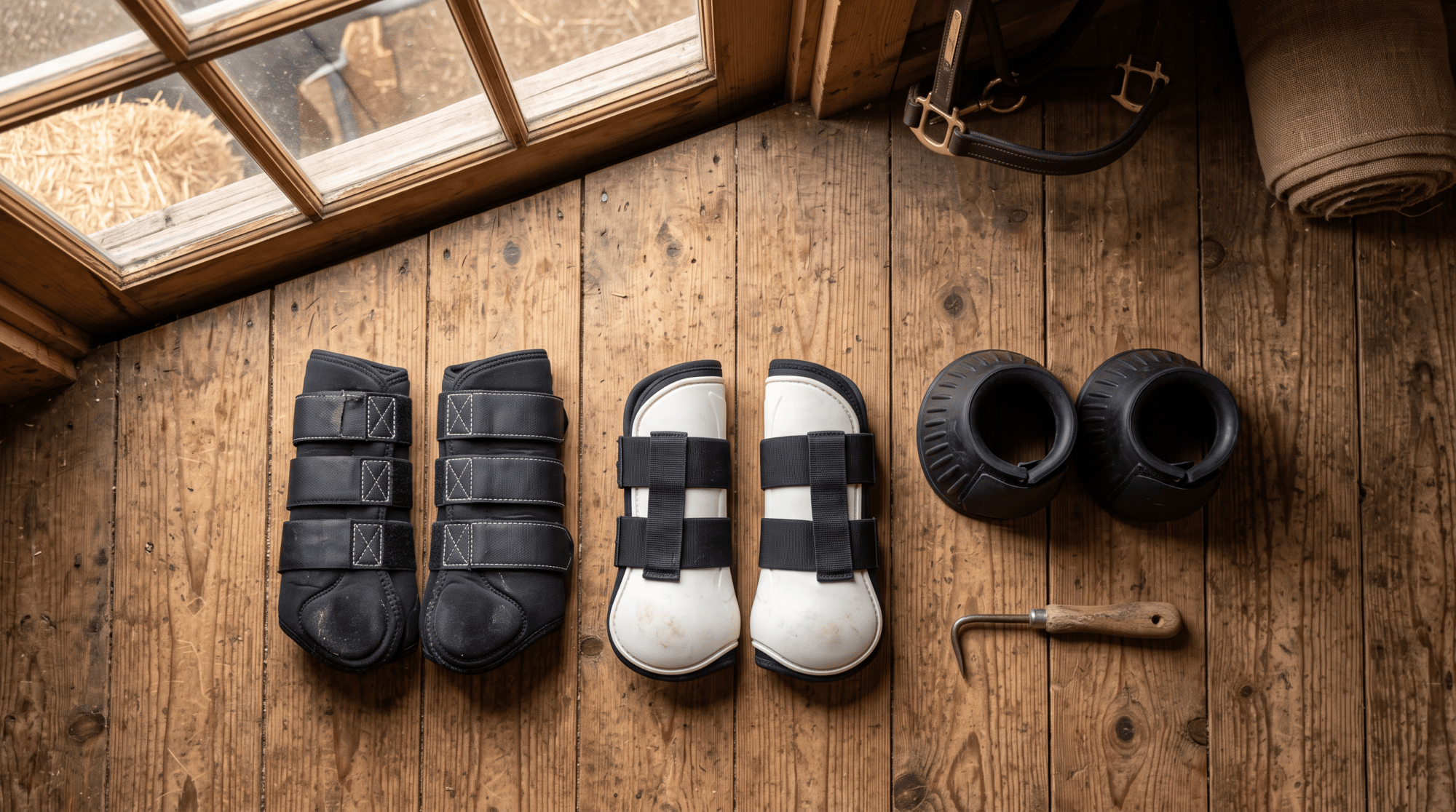
Horse Boots at a Glance
How to Make Sure Boots Fit (and Help Instead of Hurt)
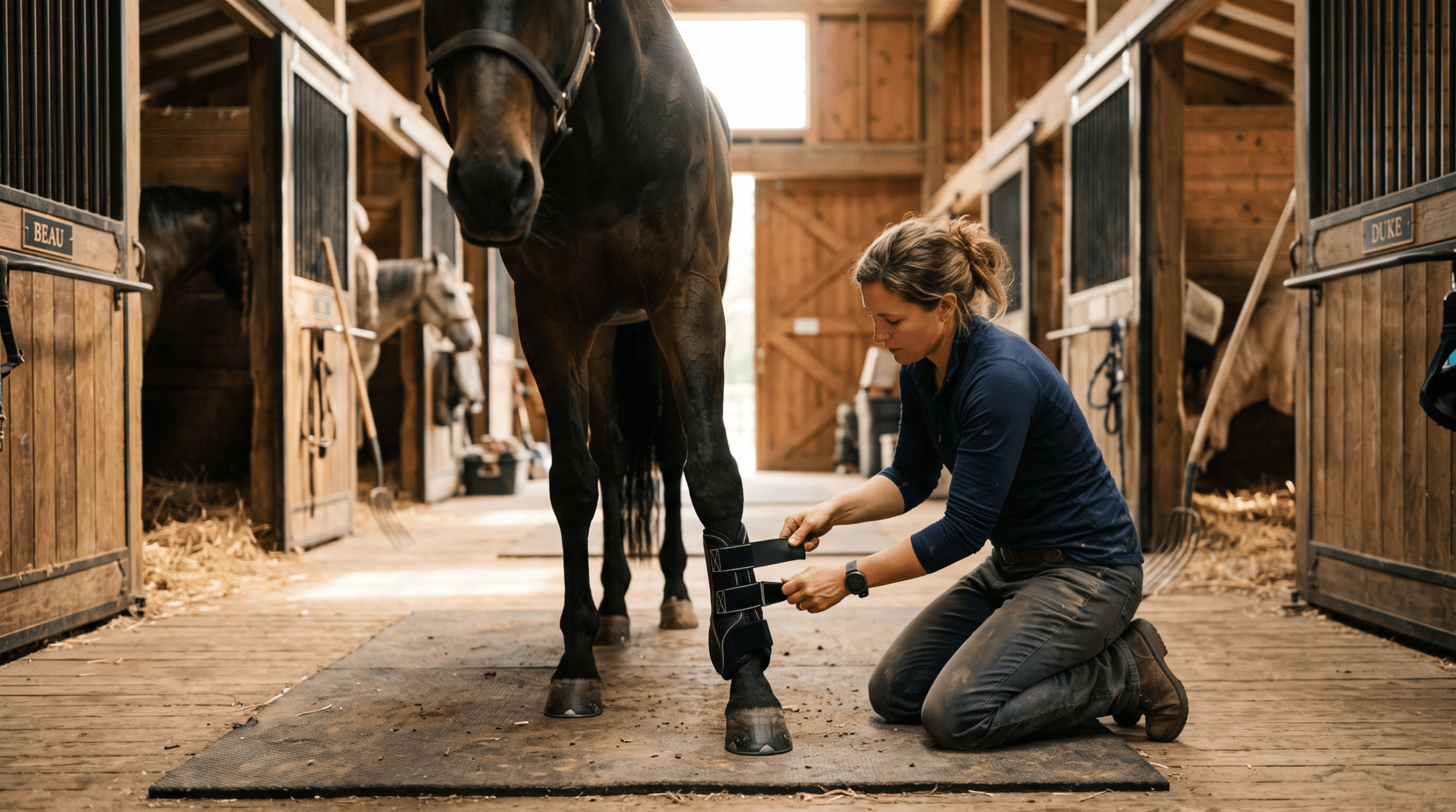
Even the best boot does more harm than good if it doesn’t fit. A few quick checks before every ride:
- Straps point toward the back. That way a brushing hoof pushes them closed instead of catching them open.
- Snug, not tight. You should be able to slide a finger under each strap. Too tight puts pressure on the tendons; too loose lets the boot spin and rub.
- Left is left, right is right. Most boots are made for a specific leg, with the strike pad on the inside.
- Brush the legs first. Sand trapped under a boot turns into sandpaper by the end of your ride.
- Take them off right after you ride and check the legs for rubs, heat, or swelling.
- Clean them regularly. Dried sweat and grit stiffen straps and cause rubs.
Which Boots Should You Buy First?
You don’t need all five on day one. If you mostly ride on the flat, start with a good set of sports medicine or brushing boots plus a pair of bell boots. If you jump, add open fronts and hind fetlock boots. If you’re heading out cross-country, that’s when real cross-country boots earn their price. And whatever your horse wears, ask your trainer to check the fit the first few times — it’s a two-minute lesson that saves a lot of rubs.
Building out the rest of your tack room? Here’s what tack is worth splurging on (and what to skip), how to pick the right saddle pad for your discipline, and my list of the best affordable horse tack on Amazon.
Which boots does your horse wear most? Tell me in the comments!
Ready to Protect Those Legs?
Here’s the sports medicine boot I recommend on Amazon — an easy first boot for everyday riding.