Let me paint you a picture. Your kid finally nails the line they’ve been fighting with for weeks. They come out of the ring glowing, run over, and ask, “Did you get it?!” And you look down at your phone and realize you got eleven seconds of the arena fence, your own thumb, and a very clear shot of the dirt. Then it cut off because your storage was full.
If that hasn’t happened to you yet, bless you. So many of us have been there, holding a phone in one hand, a lead rope or a coffee in the other, trying to be a camera crew, a cheerleader, and a snack bar all at once.
Here’s the thing: the videos matter. Not just for the memories (though, yes, those too). Good footage helps your kid and their trainer see what’s actually happening in the saddle. So let’s get you from “thumb-cam” to “hey, that’s actually useful” with nothing fancier than the phone already in your pocket.
Why Filming Your Kid Riding Is Worth Getting Right
Riders can’t see themselves. They can feel that something is off, but they can’t see that their heels creep up over fences or that their hands get busy on the left lead. Video closes that gap. A lot of trainers love it when parents film lessons, because it lets everyone go back and look at the same moment together instead of arguing over what it felt like.
And then there’s the other reason. One day the pony will be outgrown, or the horse will be sold, or retired, or gone. Those wobbly little videos of your kid trotting their first cross-rail become some of the most precious things you own. If you’ve ever lost a horse, you know exactly what I mean. Film the ordinary days, not just the shows.
Phone Settings That Make a Huge Difference
You don’t need a new camera. You need about two minutes in your settings app before you get to the barn. Here’s where I’d start:
- Turn your phone sideways. Always. Horses are long, arenas are wide, and vertical video cuts off half the horse. The only exception is a quick clip you know is going straight to stories.
- Lock focus and exposure. On most phones you can press and hold on the horse and rider until the focus locks. This keeps the camera from hunting back and forth between your kid and the fence posts, and stops the picture from going dark every time they ride past a bright sky.
- Clean your lens. Barn phones live in pockets full of hay, dust, and mystery horse slobber. A quick wipe on your shirt makes a bigger difference than you’d think.
- Use slow motion for jumps and transitions. Slow-mo is gold for seeing what happens over a fence: release, leg position, where the eyes go. Just don’t use it for a whole course, because nobody wants to watch a four-minute round in slow motion.
- Clear some storage first. Video eats space fast. Offload old clips the night before a show so you don’t end up with a “storage full” message mid-round.
- Charge it, and bring backup. A small battery pack in the tack trunk has saved more show days than I can count.
Where to Stand: Angles That Actually Help
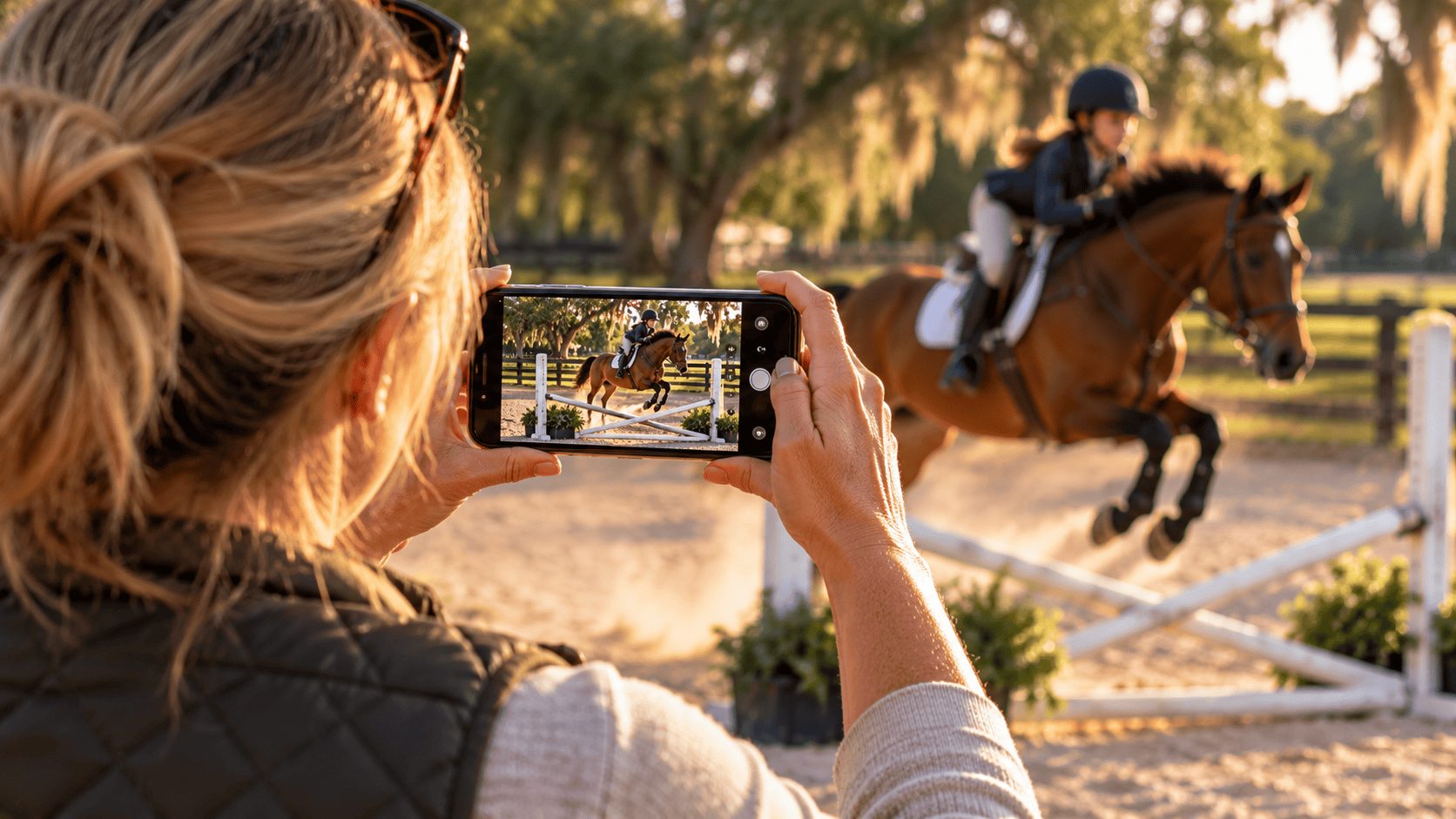
Where you stand changes everything. One angle is great for the memory book; another is what the trainer actually needs. Here’s a quick cheat sheet:
| What you’re filming | Best spot to stand | What it shows |
|---|---|---|
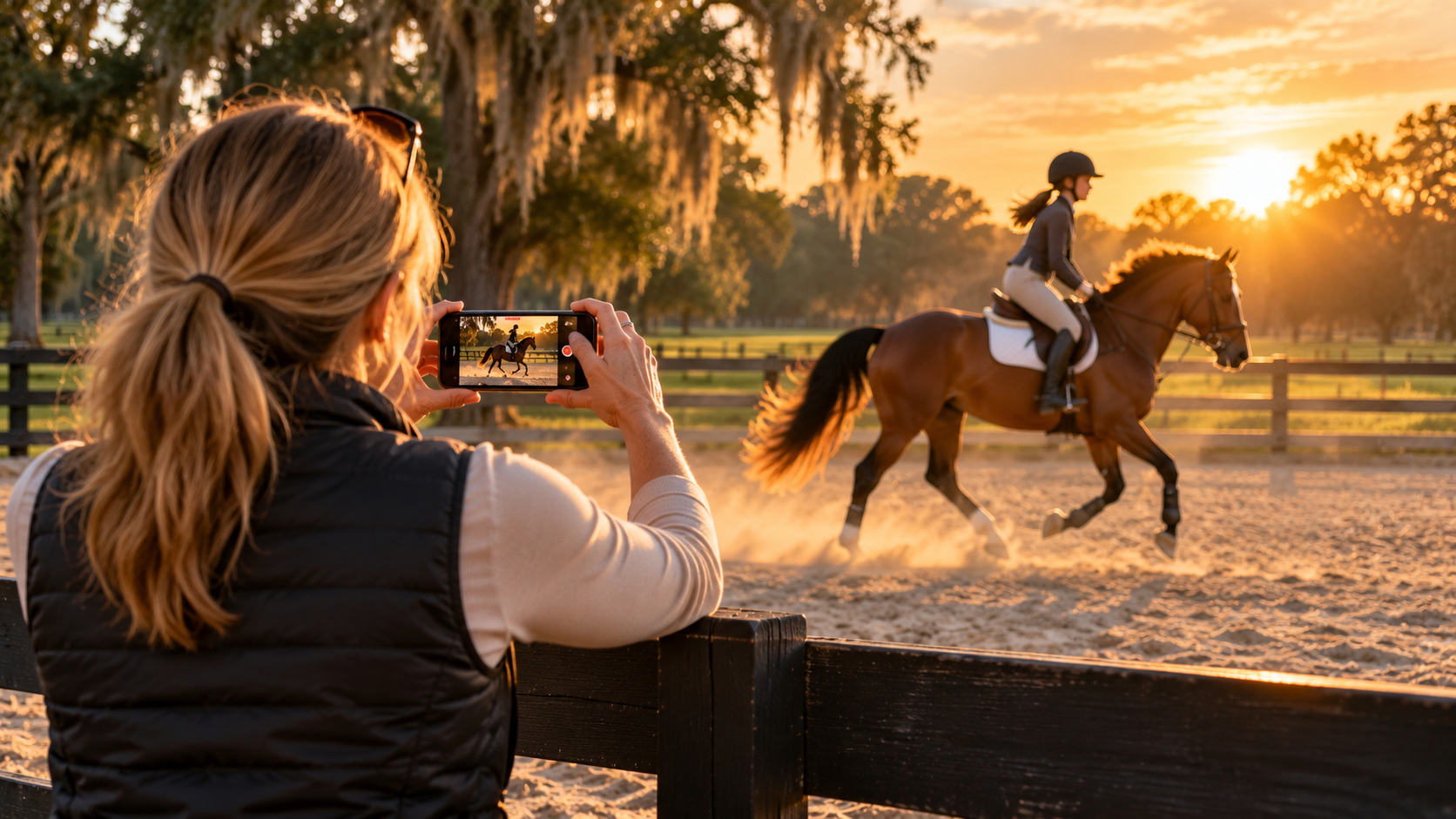
| Flatwork / equitation | Middle of the long side, outside the rail | Leg position, posture, the line from elbow to bit |
| Single fence | Perpendicular to the jump, a safe distance back | Takeoff, release, landing, lower leg |
| Lines and distances | Straight on, at the end of the line | Straightness, drifting, whether the horse is centered |
| Full course | Somewhere high, like bleachers or a corner where you can see most fences | The whole picture: track, pace, corners |
| Just for memories | Wherever their face is! | That grin. You’ll want it later. |
A few safety notes, because this is horses and we know better: stay outside the arena unless the trainer says otherwise, never step into a horse’s path to get a shot, and keep your eyes up. You’re a barn mom first and a videographer second. If a horse spooks, nobody cares about the footage.
Also, check the rules at shows. Some venues or classes have their own policies about filming or standing in certain areas, and a quick look at the prize list or a question at the show office keeps everybody happy.
Timing: When to Hit Record (and When to Just Watch)
This is the part nobody tells you. You don’t have to film everything, and honestly, you shouldn’t.
Start recording a few seconds early. Hit record as they pick up the canter or turn toward the first fence, not the moment they’re airborne. Starting early gives you the approach, which is usually where the real story is.
Keep rolling a few seconds after. The landing, the pat on the neck, the face they make when they come back to the walk. That’s the stuff you’ll rewatch.
Ask your kid what they want filmed. Some kids want every ride. Some kids get nervous knowing a phone is on them. Some only want the good ones. Respect that. It’s their ride.
Put the phone down sometimes. I know. But there’s something to be said for watching a big moment with your own eyes instead of through a screen. If you can, pass the phone to a barn friend for the big class so you can actually be there.
Gear That Helps (None of It Required)
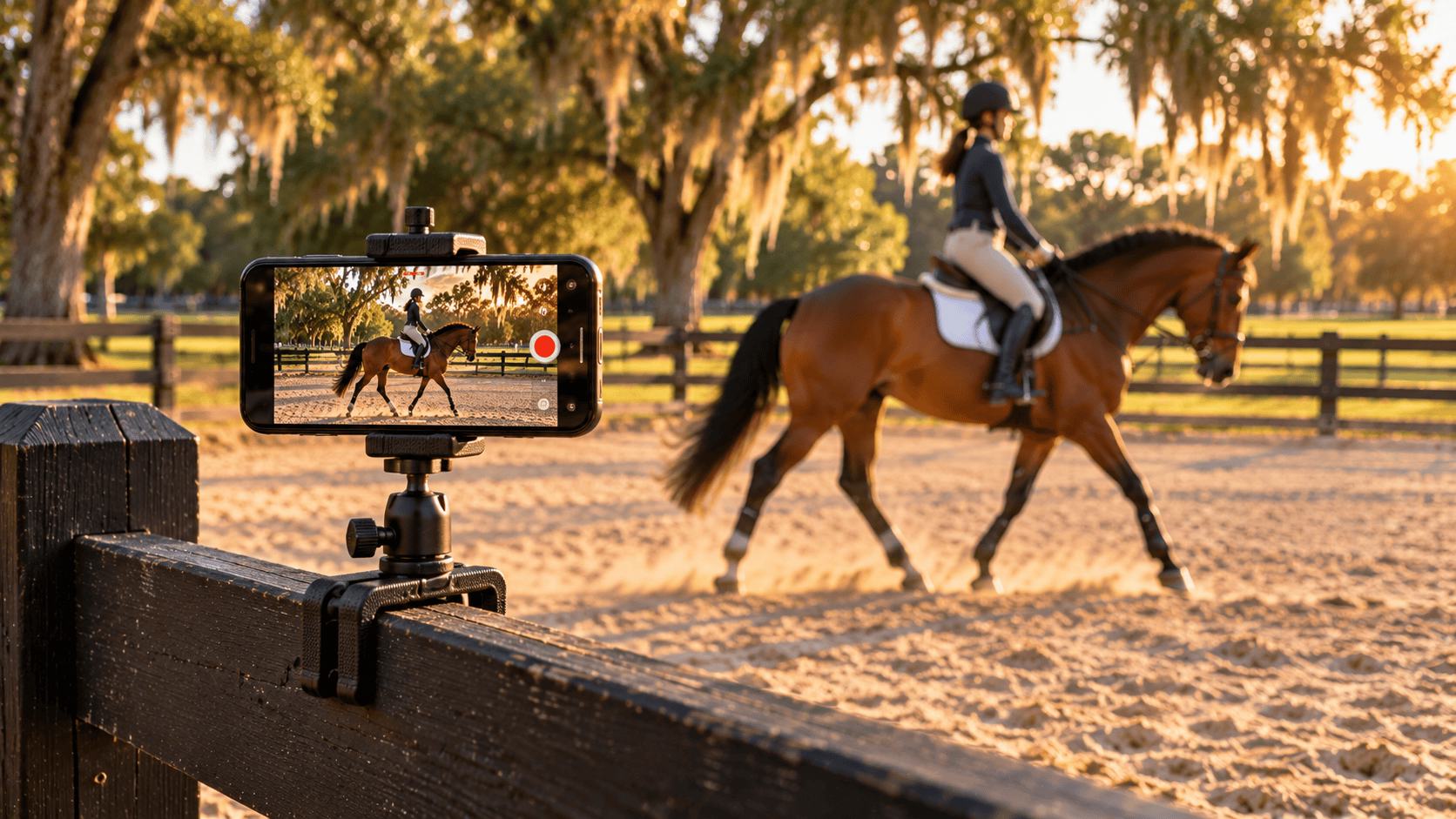
Everything above works with just a phone. But if you find yourself filming a lot, a few simple things make life easier:
- A small tripod or fence clamp so you can set up on the rail for a lesson and keep your hands free.
- A phone grip or handheld stabilizer if your videos look like they were filmed during an earthquake.
- A clip-on telephoto lens for big arenas where your kid ends up looking like a tiny dot.
- A little lens cloth in your pocket. Seriously. Dust is the enemy.
There are also auto-tracking camera mounts that follow a rider around the arena on their own. They can be really handy for kids who ride without a parent nearby, but definitely not something you need to start.
What to Do With All That Footage
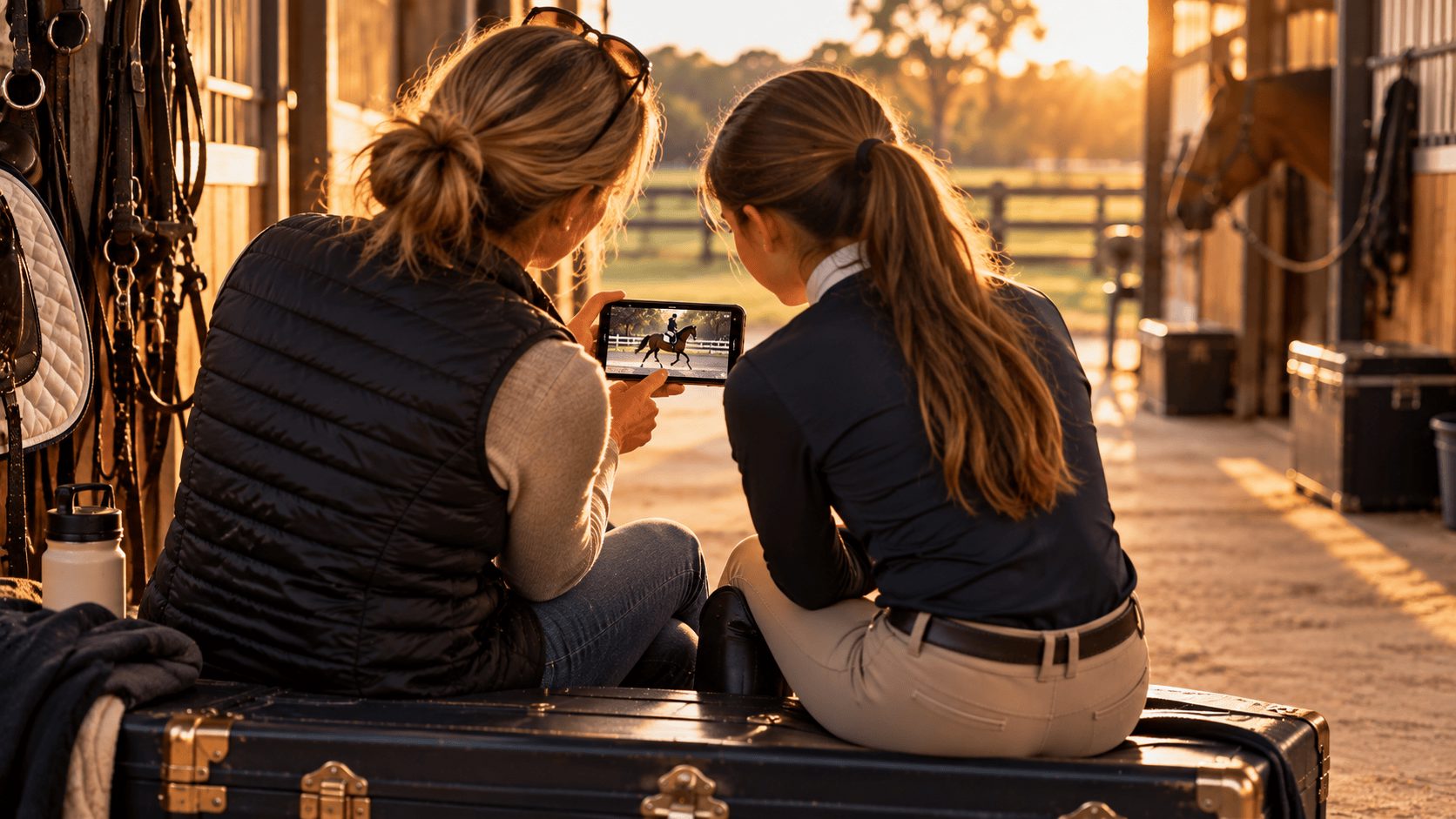
Okay, you’ve got the videos. Now what? Here’s what helps keep it from turning into a camera roll black hole:
- Watch it together, soon. Sit down with your kid that evening while the ride is still fresh. Ask what they notice before you say anything. You’d be amazed how often they spot the thing themselves.
- Send the useful clips to the trainer. Short ones, labeled with the date and what they were working on.
- Make an album for each horse. Future you will be so grateful to have every ride on that horse in one place.
- Be careful posting other people’s kids. If someone else’s child is in the shot, ask their parents before it goes on social media.
- Keep the bad rides too. The refusals, the tears, the day the pony decided the flower box was a monster. Watching how far they’ve come is the best kind of motivation.
If you want more on surviving show days in general, my Horse Show Mom Survival Guide covers what to pack (add a battery pack to that list!). And if your rider is still in the early stages, Riding Tips for Beginners pairs really well with lesson videos. Plus, trading filming duty is one of the easiest ways to start the kind of barn friendships that carry you through the whole journey.
The Bottom Line
You don’t need fancy equipment or a film degree to get great videos of your kid riding. Turn the phone sideways, lock the focus, stand where you can see what matters, and start recording a few seconds early. Film the lessons for learning and the ordinary days for remembering.
And every once in a while, put the phone in your pocket and just watch. Some of the best moments are the ones you see with your own eyes.
What’s your best (or worst!) barn filming story? Did you ever miss the big moment, or catch one you’ll treasure forever? Tell me in the comments. I promise I’ve filmed the dirt too.