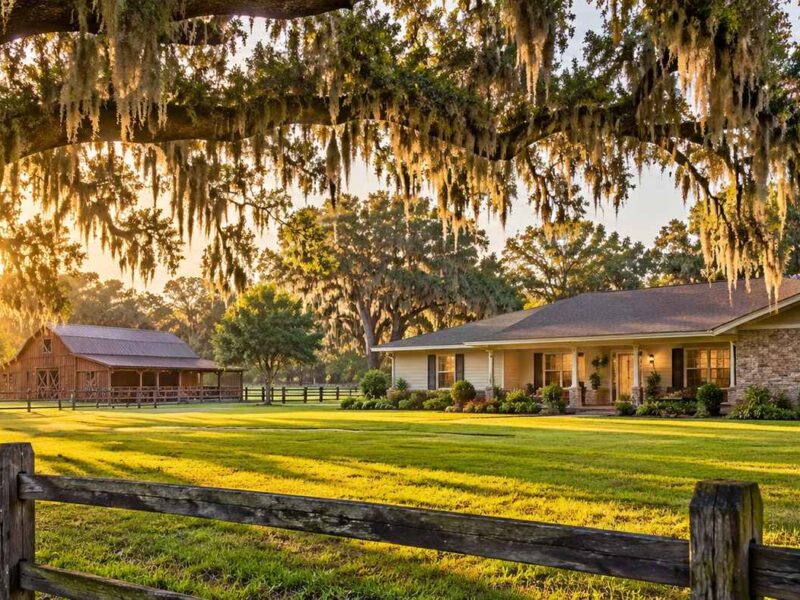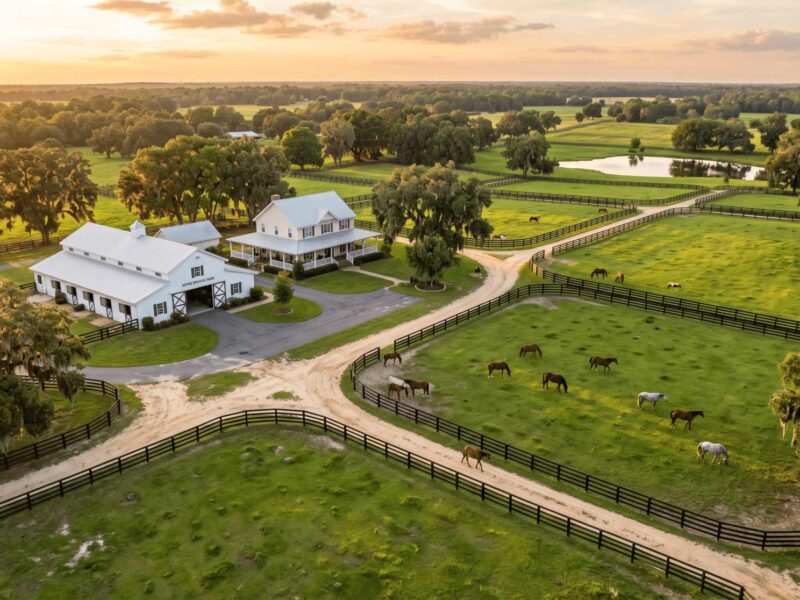
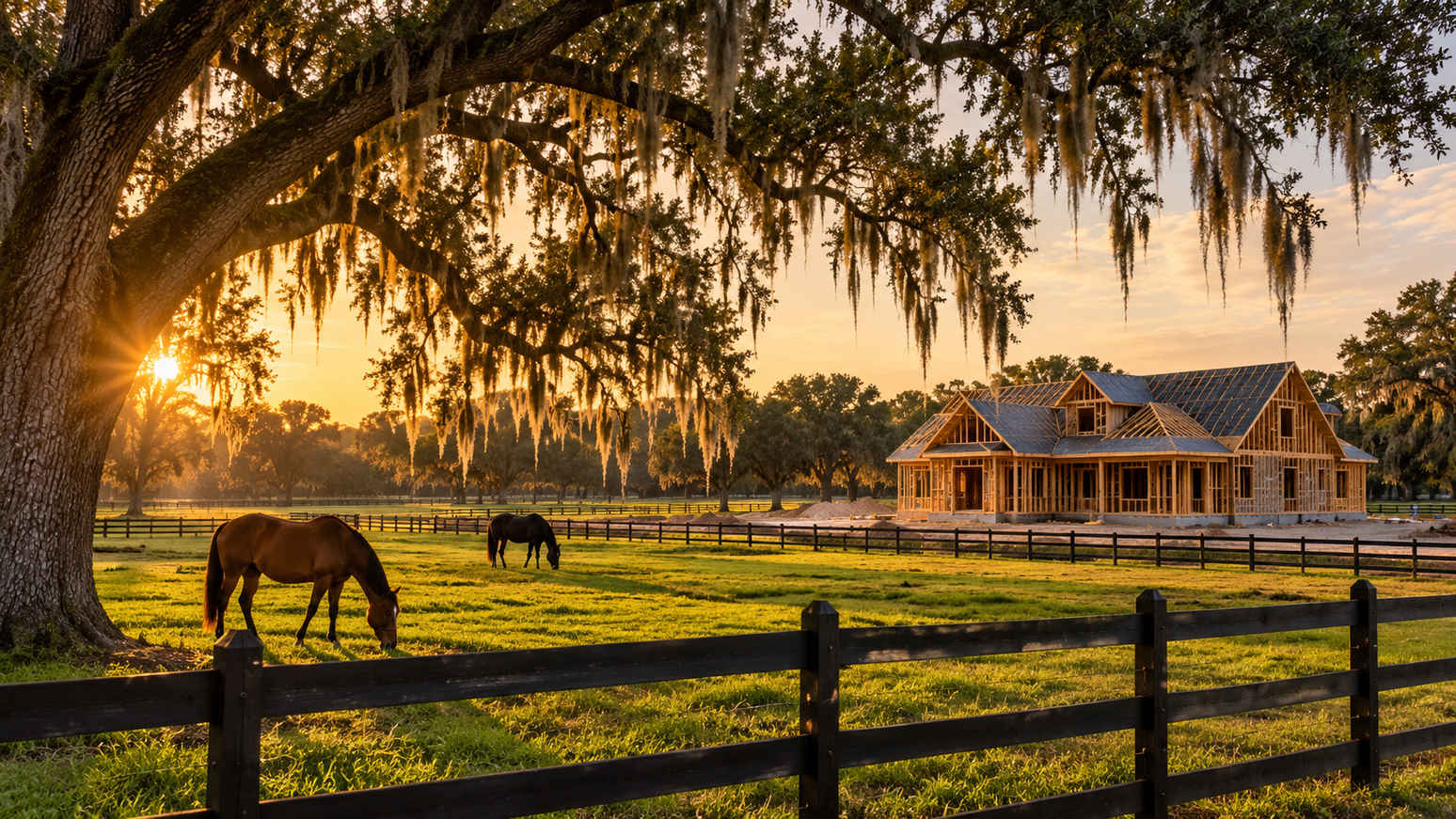
Here’s how it usually starts. You’ve been scrolling land listings at 11pm (don’t pretend you haven’t), you find ten pretty acres outside Ocala with nothing on them but grass and a couple of live oaks, and you think, “We could build exactly what we want. House, barn, run-in sheds, the whole dream.” And then the next thought hits: “Wait… how do you even pay for a house that doesn’t exist yet?”
Short answer: with a construction loan. A construction loan is a short-term loan that pays your builder in stages (“draws”) as the work gets done, instead of handing over one lump sum at closing like a regular mortgage. During the build you typically pay only interest on the money that’s been drawn so far. When the house is finished, that loan either rolls into a regular mortgage automatically (construction-to-permanent) or you pay it off with a brand-new mortgage (construction-only). There’s also a third path for people acting as their own general contractor (owner-builder), which is harder to find. Let’s walk through all three like we’re sitting on the tailgate.
Thinking About Buying Land or Building? Let’s Talk.
Whether it’s a family home or an equestrian property here in the Ocala area, I’ll give you an honest answer for your situation — including whether building actually makes sense.
How Is a Construction Loan Different From a Regular Mortgage?
With a normal mortgage, the bank is lending against something that already exists. They can appraise it, inspect it, and walk through it. With a construction loan, the bank is lending against a set of plans, a budget, and a builder’s promise. That’s a lot more risk on their side, so they manage it a few ways:
- Draw schedule. Money gets released in chunks tied to milestones — think foundation, framing, roof, mechanicals, finishes. Before each draw, the lender usually sends someone out to confirm the work is actually done.
- Interest-only payments during the build. You generally pay interest only on what’s been drawn so far, so payments start small and grow as the house goes up.
- More paperwork up front. Expect the lender to want detailed plans, a line-item budget, your builder’s license and insurance info, and a signed construction contract before they’ll close.
- “As-completed” appraisal. The appraiser values the home based on what it will be worth when finished, using your plans and specs.
Down payment requirements and rates on construction loans are often different from a standard purchase loan, and they vary a lot by lender and program. I’m not going to throw a number at you here, because those numbers change and they genuinely depend on your credit, the program, and the lender. Ask your lender for their current down payment and rate requirements on construction loans specifically, not just their regular mortgage rates. The point is: talk to a lender who actually does construction loans regularly. Not every bank does, and the ones that dabble can make your life miserable with slow draws.
The Three Main Types of Construction Loans
This is the part that confuses everybody, so here it is side by side.
| Loan Type | How It Works | Good Fit If… | Watch Out For |
|---|---|---|---|
| Construction-to-Permanent (“one-time close”) | One loan, one closing. Funds the build, then converts to a regular mortgage when the house is done. | You want simplicity and one set of closing costs. | Less flexibility to shop for a better mortgage later. |
| Construction-Only (“two-time close”) | Short-term loan for the build only. When it ends, you pay it off with a separate mortgage. | You want to shop for the best permanent mortgage once the house is finished. | Two closings, two sets of costs, and you have to qualify again at the end. |
| Owner-Builder | You act as your own general contractor and manage the subs. | You have real construction experience (or a license). | Many lenders won’t do these at all, and the ones that do are picky. |
Construction-to-permanent is the one I’d point most families toward first, because you lock in the whole thing once and you’re done. Some government-backed programs offer construction-to-permanent versions too, but availability varies by lender — and if you’re looking at rural land, it’s worth reading my post on who qualifies for a USDA loan in Marion County before you assume anything.
Construction-only makes sense if you expect your finances to look better by the time the house is done, or you just want to shop around. The risk is that if something changes — job, credit, rates — you still have to qualify for that second loan.
Owner-builder sounds like a money-saver, and sometimes it is, but lenders know that most first-time owner-builders underestimate time and budget. Unless you’ve done this before, expect a lot of “no”s.
What About the Barn? (The Horse-Property Wrinkle)
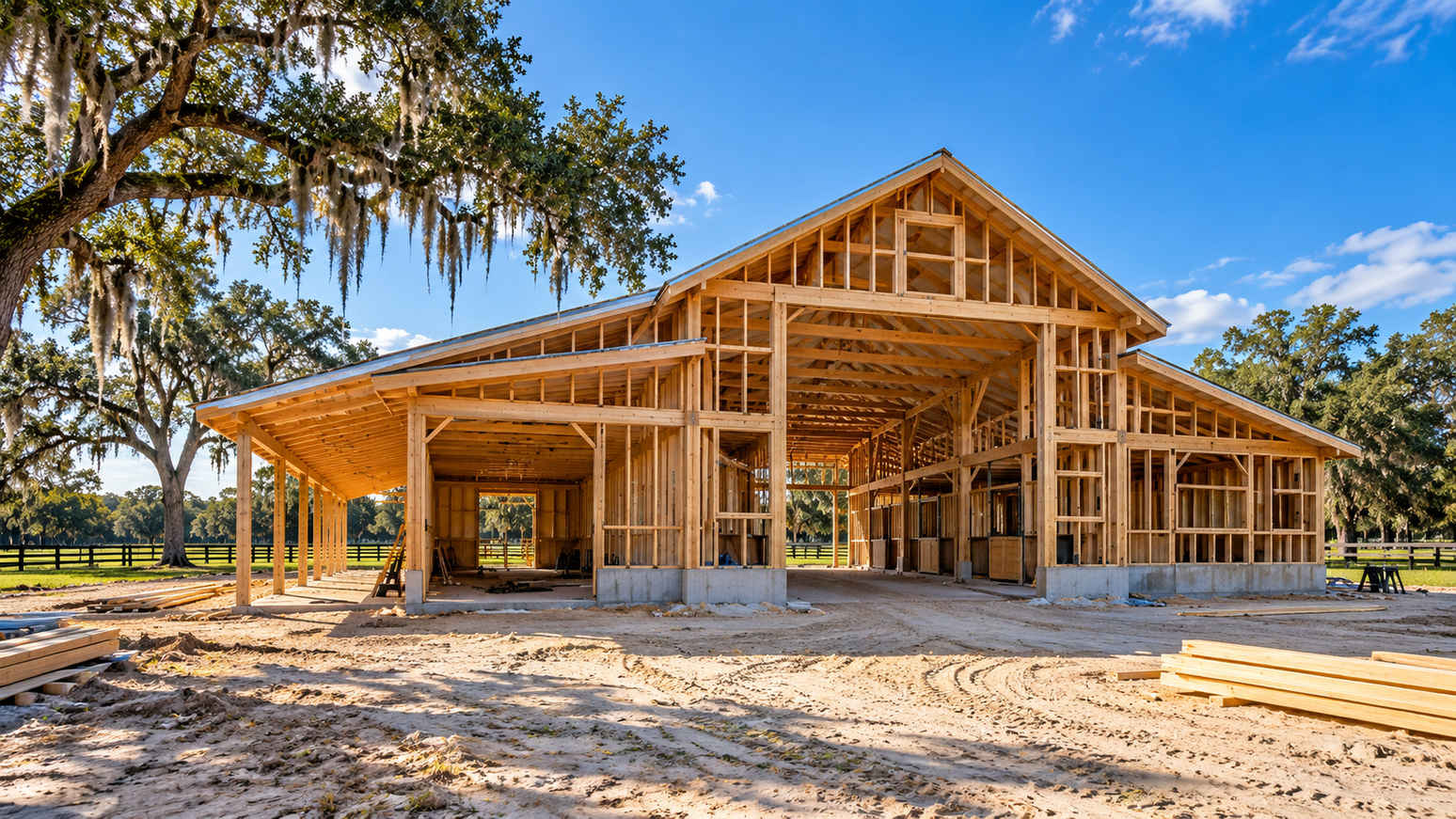
Okay, this is where my two worlds collide. So many of us aren’t just building a house — we’re building a house and a barn, fencing, a well that can handle a few horses, maybe an arena. And here’s the thing nobody tells you: lenders and appraisers don’t always value equestrian improvements the way we do.
To a barn mom, a center-aisle barn with good airflow and a wash rack is priceless. To an appraiser looking for comparable sales, it might count for less than you’d hope, depending on what’s sold nearby. In Marion County we actually have more horse-property comps than most places, which helps — but it’s still something to ask about early.
Some families end up building the house with the construction loan and adding the barn later with cash or a separate loan. That’s not a failure — it’s just sequencing.
If you’re still deciding what land to even look at, my horse property checklist covers drainage, soil, and access — all things that matter even more when you’re building from scratch.
What Do You Need Before You Apply?
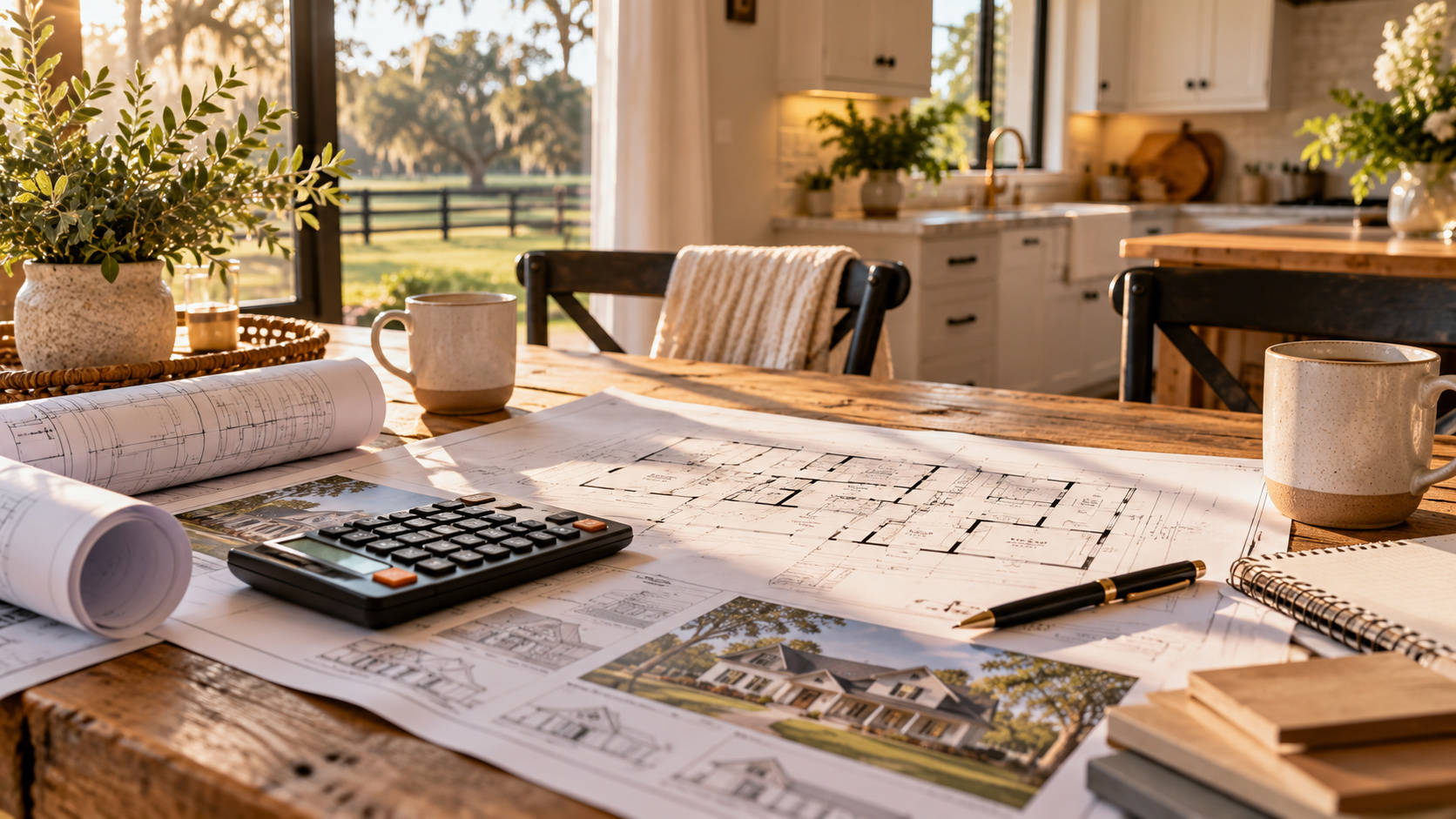
Here’s the honest checklist. Getting these lined up first will save you weeks of back-and-forth.
- ☐ Pre-approval conversation with a lender who does construction loans regularly
- ☐ The land — already owned, or under contract (some loans can include the lot purchase)
- ☐ A licensed, insured builder the lender will approve
- ☐ Plans and specs — not a Pinterest board, actual drawings
- ☐ A line-item budget from your builder, including a contingency for surprises
- ☐ Site info — survey, soil/perc test for septic, well plans, and any zoning or permitting notes for the property
- ☐ Your financial docs — income, assets, credit, the usual
That contingency line is not optional in my book. Builds almost always run into something — weather, material delays, a change you decide you can’t live without. Ask your lender and builder what contingency they recommend for your project, and some lenders will require one, so find out early.
Mistakes I See People Make
None of these are dumb. They’re just easy to fall into when you’re excited.
- Buying the land before talking to a lender. Then finding out the lot has issues (flood zone, no road access, septic problems) that make it hard to finance a build.
- Picking the builder on price alone. A cheap bid with a builder the lender won’t approve is worth exactly zero.
- Forgetting about the “between” costs. Rent or your current mortgage, storage, maybe boarding your horses somewhere while you wait. Those months add up — my post on what it costs to buy a horse property in Marion County gets into the costs people forget.
- Underestimating the timeline. Permits, inspections, and weather all take longer than you’d think. Plan your life (and your horse’s living situation) with some cushion.
- Making changes mid-build without updating the lender. Change orders can affect your draws and your appraisal. Keep everybody in the loop.
Is Building Actually Better Than Buying?
Sometimes yes, sometimes no. Building gets you exactly what you want — the barn facing the right way, the mudroom big enough for three pairs of tall boots and a muck bucket. Buying an existing horse property gets you in faster, with fewer unknowns, and someone else already fought with the fence posts.
Around Ocala, there’s a real mix of both: raw acreage, older farms that need love, and newer properties near the World Equestrian Center area. The right answer depends on your timeline, your budget, and honestly, your patience level. I’m happy to walk through both options with you and be straight about which one fits.
The Bottom Line
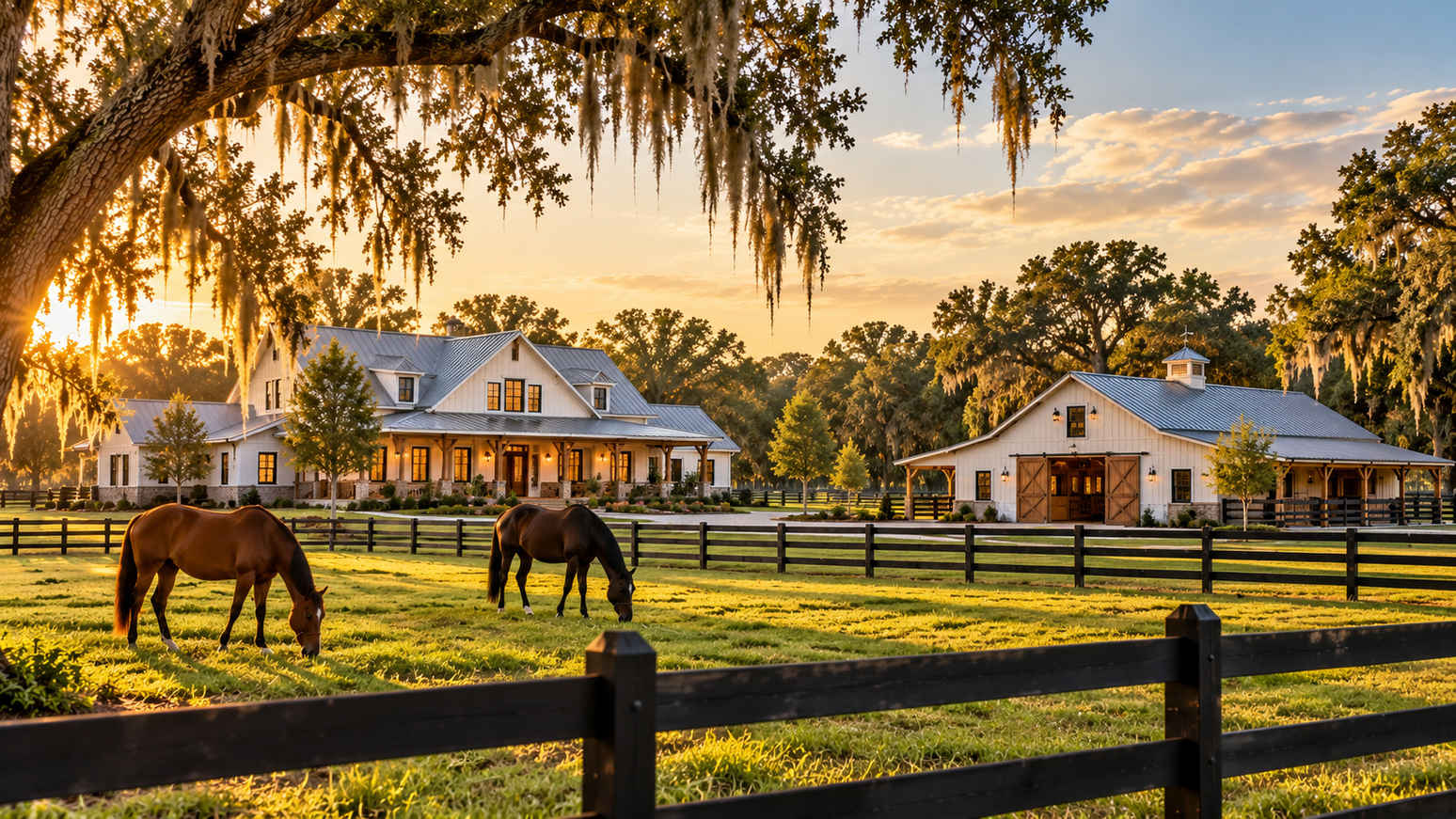
A construction loan is just a way to borrow for a home that’s still being built, paid out in stages as the work gets done. Construction-to-permanent is the simplest for most families, construction-only gives you more flexibility at the cost of a second closing, and owner-builder is for people who really know what they’re doing. If horses are part of the plan, ask early how the barn and fencing will be handled — that one question can save you a lot of heartache.
And please, talk to a lender before you fall in love with the land. Your 11pm scrolling self will thank you.
Are you dreaming about building your own place — or have you already survived a build? Tell me in the comments what you wish someone had told you first.