There’s a very specific look a barn mom gets about two years in. You’re standing at the rail with a coffee in one hand and a lead rope you’re holding for no reason in the other, and your kid trots past, and something in your chest says, wait, why am I always the one on the ground?
So many of us spend years being the driver, the snack bag, the hoof-pick finder, and the person who knows exactly which bucket is whose. We know the horses’ names, their quirks, and which one will steal your sunglasses. And then one day, we want to know what it actually feels like up there.
I’ll be honest: these days I love a good trail ride. But I took lessons as a teenager, and back then I wanted to be a three-day eventer. I had pictures of eventers hanging all over my room.
If you’re feeling that pull, this post is for you. Not the “how to start riding as an adult” basics (I’ve covered that in Riding as an Adult Beginner: It’s Never Too Late), but the part nobody talks about: what happens when you and your kid are both learning at the same barn.
For the mom who’s finally stepping into the arena
My Barn Mom coffee mug says it best: “Where grit, grace and endless encouragement meet.” Perfect for the 6 a.m. lesson you’re now booking for yourself.
Your Kid Is Going to Be Better Than You (And That’s the Best Part)
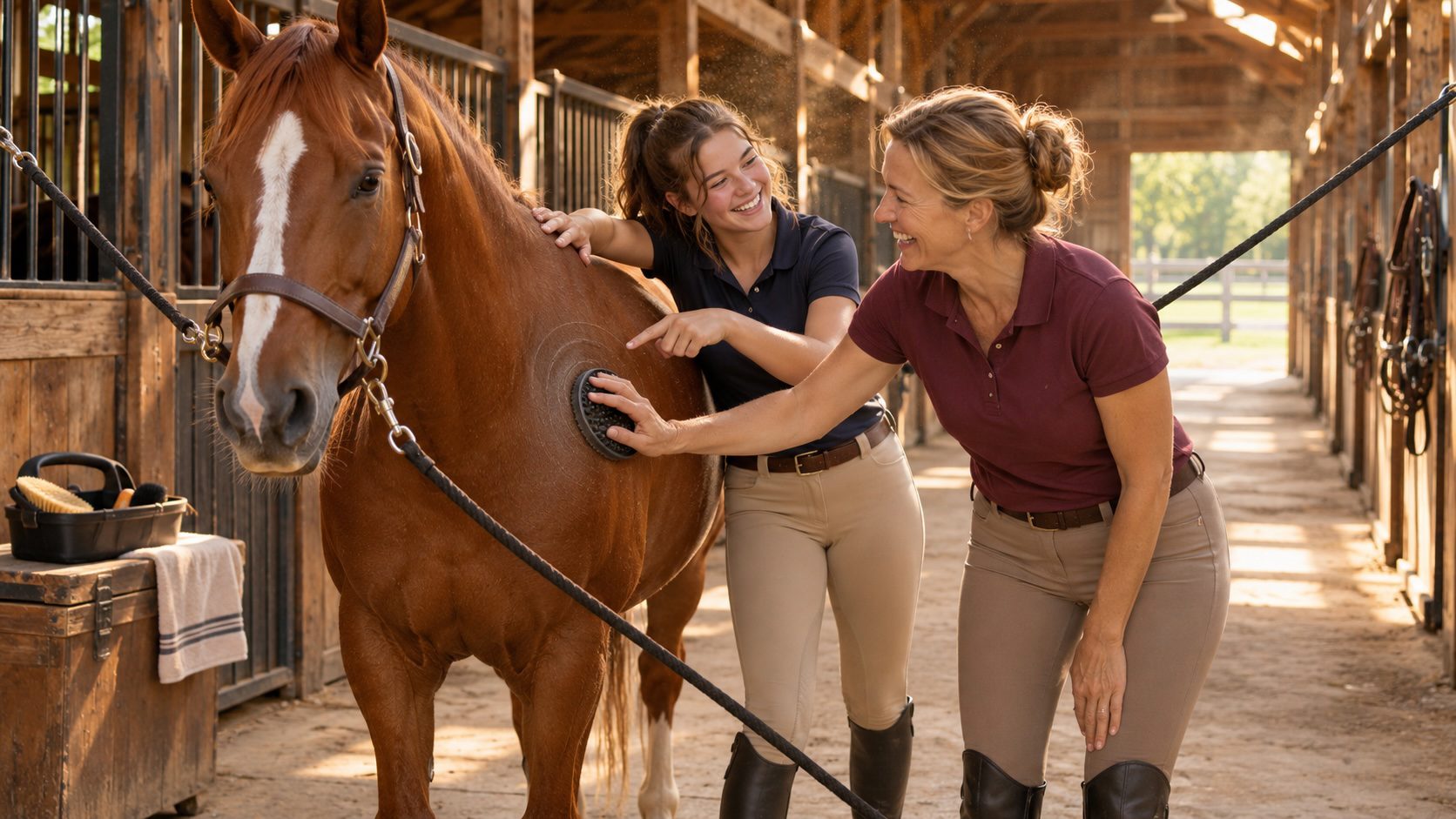
Let’s just get this one out of the way. Your kid has been riding for a while. You have not. They will be better than you, probably for a long time, and possibly forever.
That stings for about five minutes. Then it turns into one of the sweetest things about riding together.
Think about it: for years, you’ve been the one who knows more. You know how to drive, how to cook, how to fill out the permission slip. At the barn, the roles flip. Suddenly your kid is the expert. They know how to check the girth, how to hold the reins without making “puppy paws,” and why the horse keeps drifting toward the gate. (It’s you. You’re the reason. Sorry.)
Letting your kid teach you something is a huge gift to them. It tells them that what they’ve worked so hard on matters, and that you see it. A lot of kids light up when Mom asks, “Can you show me how you do that?”
Keep Their Barn Their Barn
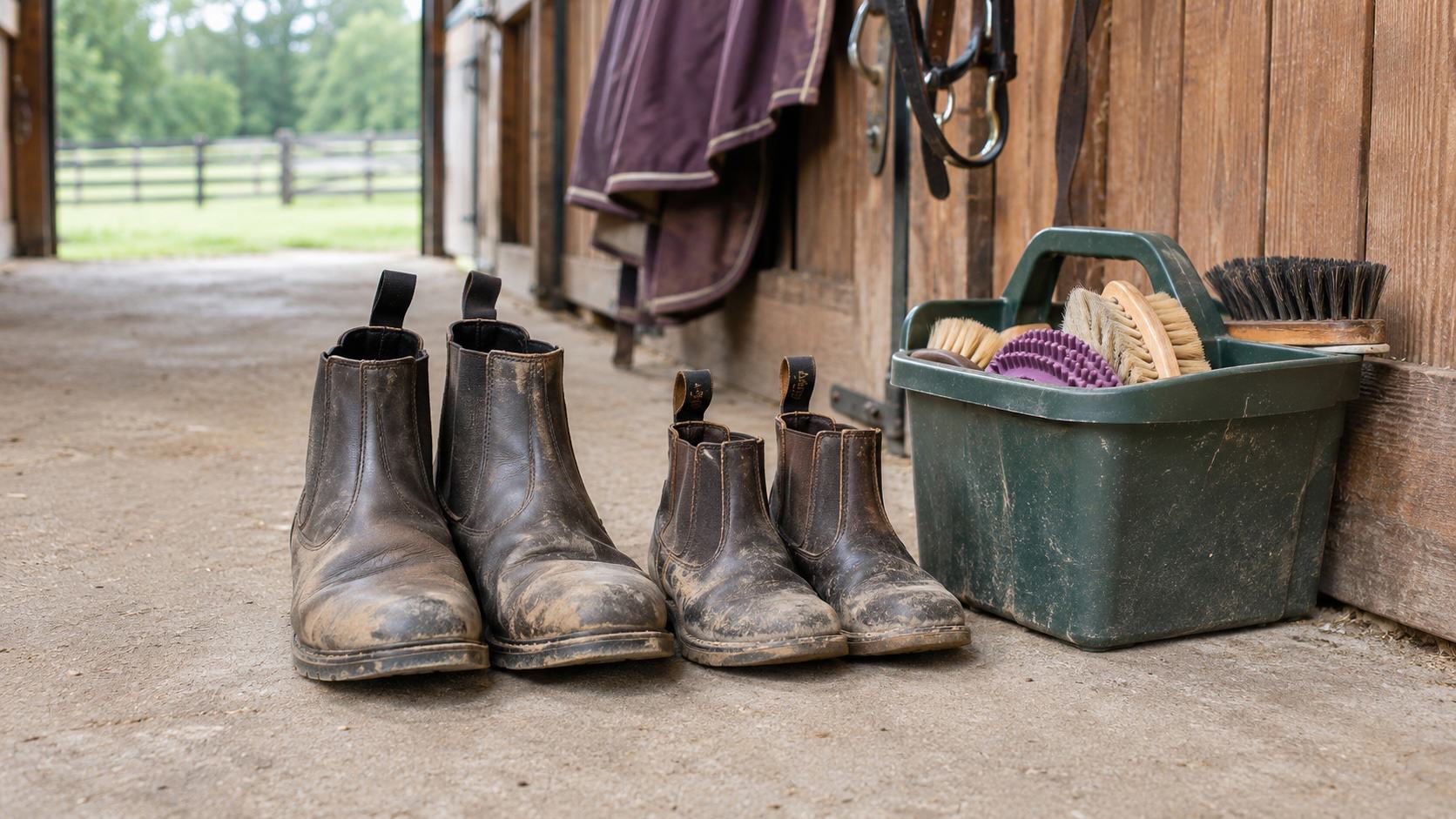
Here’s the honest, slightly uncomfortable part. For a lot of horse kids, the barn is theirs. It’s the one place where they’re competent, independent, and not somebody’s little kid. When a parent shows up wanting to ride too, some kids are thrilled. Some feel a little invaded. Most feel both, and won’t say so.
That doesn’t mean you shouldn’t ride. It means you should ask first, and actually listen to the answer.
Before you book anything, have a real conversation. Here’s a checklist of things worth talking through together:
- ☐ Ask how they feel about it. “Would it be weird for you if I took lessons too?” Then wait. Don’t fill the silence.
- ☐ Decide whose trainer is whose. Some families love sharing a trainer. Others do better when Mom has her own instructor, or rides at a different time.
- ☐ Talk about their horse. If your kid has a horse they ride, ask before you assume you’ll learn on it. That horse may feel like theirs, even if you pay the board.
- ☐ Protect their lesson time. Your lesson shouldn’t eat into their ride, their attention from the trainer, or their time with barn friends.
- ☐ Agree on coaching rules. Is it okay for them to give you tips? Is it okay for you to give them tips? (Honestly, you probably shouldn’t for a while.)
- ☐ Check in again in a month. Feelings change once it’s real. Ask again.
Some of the best barn friendships grow between parents and kids exactly because the boundaries are clear. If you haven’t read it yet, my post on why the barn becomes your second family gets at why that community is worth protecting.
What Changes When You’ve Been in the Saddle Yourself
Here’s what I’ve noticed: once you’ve ridden, even a little, you start watching your kid differently.
You realize how much leg it takes to keep a lazy horse moving. You understand why they come out of the arena red-faced and grumpy after a lesson where “nothing went right.” You feel, in your own body, how scary it is when a horse spooks, and how brave it is to get right back to work.
It changes how you talk about their rides, too. “Why didn’t you just make him canter?” stops coming out of your mouth once you’ve tried to make a horse do something he had no intention of doing.
And it gives you more empathy for nerves. At one show, my daughter’s nerves hit so hard she started breathing really fast. I stopped her and helped her remember who she is. Watching your kid go through that is hard from the ground. Once you’ve felt your own heart pounding in the saddle, you understand a little better what’s going on inside them, and what they need from you in that moment. (I wrote more about show nerves in my horse show affirmations post.)
I still ride sometimes myself, so I know that feeling.
The Hard Parts Nobody Mentions
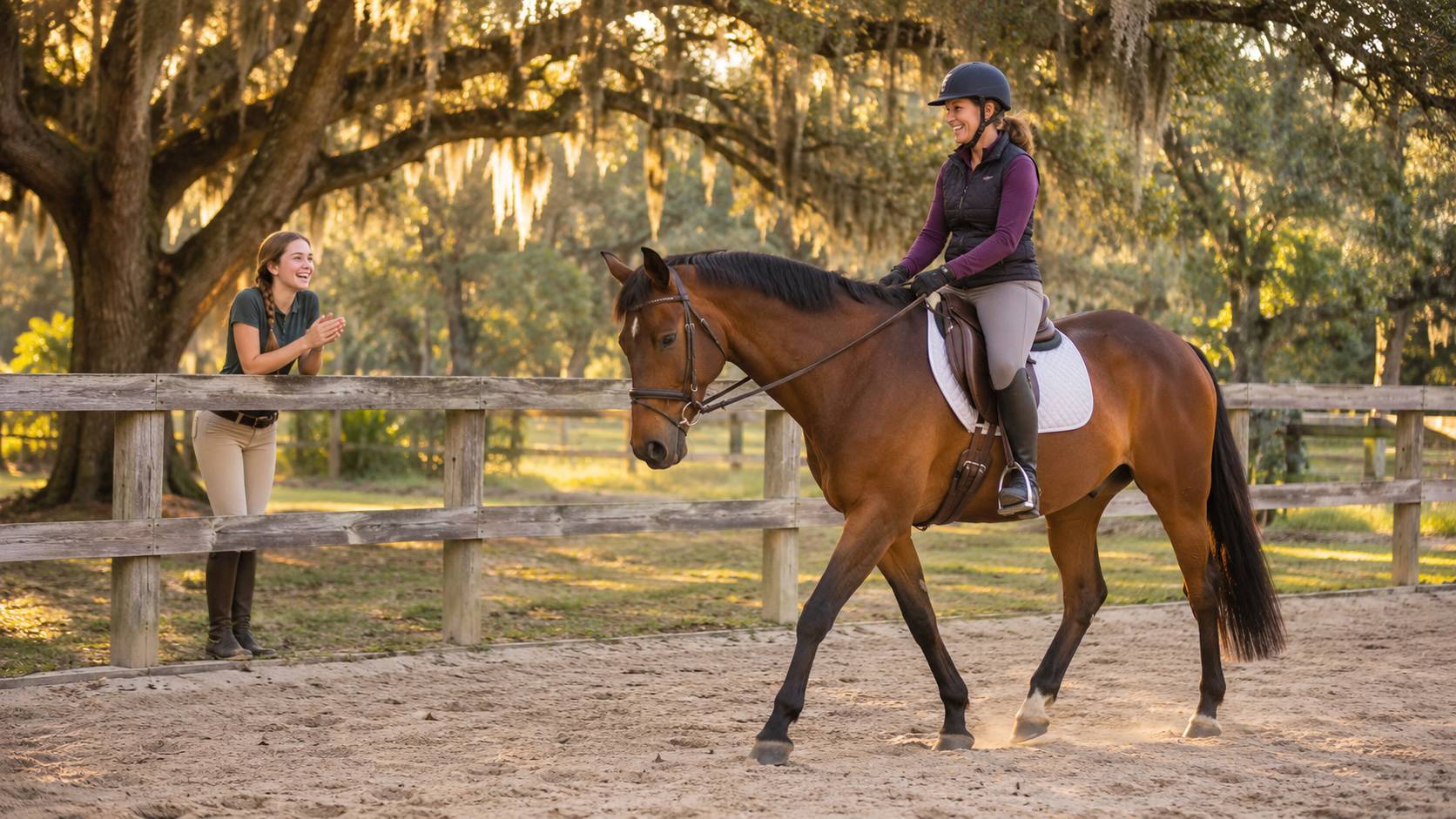
Riding as an adult next to your kid is wonderful. It’s also humbling in ways that sneak up on you.
The comparison trap. You’ll catch yourself thinking, “She was cantering by now.” Stop. Kids learn differently. They bounce, they don’t overthink, and they started with a body that bends. You’re not behind. You’re on your own timeline.
The fear is different. Adults know exactly what can go wrong, and our bodies tense up because of it. That’s normal, and good instructors work with it instead of pushing through it. If fear is what’s holding you back, my post on overcoming fear and building confidence in the saddle is a good place to start.
The soreness. You will discover muscles you didn’t know you had. Your kid will think this is hilarious. Let them.
The time. Adding your own lessons to a schedule that already revolves around the barn is real. Many barn moms find it easiest to ride while their kid is already there, so it’s one trip instead of two. Talk to your trainer about what works.
The cost. Lessons, a helmet, boots. It adds up, and prices vary a lot from barn to barn. Ask your barn directly what adult lessons cost before you commit, and remember that a properly fitted, certified helmet is the one thing never to skimp on.
The Bottom Line
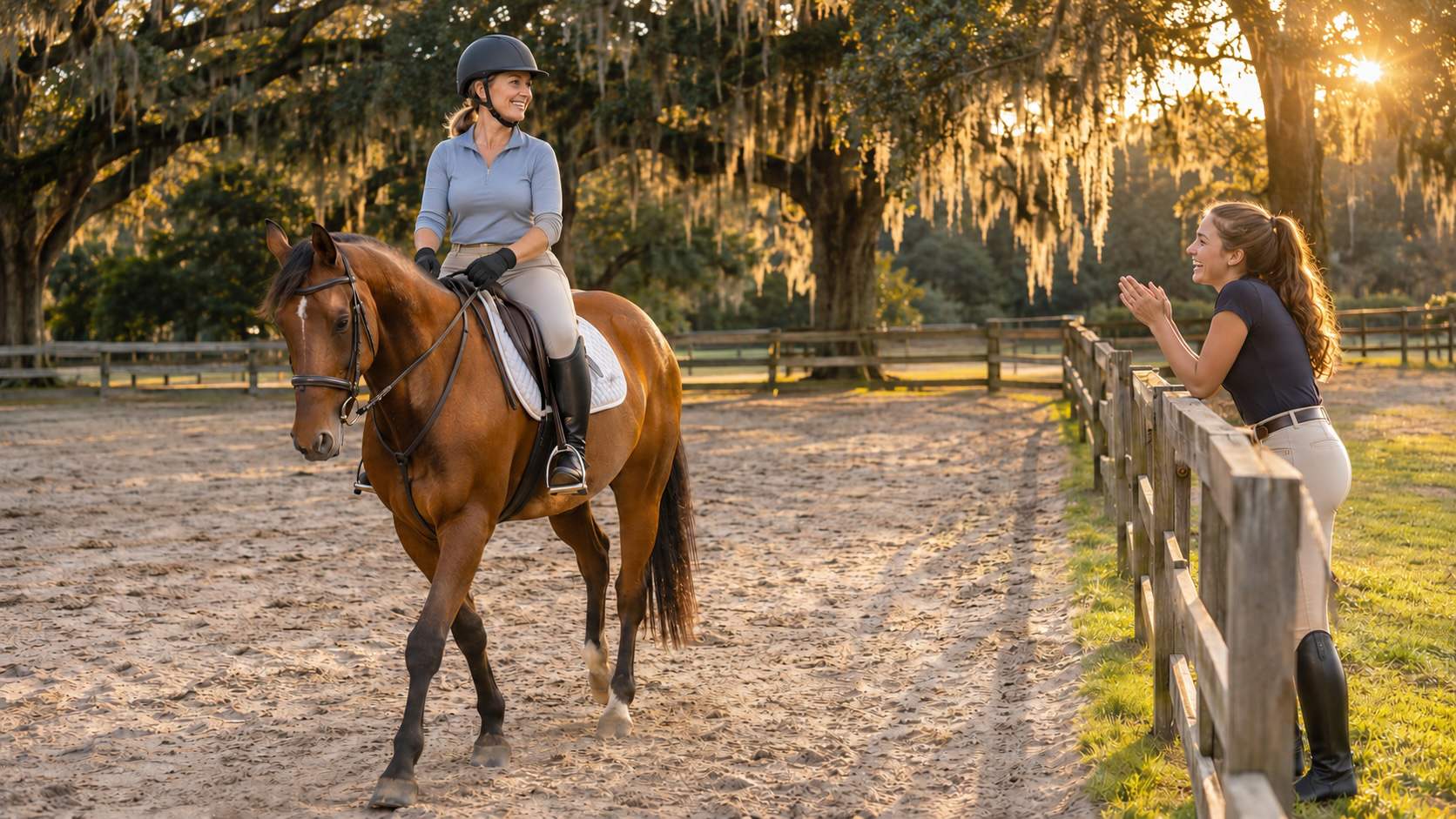
You don’t have to stay on the bleachers forever. Taking lessons alongside your kid can open up a whole new language between you: comparing notes in the car, laughing about sore legs, cheering each other on from the rail for once instead of just one direction.
Just do it with care. Ask your kid how they feel. Keep their barn feeling like theirs. Let them be the expert. And give yourself the same patience you’ve given them all these years.
Funny thing: so many of us who come to horses through our kids end up loving them just as much. My husband wasn’t a horse kid either, and look how that turned out.
Have you started riding alongside your kid, or are you still working up the nerve? Tell me in the comments: what was the first thing your kid “taught” you at the barn?