Here’s the honest truth about the night before your first riding lesson as a grown-up: you will try on every pair of pants you own. You’ll stand in front of the mirror in jeans, then leggings, then those yoga pants with the hole you swear nobody can see, and wonder if the barn people are going to take one look at you and know you have no idea what you’re doing.
They won’t. Or, okay, they might know you’re new — but every single person at that barn was new once. And what you wear to that first lesson matters a lot less for looking the part and a lot more for staying safe and comfortable enough to actually enjoy it.
So many of us barn moms spend years watching our kids ride before we finally work up the nerve to get on ourselves. I took riding lessons as a teenager — I wanted to be a three-day eventer so badly I had pictures hung all over my room — and these days I love trail riding and still ride sometimes. And here’s a little secret from our family: from a very young age, my daughter started wearing two different socks to the barn, and she still does to this day. I think it’s so fun, and honestly, it saves me from hunting for two socks that match. Proof that not everything has to be perfect to ride.
Let’s talk about what you actually need for day one, what can wait, and what you should absolutely not spend money on yet.
This post contains affiliate links. If you buy through them I may earn a small commission at no extra cost to you.
👢 Not sure what to buy (when you’re ready)?
I keep a running list of riding basics — breeches, boots, helmets and gloves — all in one place so you don’t have to wade through a thousand options.
First, Call the Barn (Seriously)
Before you buy a single thing, ask your instructor or the barn office three questions:
- Do you have loaner helmets? Many lesson programs do, and some require you to use one of theirs or bring your own that meets current safety certification.
- What footwear do you require? Some barns are strict about boots with a heel. Some are fine with a sturdy shoe with a small heel for a first lesson.
- English or Western? It changes what’s comfortable. Jeans can work fine in a Western saddle and be pretty miserable in an English one.
That one phone call can save you money and a whole lot of overthinking. Lesson barns get adult beginners all the time. Nobody will think it’s a silly question — they’d much rather you ask than show up in flip-flops.
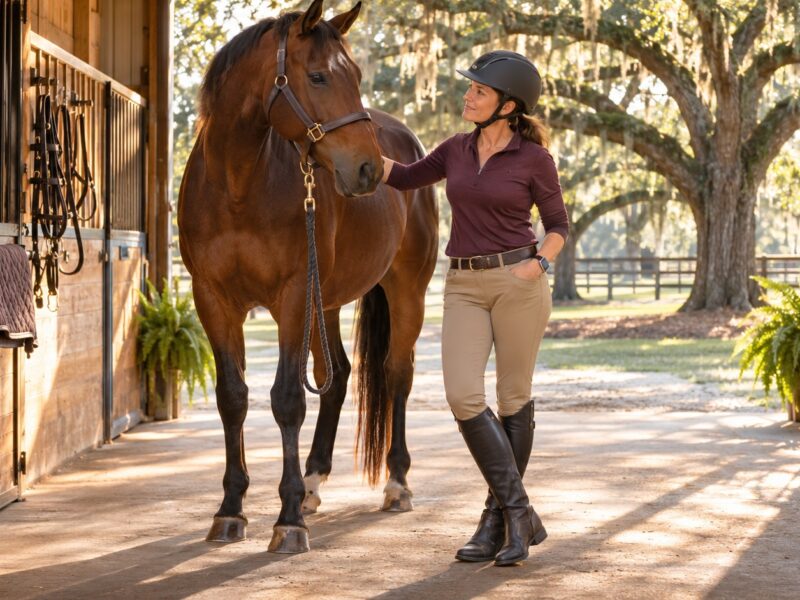
The Day-One Outfit: What Actually Matters
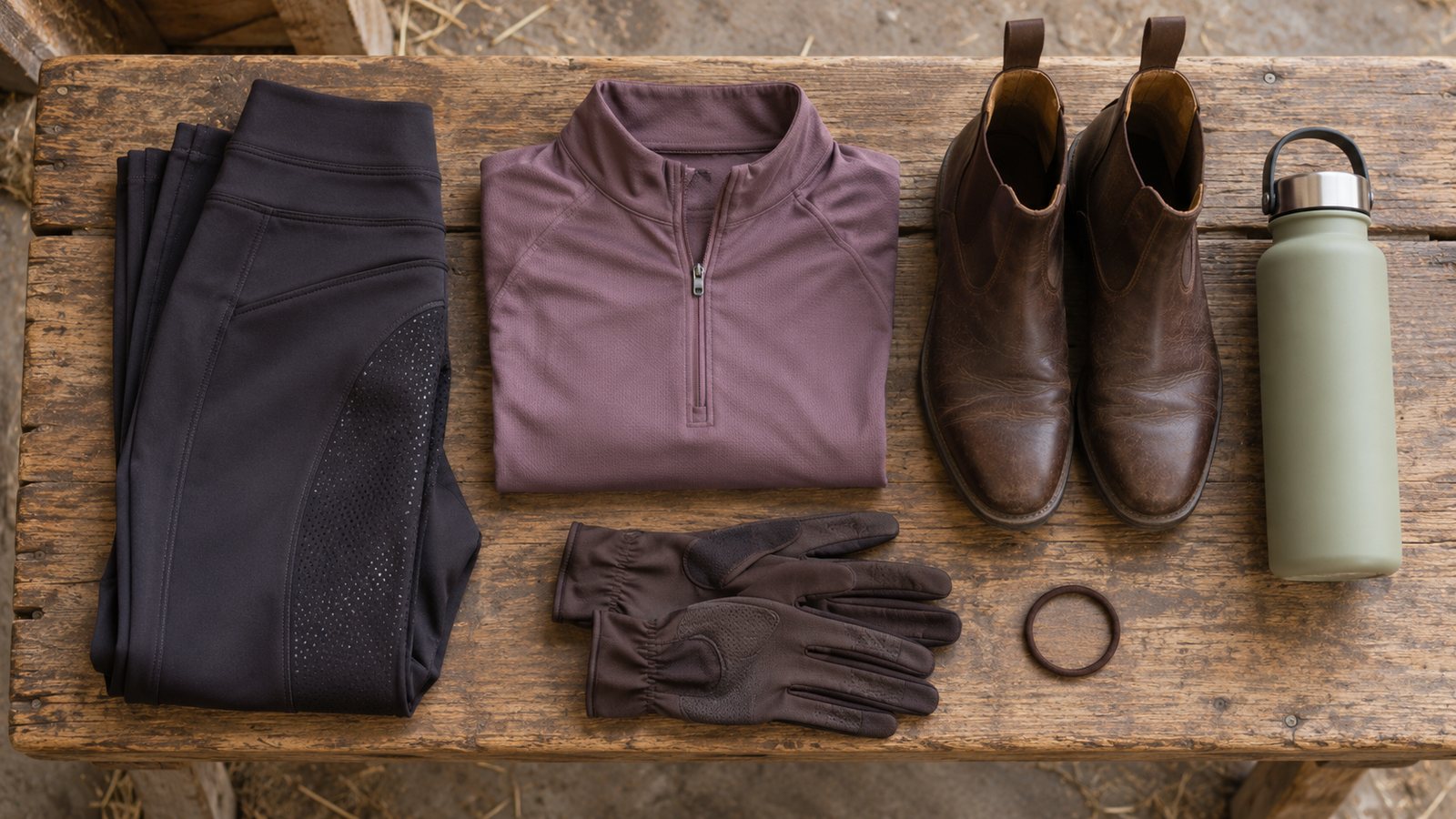
Here’s the good news: for your very first lesson, you probably already own most of what you need.
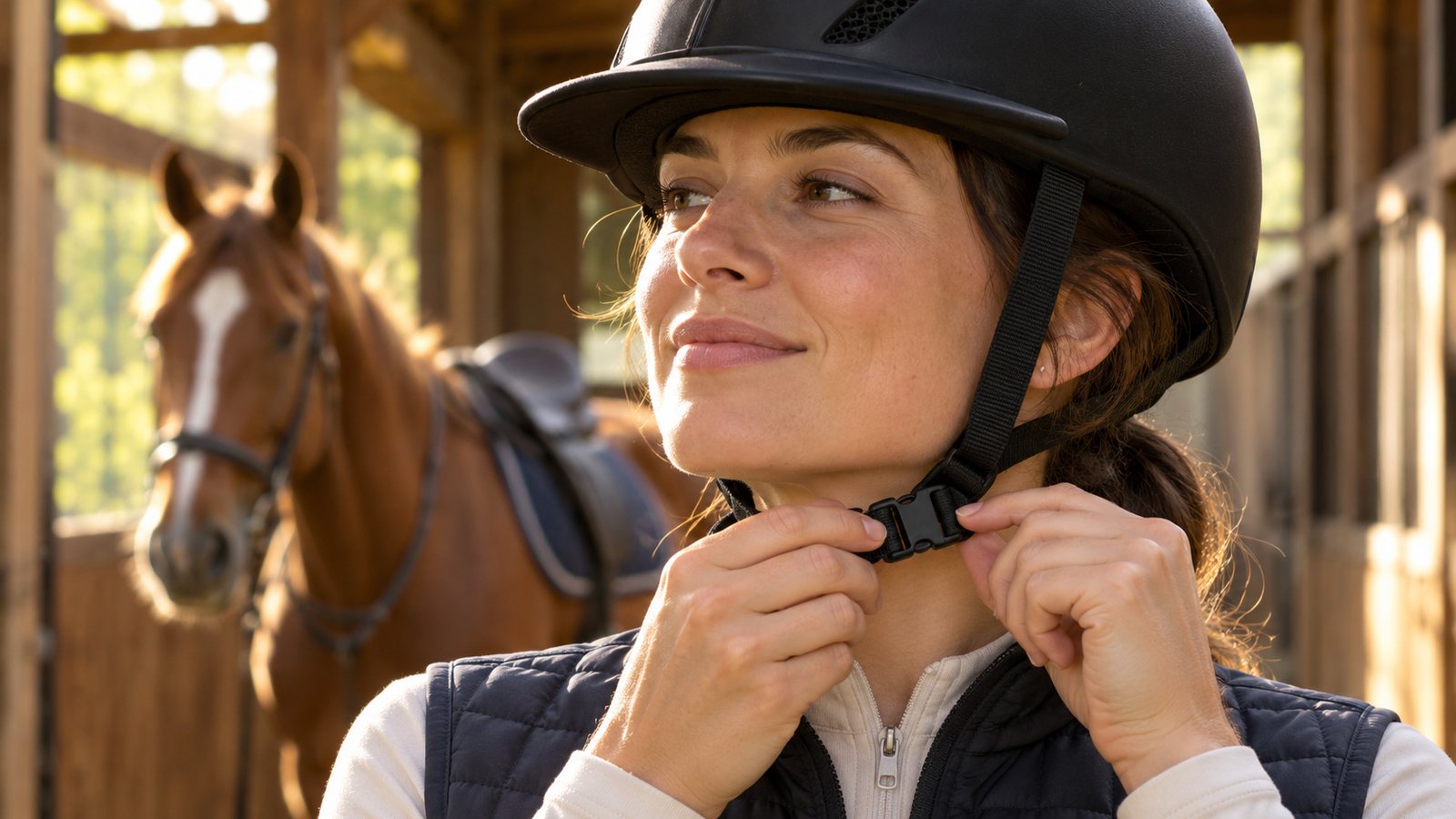
On your head: a certified riding helmet
This is the one item that is never optional. A bike helmet is not the same thing. A riding helmet should be certified for equestrian use and fit snugly — it shouldn’t rock forward or back when you shake your head. If the barn loans you one, let the instructor check the fit. If you buy one later, try it on in person if you can, and follow the manufacturer’s guidance on when to replace it (including after any fall).
On your legs: something stretchy, smooth and snug
Riding tights or schooling breeches are made for this, but for lesson one, snug-fitting leggings or stretchy pants without a thick inside seam can get you through. The enemy is anything that bunches, rubs, or has a chunky seam on the inside of your knee. Stiff jeans in an English saddle can leave you rubbed raw in places you didn’t know could get rubbed.
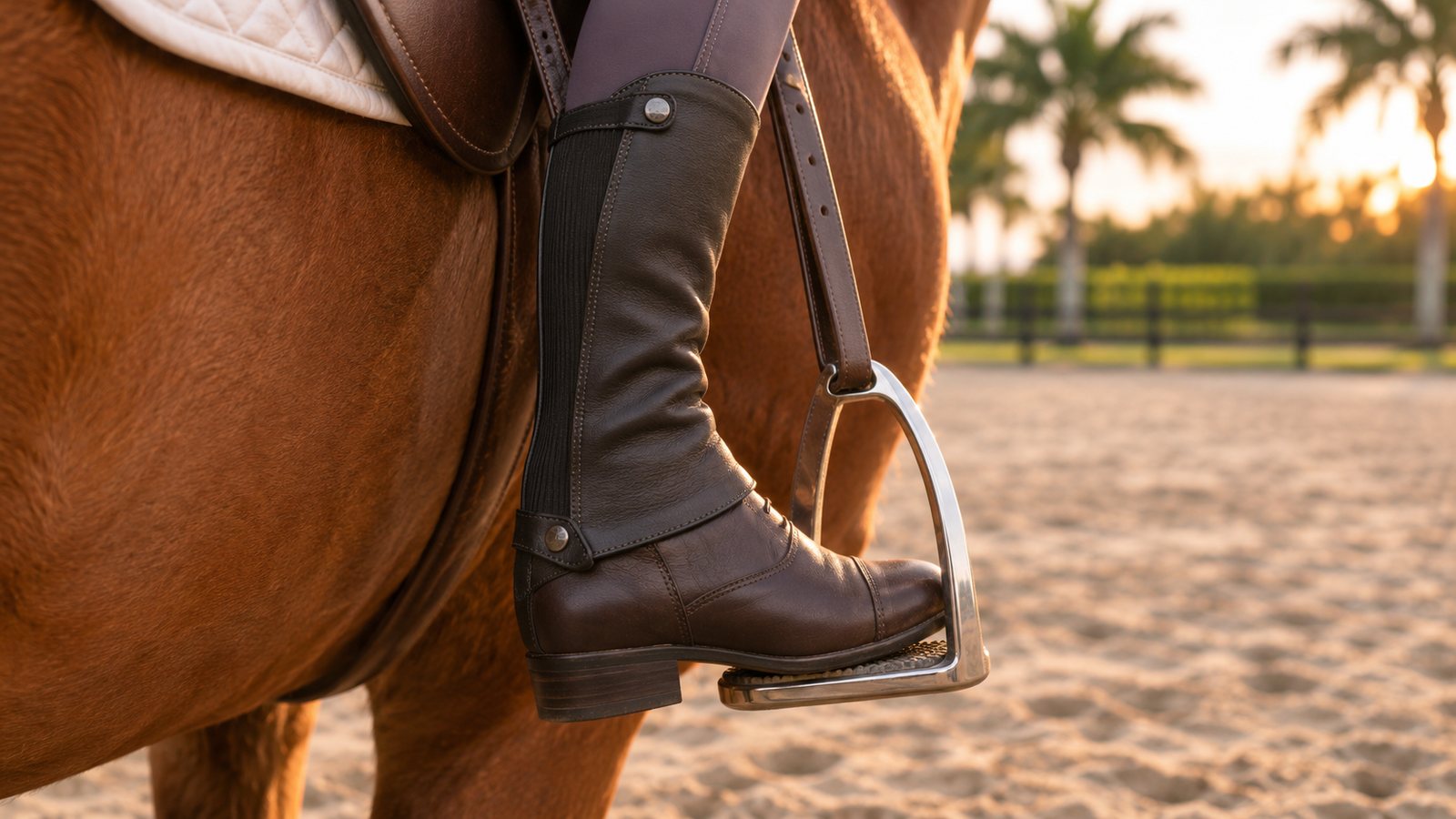
On your feet: a closed-toe boot with a small heel
The heel isn’t fashion — it keeps your foot from sliding all the way through the stirrup. A smooth-soled boot with a small, defined heel is what you want. Skip sneakers with chunky tread, hiking boots with big lugs, and anything open-toed. Horses are large and do not always watch where they step.
On top: fitted and layered
A fitted shirt you can move your arms in, plus a zip-up layer you can take off without taking off your helmet. Loose, flowy tops can catch on tack. And here in Florida, moisture-wicking is your best friend for most of the year.
Your First Lesson Checklist
Screenshot this, or just read it out loud while you’re getting dressed:
| Item | Day One? | Notes |
|---|---|---|
| Certified riding helmet | Must have | Borrow from the barn if they offer loaners |
| Boot with a small heel | Must have | Smooth sole, closed toe |
| Snug, stretchy pants | Must have | No thick inner seams |
| Fitted top + light layer | Must have | Nothing loose or flowy |
| Gloves | Nice to have | Thin garden gloves work in a pinch |
| Sports bra (if you wear one) | Trust me | The trot is a lot of bouncing |
| Water, sunscreen, bug spray | Must have | Leave them in the car or at the mounting block area |
| Half chaps | Later | Great once you’re riding regularly |
| Breeches, tall boots, the fancy stuff | Wait | Wait until you know you’re sticking with it |
Also leave at home: dangly earrings, rings that can catch, scarves, and anything in your back pocket. Your phone can stay in the car or in a zipped pocket if the barn allows it.
What Not to Buy Yet
I know the feeling. You book the lesson, you get excited, and suddenly you’ve got eleven tabs open with matching saddle pads and sparkly helmet covers. Close the tabs. Here’s why:
- You don’t know your discipline yet. English and Western gear are pretty different. Give yourself a few lessons to see where you land.
- You don’t know what fits your body in the saddle. Breeches that feel great walking around a store can feel completely different after an hour of posting trot.
- Tall boots need real fitting. They’re one of the biggest purchases in a riding wardrobe, and they’re worth getting right later — not rushing now.
- Barns are full of hand-me-downs. Ask around. So many of us have a bin of outgrown or barely used gear we’d love to see go to a good home.
Once you’re a few lessons in and know you’re hooked (you will be hooked), upgrade in this order: your own helmet, then proper paddock boots, then a couple pairs of riding tights or schooling breeches. That’s the core. Everything else is extra. If you want the bigger-picture rundown of lesson wear versus show-ring wear, I break it down in What to Wear Horseback Riding: From the Show Ring to the Lesson Barn.
The Part Nobody Talks About: Feeling Like You Don’t Belong
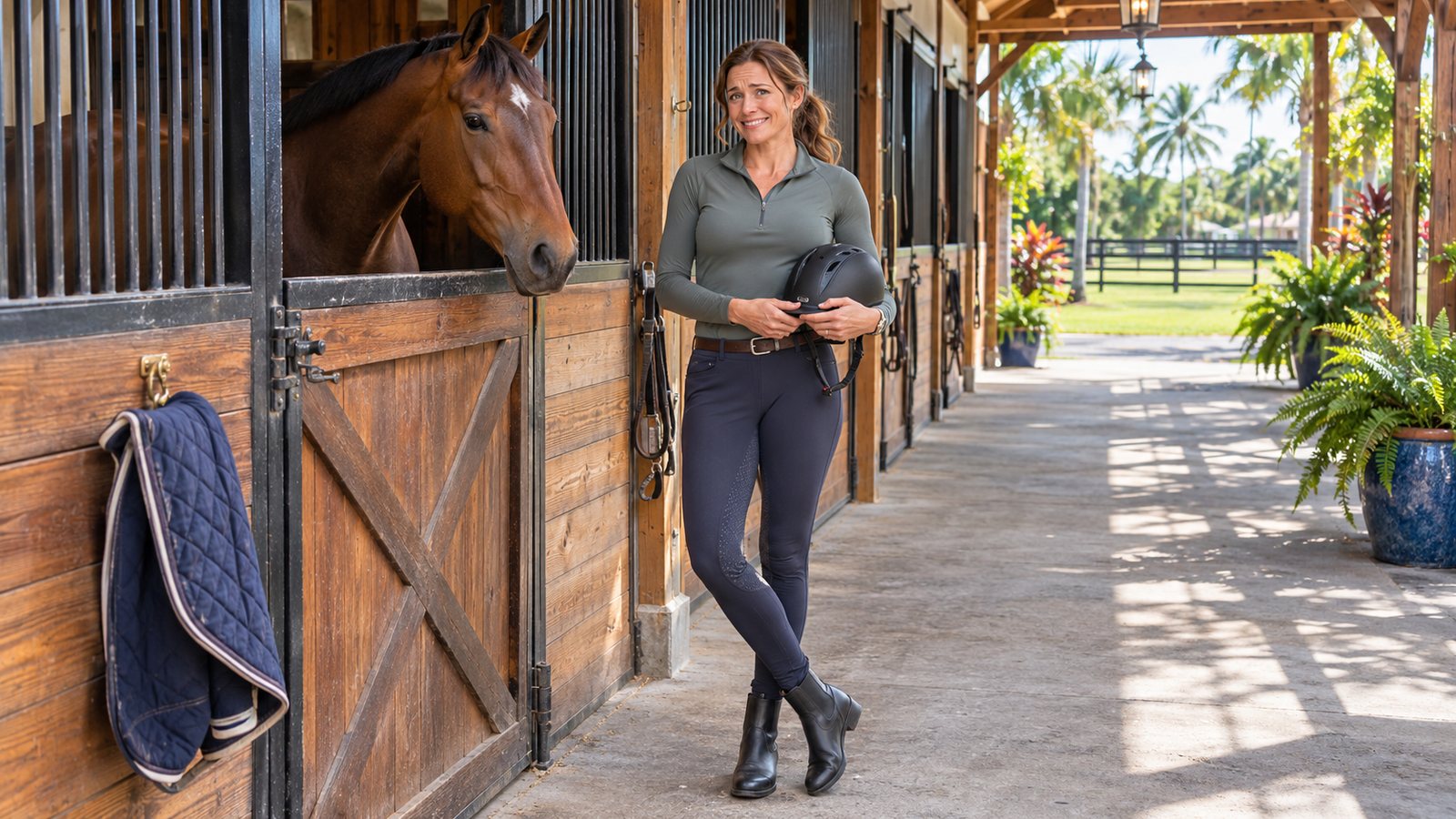
Let’s be real for a second. A lot of the clothing anxiety isn’t really about clothes. It’s about walking into a barn full of people who seem to know exactly what they’re doing — often including your own kid — and feeling like the oldest, least coordinated person there.
Here’s what I’ve seen over and over at the barn: nobody is watching your outfit. The instructor is watching your heels, your hands and whether you’re breathing. The other riders are busy with their own horses. And the horse? The horse truly does not care whether your leggings came from a tack shop or a big-box store.
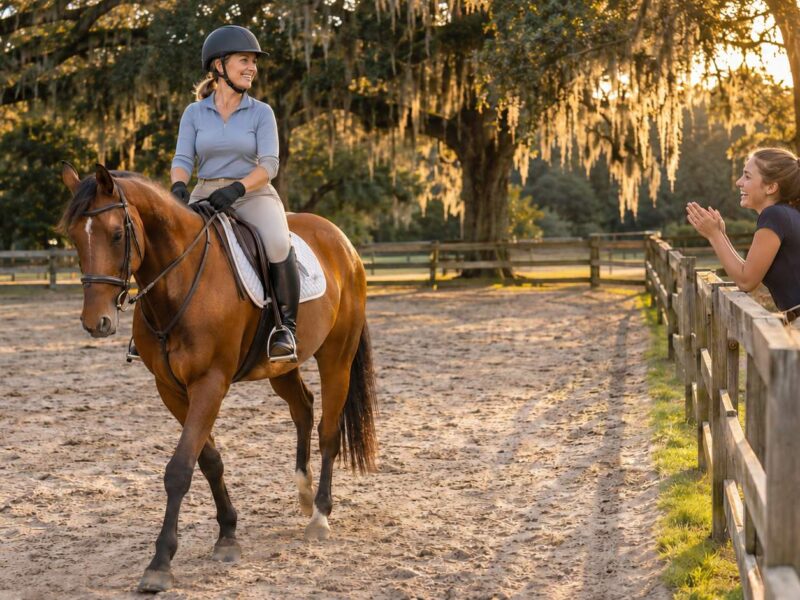
Riding as an adult takes guts. You’re choosing to be a beginner at something on purpose, in front of people, on top of an animal that weighs a lot more than you. That’s worth being proud of before you even put your foot in the stirrup. If you need a little more encouragement, read Riding as an Adult Beginner: It’s Never Too Late and Riding Alongside Your Kid: When Barn Moms Start Taking Lessons Too.
I’ll never forget meeting a 50-year-old woman and watching her take her very first riding lesson. She was so scared. But everyone at the barn showed her so much love and encouragement. Just a couple of years later, she’s competing at a high level. If she can start at 50, you can start right where you are.
The Bottom Line
For your first riding lesson as an adult, you need a certified helmet (borrowed is fine), a boot with a small heel, snug stretchy pants and a fitted top. That’s it. Call the barn first, keep your wallet closed until you know you’re sticking with it, and give yourself permission to be a beginner.
The outfit doesn’t make you a rider. Showing up does. And you already did the hardest part by booking the lesson.
Are you an adult rider, or thinking about becoming one? What did you wear to your first lesson — and what do you wish someone had told you? Tell me in the comments!