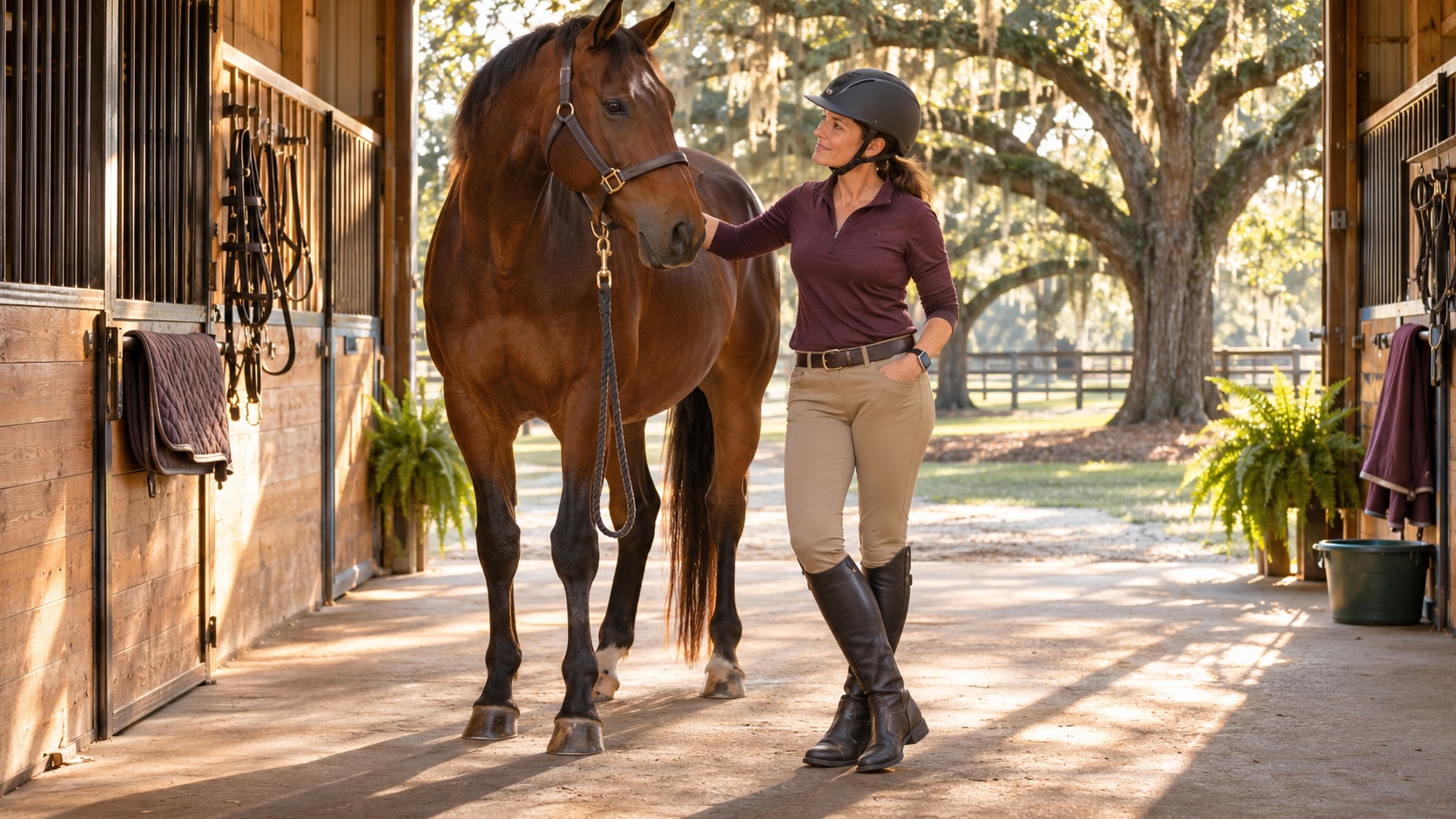
Here’s how it usually happens. You’ve been taking lessons for a while. You’ve got a favorite lesson horse. You’ve started saying “my” horse when you talk about him, even though he very much belongs to the barn and also lets three other people ride him on Thursdays. And then one night, around 11 p.m., you find yourself scrolling horse sale listings in bed like it’s a perfectly normal thing to do.
So many of us adult riders hit this moment. The lessons aren’t quite enough anymore. You want more saddle time, more barn time, a horse that’s yours. And the big question shows up: do you lease, or do you buy?
There’s no one right answer. But I can walk you through the honest version of this decision, the one that isn’t written by someone trying to sell you a horse. And if you ride at the same barn as your kid, talk it through with them too (more on that in riding alongside your kid).
If you want my opinion up front: leasing a horse is almost always a good place to start. And here’s something a lot of people don’t realize: if the lease goes well and you fall in love, you might be able to buy that horse down the road. Ask the owner if that could ever be an option.
Thinking about a horse of your own?
My Barn Management Spreadsheet helps you keep track of board, farrier, vet visits, and everything else in one place, whether you lease or buy. It’s a great reality check before you commit.
First, What Does “Leasing a Horse” Even Mean?
If you’re newer to the horse world, leasing can sound mysterious. It’s basically renting time with a horse that someone else owns. But there’s no single standard version, and that’s where people get confused.
A partial (or half) lease usually means you get to ride the horse on certain days each week, and you share some of the costs with the owner. The owner, or another leaser, rides on the other days.
A full lease usually means the horse is yours to ride and care for as if you owned him, for a set amount of time. You typically cover most or all of his day-to-day costs, but you don’t own him and you can’t sell him.
An in-barn lease means the horse stays at his current barn, usually with your trainer nearby. An off-site lease means the horse moves to where you board.
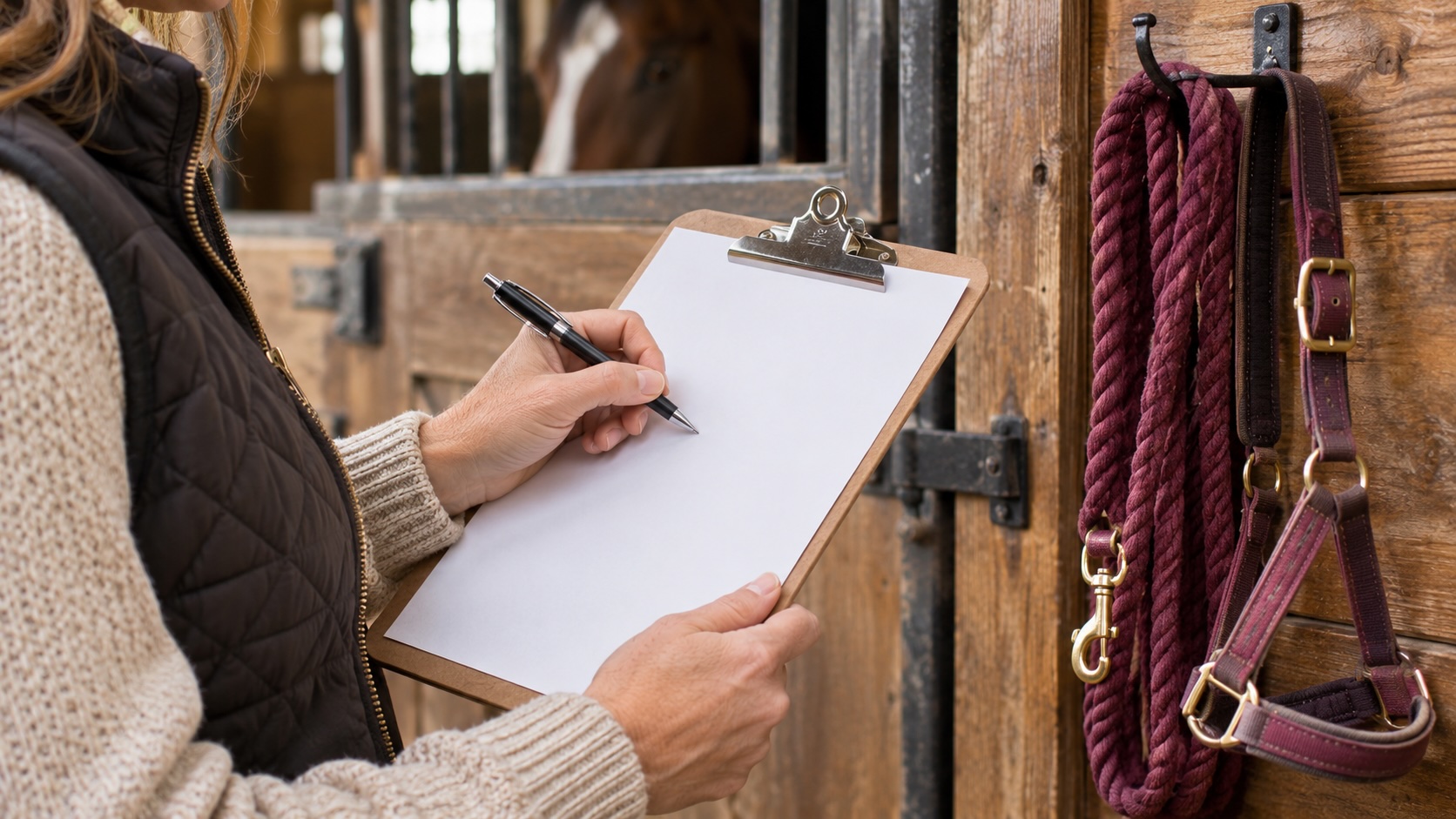
Every lease is different. Who pays for the farrier? Who pays if he needs the vet? Can you show him? Can your trainer ride him? All of that gets worked out between you and the owner, and it should be in writing.
Why Leasing Is Often the Smart First Step for Adult Beginners
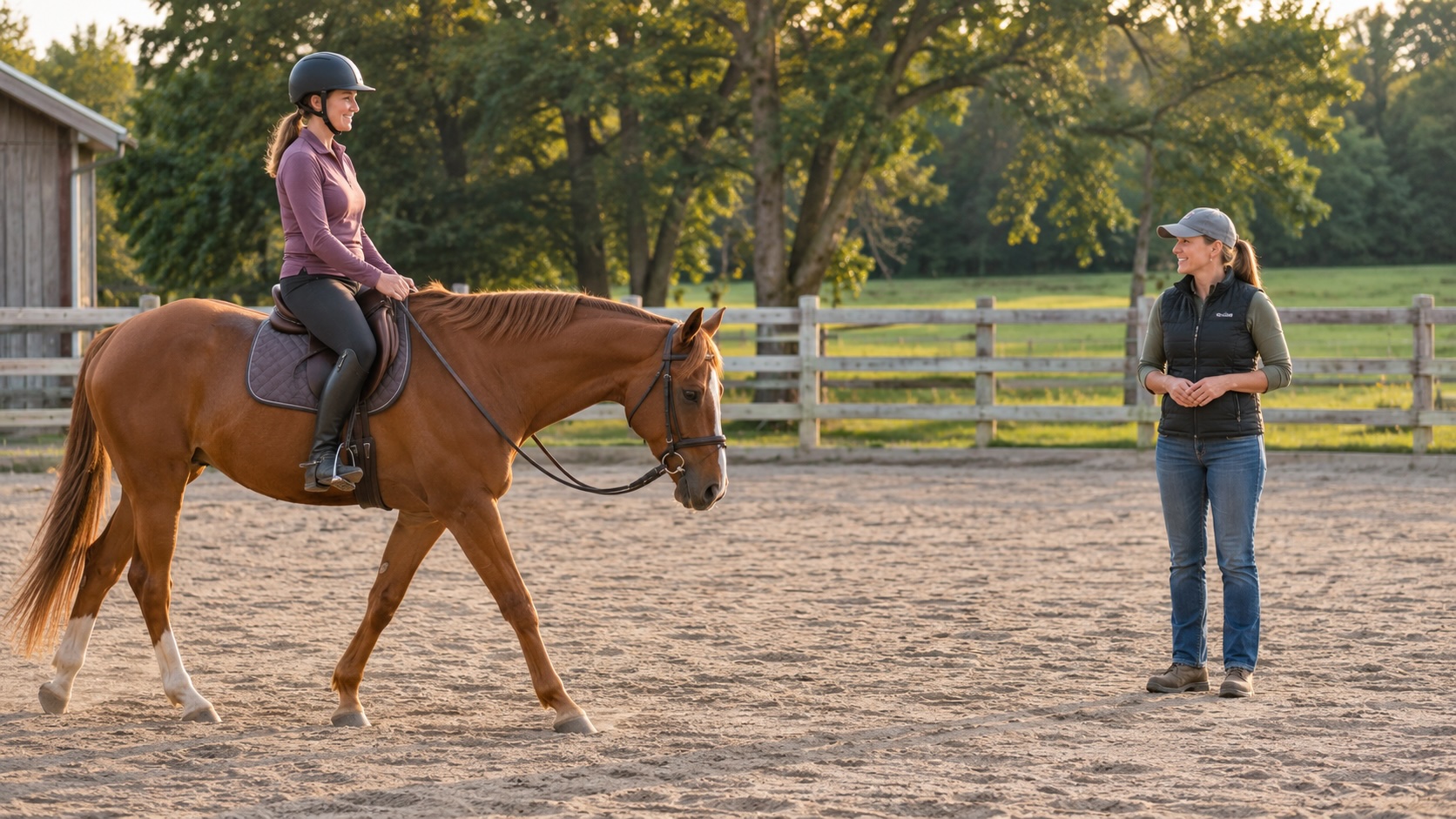
Here’s the honest truth: as adult beginners, we’re still figuring out what kind of rider we are. That’s not a bad thing. It’s just true.
Maybe you think you want to jump, and six months in you realize you’d be perfectly happy doing flatwork and the occasional trail ride for the rest of your life. Maybe you think you want a big fancy warmblood, and then you ride a steady little Quarter Horse who makes you feel safe for the first time, and you fall in love.
A lease lets you find that out without the commitment of owning. Some of the things leasing does really well:
- You learn what horse care actually involves. The schedule, the farrier visits, the random Tuesday-night abscess. It’s real, but with a safety net.
- You get more saddle time. More rides on the same horse is one of the best ways to build skill and confidence.
- You can walk away. If your life changes, your interests change, or the horse just isn’t the right fit, a lease has an end date. Owning doesn’t.
- You often get a more experienced horse. Lots of owners lease out older, well-schooled horses that are exactly what a nervous adult needs.
If you’re still in the early lesson stage, my post on riding as an adult beginner is a good place to start before you think about either option.
When Buying Might Make More Sense
Leasing isn’t always the right call. Sometimes buying really is the better path, and it’s okay to admit that.
Buying can make sense when you’ve been riding consistently for a while and know what you like. It can make sense when you’ve found a horse you truly connect with and the owner wants to sell, not lease. It can make sense when you want full control over his care, training, and future. And for a lot of us, it makes sense when we want the relationship to last, not end on a date written in a contract.
But here’s the part the sale ads don’t mention: the purchase price is often the smallest part of owning a horse. Board, feed, hay, farrier, vet, dental, vaccines, tack, insurance, and the emergencies you can’t plan for. Those keep coming every single month, for years. I wrote a whole post on the real cost of owning a horse if you want to see it all laid out. Costs vary a lot depending on where you live and how you board, so ask your barn and your vet for real local numbers before you decide anything.
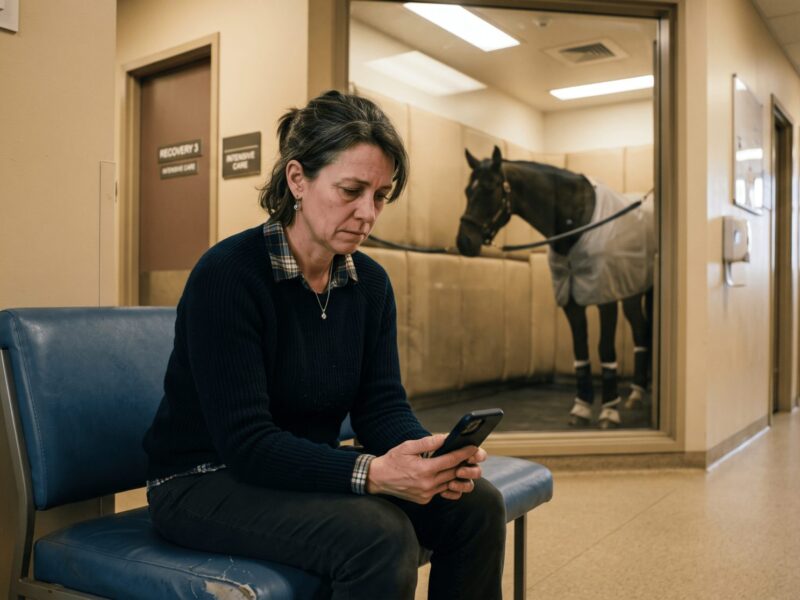
And please, please think about insurance. When our warmblood gelding Comit got EPM, he spent 40 days in the vet hospital, and in the end we had to put him down. It was heartbreaking. But insurance kept our family out of debt during one of the hardest times we’ve been through. I never want anyone to be in that hospital waiting room also panicking about money. My post on horse insurance explained walks through what to ask about.
Lease vs. Buy: A Side-by-Side Look
Here’s a quick comparison to help you sort through your own situation. Every lease and every purchase is different, so think of this as a starting point for a conversation with your trainer, not a rulebook.
The Questions to Ask Yourself Before You Decide

This is the part where I’d hand you a cup of coffee and ask you to be really honest with yourself.
How much time do I actually have? Not how much time you wish you had. If you already spend half your life at the barn because of your kid, adding your own horse might fit right in. Or it might be the thing that breaks the schedule.
What happens if this horse can’t be ridden for months? Horses get hurt. They need time off. With a lease, that may or may not be your problem. With ownership, it absolutely is.
What does my trainer think? A good trainer knows your riding better than you do right now. Ask them directly what kind of horse would help you grow, and whether they think you’re ready. Then listen, even if it’s not what you want to hear.
Who would I be doing this for? Sometimes the pull toward buying is about wanting to belong, wanting to keep up, or wanting to finally have the thing we dreamed about as kids. Those are real feelings, and they’re allowed. Just make sure the decision fits your life now, too.
Is this horse a good fit for my whole family? This is where a lease really shines, especially if your child rides too. It’s a chance to see whether the horse is a good fit for your family and your child, and how committed everyone really is, not just to riding, but to the everyday work of taking care of a horse.
The Bottom Line
For most adult beginners, a lease is a gentle, honest way to find out what horse ownership really feels like, without betting everything on it. But if you’ve done the homework, talked to your trainer, looked hard at the real costs, and found a horse you can’t stop thinking about, buying can be one of the best decisions you’ll ever make.
Either way, you don’t have to rush. The horses will still be there. And the fact that you’re thinking this carefully? That already tells me you’ll be a good partner for whichever horse ends up being yours, even if it’s just for a season.
Did you lease before you bought, or did you jump straight in? Tell me in the comments: what’s one thing you wish someone had told you before your first horse?