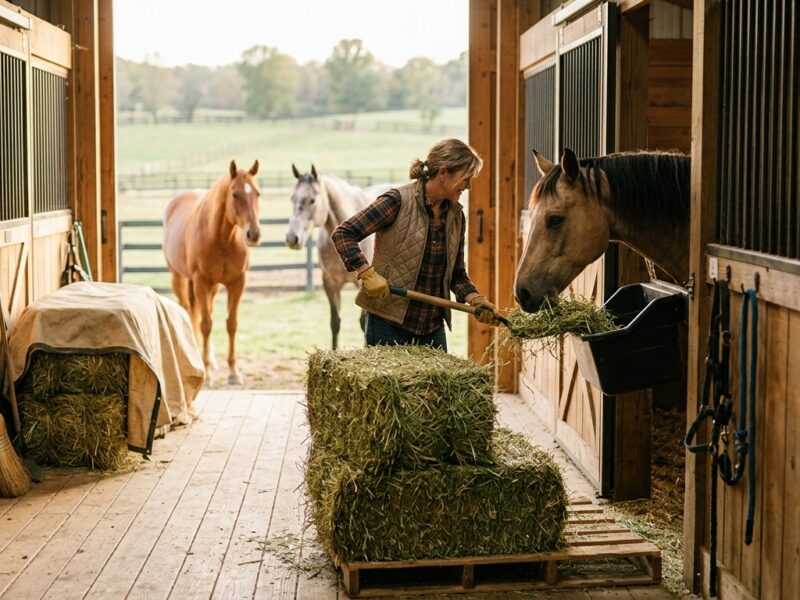

Welcome back to That Barn Mom! If you are anything like me, your horse’s health, happiness, and well-being occupy about ninety percent of your daily brain space. We constantly worry about their feed, analyze the shape of their hooves, and panic over every little scrape they bring in from the pasture. Can you truly make sure your horse is healthy without having the right care items on hand? The short answer is no. But the good news is that keeping your tack room stocked doesn’t mean you have to make a two-hour round trip to the feed store every time you run out of vet wrap.
Over the years, I’ve discovered that Amazon is an absolute lifesaver for horse health care essentials. From high-quality nutritional supplements to heavy-duty barn hygiene supplies, having these items delivered right to my door (often the next day) has changed the way I manage my barn. It’s incredibly important to take good care of your horse to keep them healthy and happy, and having a well-stocked supply kit is your first line of defense.
In this comprehensive guide, I am going to walk you through the absolute essential health care products every horse owner needs. Rather than skimming over a dozen different topics, we are going to dive deep into the five areas that actually matter most in your day-to-day barn life: proper feeding and supplementation, foundational hoof care, wound management and first aid, targeted parasite control, and barn hygiene. Let’s learn about caring for your horse’s health together, using the exact products I trust in my own barn.
Equine Nutrition: Feeding Your Horse Right
Feeding your horse the right way is the cornerstone of their health, longevity, and overall happiness. It is not just about tossing a flake of hay and a scoop of grain into the stall; it involves knowing what essential nutrients they need and how to best feed them for their specific age, workload, and metabolic status. Proper nutrition impacts everything from the shine on their coat to the strength of their hooves and their mental focus in the arena.
The Essential Nutrient Breakdown
Horses naturally require a highly balanced diet to keep their complex digestive systems running smoothly. Whenever I am evaluating my feeding program, I always look at these core pillars:
- High-Quality Forage: This should make up the vast majority of your horse’s diet. Grass, hay, and fibrous foods keep the gut moving and prevent ulcers.
- Proteins: Essential for growth, tissue repair, and building healthy topline muscle.
- Carbohydrates & Fats: Carbs provide the immediate energy crucial for stamina, while fats provide slow-burning energy, help absorb essential vitamins, and keep the coat incredibly shiny without making the horse “hot.”
- Vitamins and Minerals: These are an absolute must-have for skeletal strength, joint health, and immune system support.
- Fresh Water: Absolutely nothing works without water. A horse can drink anywhere from 5 to 10 gallons a day, and staying hydrated prevents deadly impaction colic.
My Go-To Equine Supplements
Even with the best hay and grain, some horses need a little extra help to fill in nutritional gaps or boost their overall health. Here are the top supplements I rely on and keep heavily stocked in my feed room. You can easily grab these through my recommended lists.
Hoof Care: Keep Those Feet Healthy
There is an old, deeply true saying in the equestrian world: “No hoof, no horse.” Your horse’s feet bear the massive burden of their weight and are absolutely critical for their health, soundness, and movement. It is key to keep the hooves in pristine condition to prevent big issues that could sideline your riding for months. This part of horse ownership is non-negotiable.
Routine Daily Maintenance
Setting up a regular hoof care routine is crucial. Daily, you must clear out the hooves with a sturdy pick to get rid of packed dirt, mud, and hidden rocks that can cause bruising. This daily check also lets you spot loose shoes or early signs of thrush.
Farrier Scheduling
Trimming or resetting shoes every six to eight weeks keeps the hooves in the optimal shape. Never stretch this timeline to save a few dollars; overgrown hooves strain tendons and completely throw off your horse’s natural balance.
Dealing with Common Hoof Problems
Even with the best care, hoof issues like thrush and cracks can crop up, especially during the muddy spring and fall seasons. Thrush is a bacterial infection in the frog that smells notoriously foul. If you catch a whiff of it, you need to act fast. Keeping the area impeccably clean and dry is step one, followed immediately by using targeted thrush treatments like sprays or liquid soaks.
Abscesses are another terrifying but common issue. One day your horse is perfectly fine, and the next they are dead lame, looking like they have a broken leg. Once a vet or farrier helps you locate and drain the abscess, using Epsom salt poultices and antibacterial wraps will pull the infection out and provide immense relief. For dry, brittle hooves that are prone to cracking in the summer heat, investing in quality hoof dressings and conditioning oils will promote elasticity and protect the hoof wall. I keep a dedicated tote of my favorite hoof picks, brushes, and thrush remedies stocked from Amazon at all times.
Wound Management & Equine First Aid
Let’s be honest for a moment: horses are incredibly active, large creatures that somehow manage to find the one single sharp edge in an empty, padded stall. They are prone to scrapes, pasture bites, wire cuts, and deep slashes. Having a rapid-response wound care strategy is not optional; it is a necessity to help them heal fast and prevent massive infections or proud flesh.
Building Your Emergency Supply Kit
The absolute worst time to realize you are out of medical supplies is when your horse comes in from the pasture bleeding at 8:00 PM on a Sunday. Keeping a fully stocked first aid kit ready is crucial. My barn emergency bin always has digital thermometers, blunt-tipped scissors, tweezers, a mountain of sterile gauze, and specific topical treatments.
Here is exactly how I handle minor cuts and the products I use to do it:
After I clean the wound thoroughly with an antiseptic scrub or my Vetericyn spray, I slather on the Silver Honey. This stuff is incredible—it combines the natural antimicrobial power of Manuka honey with MicroSilver BG. Finally, I cover the wound with a non-stick sterile pad and wrap it securely with Vet Wrap. It is absolutely vital to keep an eye on the healing process daily, and of course, call your vet immediately if there is massive swelling, heat, or deep punctures near a joint.
Deworming: Protecting Your Horse from Internal Parasites
Dealing with internal parasites isn’t the most glamorous part of being a barn mom, but deworming your horse effectively is vital to their systemic health. If left unchecked, parasites steal essential nutrients, leading to drastic weight loss, poor coat condition, lethargy, and in severe cases, life-threatening colic. Knowing the enemy is the first step.
Horses can pick up various internal parasites from the pasture, including large and small strongyles, roundworms, tapeworms, and botfly larvae. The old-school method of simply giving a random paste every eight weeks is outdated and leads to parasite resistance. Today, for deworming to work safely, you need to use a targeted strategy. It is best practice to have your vet perform a Fecal Egg Count (FEC) test twice a year to see exactly what parasites are present and if your horse is a “high shedder” or “low shedder.” Then, you can strike back with the appropriate chemical class.
Top Rated Dewormers to Keep in the Med Cabinet
Depending on the season and your vet’s specific advice, rotating through different active ingredients ensures you are hitting all life stages of the parasites. Here are the broad-spectrum heavy hitters I use:
- Zimecterin Gold: This is my go-to broad-spectrum paste. It is highly effective against a massive variety of equine parasites, including tapeworms, bots, and both large and small strongyles.
- Quest Gel: Containing moxidectin, this clear gel is specifically ideal for targeting dangerous encysted small strongyle larvae that hide in the gut wall, as well as bot larvae in the late fall.
- Safeguard Paste: Packed with fenbendazole, this is a very gentle but effective treatment often used in multi-day power-dose protocols to clear out stubborn roundworms and pinworms safely.
Barn Hygiene & Pest Control: Your Horse’s Environment
You can feed the best grain and use the most expensive supplements, but if your horse’s living space is a dirty, fly-infested mess, their health will suffer. Respiratory issues from ammonia buildup and skin infections from biting insects are entirely preventable. Keeping your barn immaculately clean and managing pests is a daily grind, but it pays off in veterinary savings.
Every single day, the routine remains the same: meticulously picking out wet bedding and manure, sweeping the aisles to remove dust and hay chaff, and scrubbing the water buckets so they are clean enough for you to drink out of. But daily mucking isn’t quite enough to stop germs and bugs. During the peak summer months, pest control becomes my primary battle.
Absorbine UltraShield EX Fly Spray
This is the absolute gold standard in my tack room. It is a highly effective, sweat-resistant spray that repels flies, mosquitoes, and ticks for days. I spray down the horses before turnout and even mist the stall walls.
Rocco & Roxie Stain & Odor Eliminator
Ammonia from urine is terrible for a horse’s lungs. I use this professional-strength enzyme spray directly on stubborn wet spots on my stall mats. It literally eats the odor-causing bacteria, leaving the barn smelling incredibly fresh.
Manna Pro Force Fly Spray
When the biting stable flies get out of control in the heat of August, I switch to this heavy-duty, long-lasting formula. It offers fantastic knockdown power in the barn and stables to give the horses immediate relief from stomping.
Stock Up Your Barn Today
Looking after your horse’s health requires dedication, a solid routine, and the right supplies. By focusing on premium nutrition, consistent hoof care, proactive wound management, and a clean environment, you are actively giving your horse the very best life possible. Stop running around to multiple feed stores and panicking when you run out of essentials. You can find all of my hand-picked, thoroughly barn-tested favorites in one easy place.