Recovery and Therapy Products That Help Horses Heal Faster
Hey everyone, Cynthia here! Welcome back to That Barn Mom. If you have spent more than five minutes owning a horse, you know the harsh truth: they are basically giant, lovable toddlers constantly looking for ways to hurt themselves. Whether it is a minor paddock tweak, a strained ligament from a hard weekend run, or just the inevitable stiffness that comes with an aging equine athlete, managing physical recovery is a massive part of barn life. The emotional toll of seeing your heart horse in pain is heavy, and let us be honest—the veterinary bills can stack up at an alarming rate.
Over the years, I have seen hundreds of gadgets, lotions, and high-tech devices promise miracle cures for our horses. It is incredibly easy to fall down the rabbit hole of marketing hype when your companion is uncomfortable and you are desperate for a solution. Today, I want to talk honestly about recovery and therapy products that actually help horses heal faster. We focus specifically on non-invasive tools real horse owners use daily — from cold laser therapy and magnetic boots to the old-school liniments our grandfathers swore by. Let us separate the useful stable staples from expensive paperweights, and discuss what deserves a permanent spot in your tack trunk. Just remember: none of these tools replace your vet — they are meant to support recovery, not diagnose or treat an active injury on their own.
Cold Laser and Red Light Therapy Devices
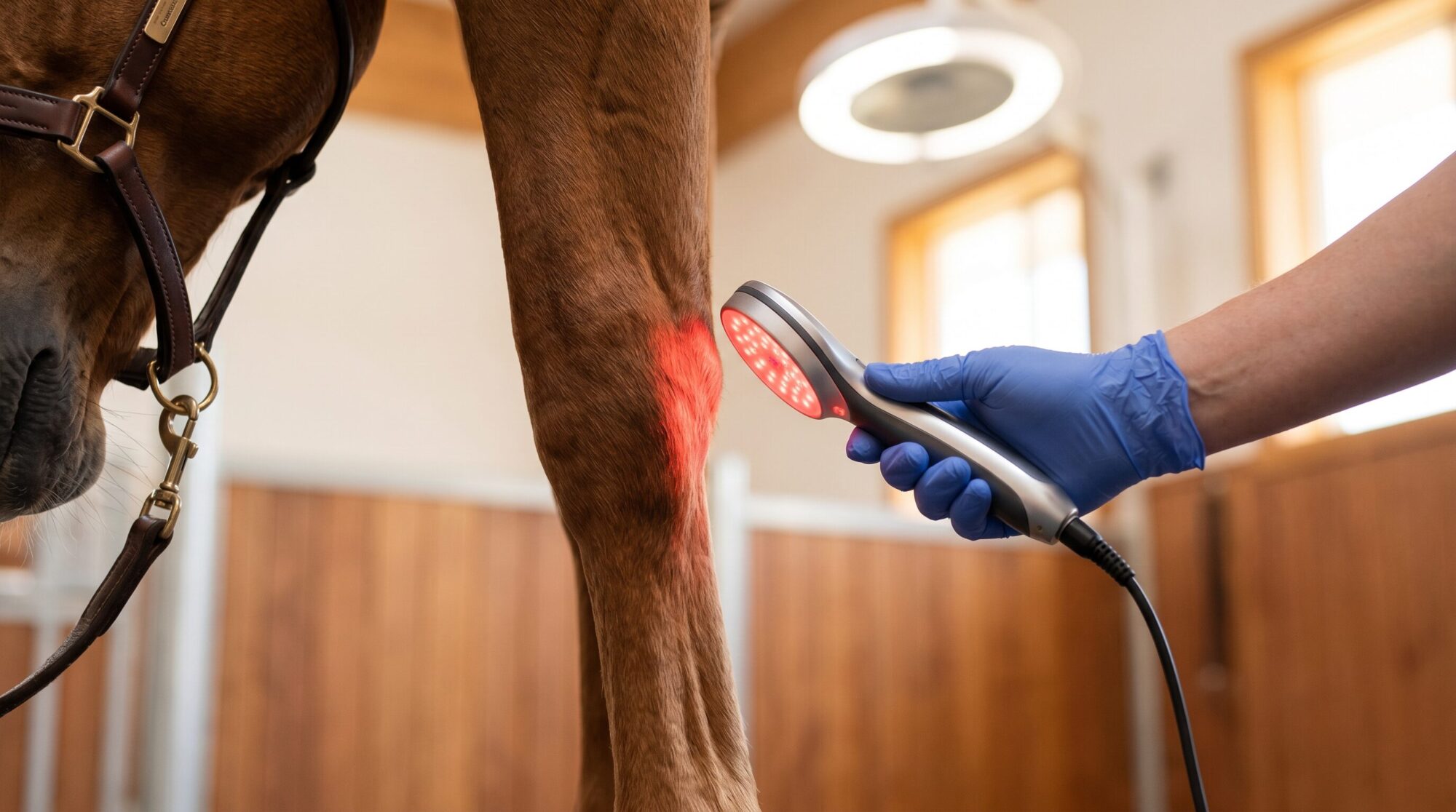
One of the most talked-about advancements in at-home care recently has been low-level laser therapy (LLLT). When we hear the word “laser,” we often think of surgical lasers that produce heat to cut tissue. Cold lasers are different — they emit low-level wavelengths that penetrate the skin without burning or heating the tissue. The goal is something called photobiomodulation (PBM): stimulating cells to produce more ATP (adenosine triphosphate), essentially cellular energy. When cells have more energy, they can repair themselves faster, which can help reduce inflammation and improve localized blood flow.
You’ll see this technology in two tiers: expensive vet-grade lasers costing thousands of dollars, and smaller, portable consumer devices marketed directly to horse owners. The consumer devices typically combine 808nm near-infrared lasers (which penetrate deeper for tendon, ligament, and muscle support) with 650nm red light (which targets the surface layer for wound healing and skin repair). I’ll be honest with you: a handheld device will not magically cure a torn suspensory ligament overnight — nothing but time and veterinary intervention will do that. But for everyday barn ailments, plenty of owners find a portable cold laser worth keeping in the grooming bag for managing minor arthritis stiffness, surface wounds, and post-ride soreness.
Best Practices for Using a Cold Laser
- Start with a clean canvas: Always brush away dirt, mud, and dander from the treatment area. Dirt can scatter the light and reduce penetration.
- Protect the eyes: Never look directly into the laser, and make sure your horse can’t turn around and stare into the beam. Most devices come with protective safety goggles — wear them.
- Use the right contact method: For deep tissue issues like sore backs or tendons, press the device gently but directly against the coat. For open wounds, hold the device about half an inch away to maintain a sterile environment.
- Consistency over duration: Short, frequent sessions (5-10 minutes per area, daily) are far more effective than one long 30-minute session once a week.
Magnetic Therapy Wraps and Blankets
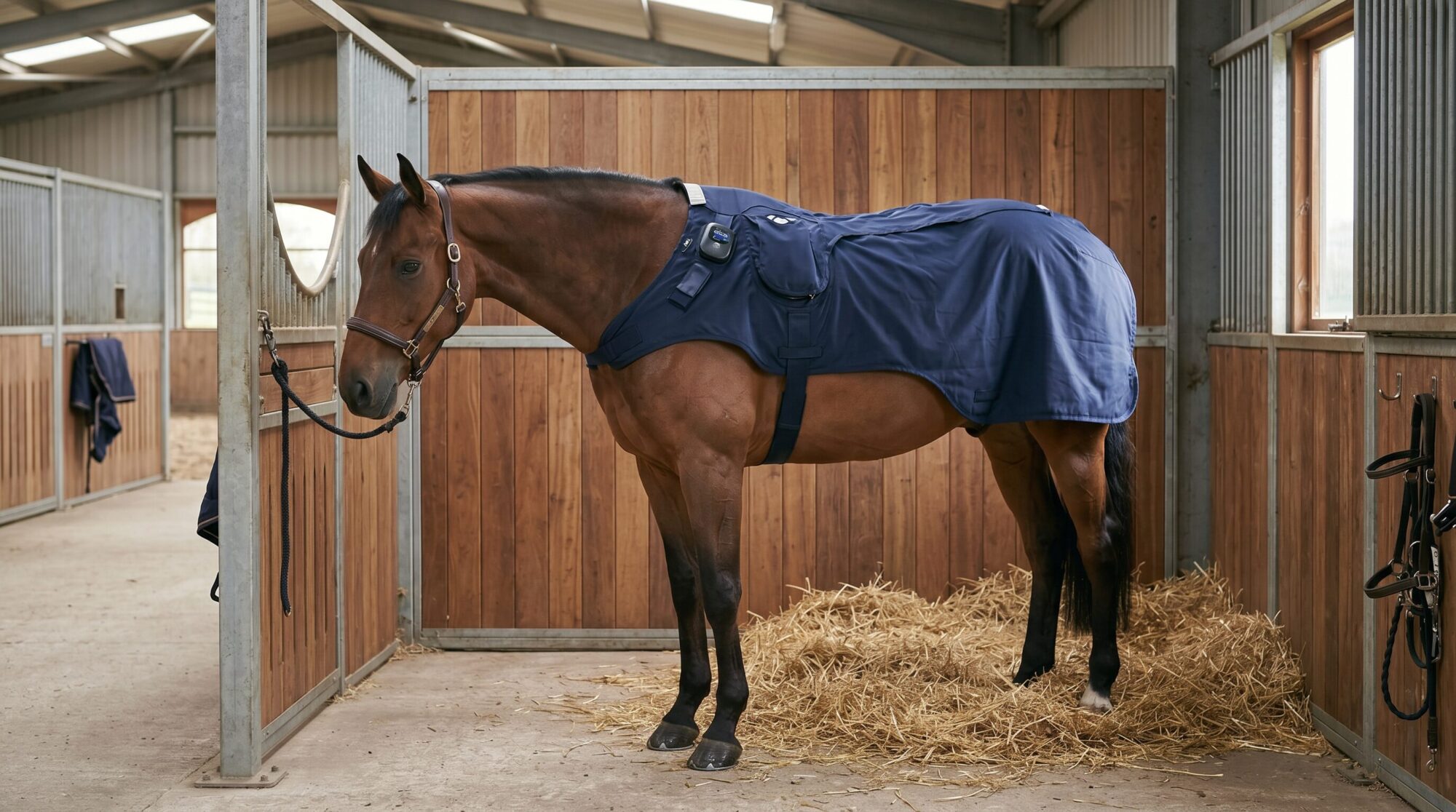
Walk down the aisle of any competitive show barn, and you will almost certainly see a horse standing quietly in magnetic boots or draped in a magnetic sheet. Magnetic therapy has been a stable staple for decades, built on the premise that strategically placed magnets stimulate blood circulation. This increased circulation brings fresh oxygen to fatigued tissues, aiding in reducing inflammation and speeding up the clearance of metabolic waste (like lactic acid) from joints and muscles.
Here is my transparent Barn Mom take: the scientific evidence in equine studies is somewhat mixed, but the anecdotal evidence from professional riders, grooms, and everyday owners is incredibly strong. Plenty of barn moms swear that an older horse who comes out of the stall stiff on chilly mornings moves noticeably looser after overnight magnetic hock boots. Standard magnetic tendon boots are popular for horses with lower leg issues, such as past bowed tendons or windpuffs. Magnetic bell boots can even help with poor hoof growth by encouraging blood flow to the coronary band. Full-body magnetic sheets are also popular for horses that get tight through the back, especially in high-impact disciplines like jumping or barrel racing.
It is worth differentiating between static magnets (the traditional, unpowered magnets sewn into boots) and PEMF (Pulsed Electromagnetic Field) therapy. PEMF uses a battery-powered device to send active, pulsing electromagnetic waves into the tissue. PEMF blankets are much more expensive but offer deeper, more active stimulation. Static magnets are a great, affordable entry point for daily maintenance.
Tips for Introducing Magnetic Therapy
- Start slow: Let your horse wear the boots or blanket for just an hour initially to make sure they don’t get agitated. Some horses feel a tingling sensation as blood flow increases and may try to bite at the gear.
- Monitor for heat: Because magnets increase circulation, they can generate natural body heat. Avoid leaving heavy magnetic wraps on during scorching summer days to prevent overheating the tendons.
- Gradual build-up: Work your way up from one hour to a few hours, and eventually to overnight use (for static magnets only — never leave active PEMF devices on overnight).
Cold Water Therapy and Ice Boots
If we are talking about recovery, no list is complete without mentioning the absolute power of cold therapy. While heat and lasers are great for chronic issues and muscle soreness, ice is your first line of defense for acute injuries and immediate post-workout recovery. When a horse works hard, micro-tears occur in the tendons and ligaments of the lower leg, leading to heat and inflammation. Applying cold causes vasoconstriction (narrowing of the blood vessels), which flushes out metabolic waste and helps stop inflammation in its tracks.
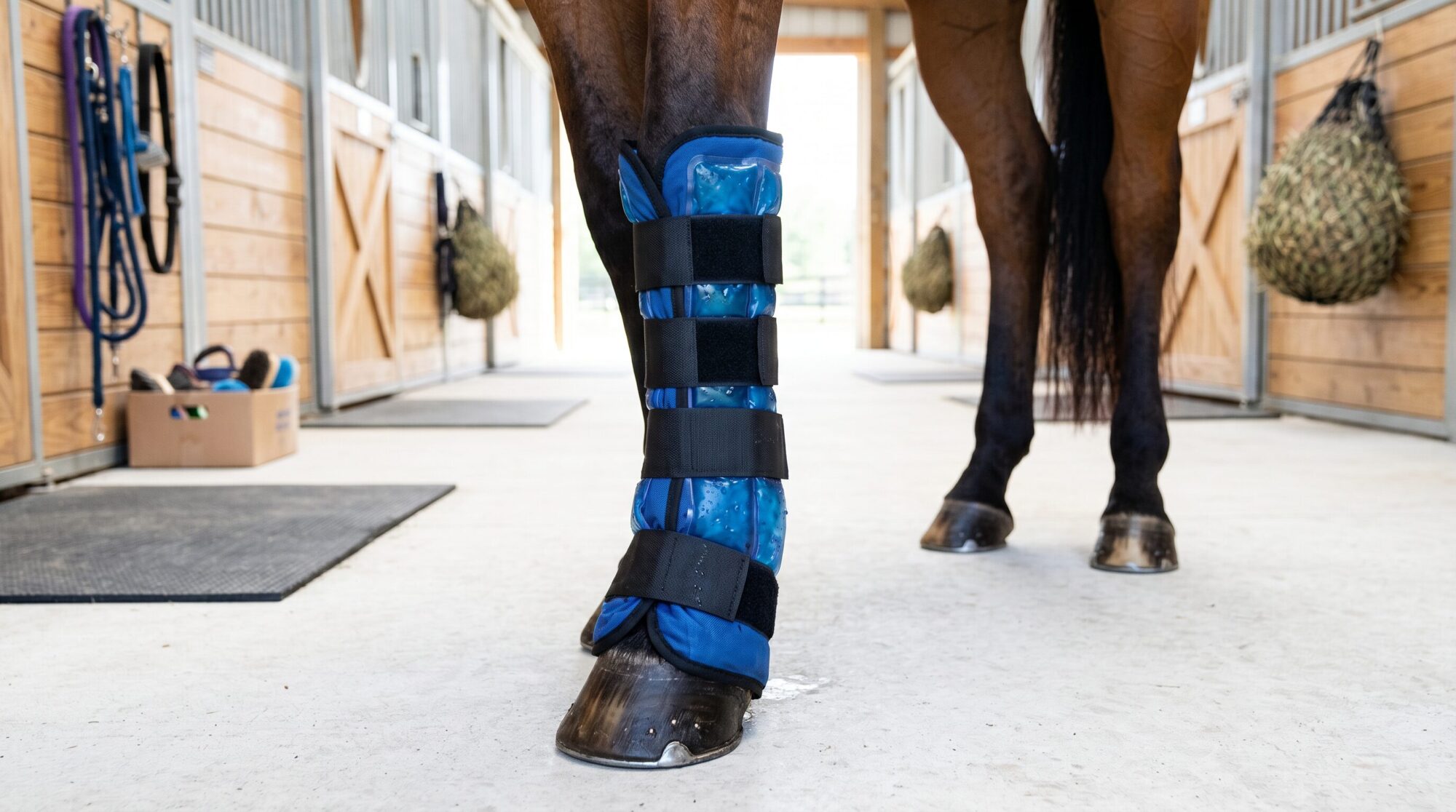
For generations, “cold hosing” was the standard. We have all stood in the wash rack for twenty minutes, mindlessly spraying a horse’s leg while our own boots filled with runoff water. While cold hosing is still effective, modern gel ice boots have made this process a lot easier. They let you strap the cold therapy directly to the leg, providing an even, 360-degree cooling effect that a hose simply cannot match.
In a lot of barns, any horse that jumps a significant course or does a hard gallop gets ice boots applied immediately after untacking — it is a non-negotiable part of preventative maintenance. The golden rule for icing is 20 minutes on, 20 minutes off. Leaving ice on for longer than 20 to 30 minutes can actually have a reverse effect, potentially damaging the tissue or causing the body to rush blood back to the area to warm it up.
Old-School Poultices and Liniments
Remember in the introduction when I mentioned the old-school remedies our grandfathers swore by? There is a reason traditional clay poultices and liquid liniments are still stacked high on tack store shelves today: they work. While they might lack the technological appeal of lasers and PEMF blankets, these topical treatments are the backbone of stable management.
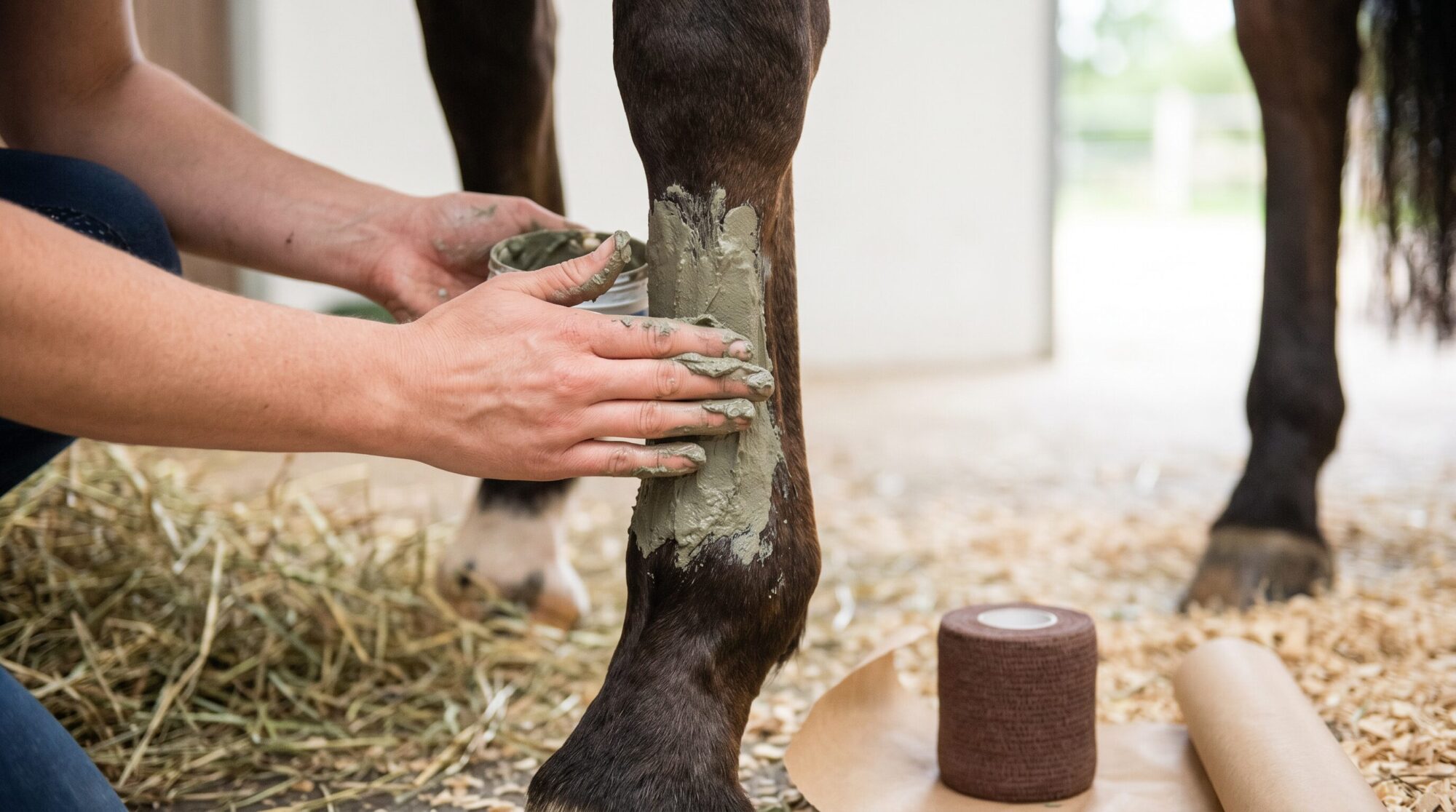
Clay Poultice: A traditional cooling poultice is made of natural clays (like bentonite or kaolin) mixed with astringents. When applied wet to a horse’s lower leg, the clay slowly dries. As the water evaporates, it literally pulls heat and fluid (edema) out of the leg. If you have a horse that stocks up (gets puffy lower legs) after a hard ride or when stalled, poultice is your best friend.
How to Properly Apply a Poultice Wrap
- Apply the mud: Slather a thick layer (about 1/4 inch) of wet poultice against the hair, smoothing it downward from the knee/hock down to the fetlock.
- Add the paper barrier: Take a piece of heavy brown paper (a feed bag cut into squares works perfectly) or damp newspaper, and wrap it smoothly over the wet poultice. This slows the drying process so it draws heat for a longer period.
- Wrap with a quilt and bandage: Apply your standard standing wrap quilt over the paper, and secure it with a stable bandage (track wrap). Make sure tension is even so you don’t bow a tendon. Leave it on overnight and wash it off thoroughly the next morning.
Liniments: Liniments are liquid or gel preparations that can either be cooling or warming. Cooling liniments (often containing menthol, eucalyptus, or arnica) are great for a refreshing brace after a sweaty summer ride — you can mix a splash into a bucket of water for an invigorating sponge bath. Warming liniments, on the other hand, stimulate blood flow and are excellent for rubbing into a stiff shoulder or tight hindquarter before a winter ride. Just be careful never to wrap a leg over a strong warming liniment, as the trapped heat can easily blister a horse’s sensitive skin.
Final Thoughts: Creating a Holistic Recovery Routine
At the end of the day, there is no single “magic bullet” that will keep your horse sound forever. Proper recovery is about layering sensible therapies and knowing your individual horse’s needs. A handheld cold laser is a useful addition for targeted healing, magnetic boots offer fantastic daily maintenance for chronic stiffness, ice boots manage acute post-ride inflammation, and traditional poultices remain unbeatable for drawing out fluid.
The most important tool in your entire barn, however, is your own intuition. Run your hands down your horse’s legs every single day. Learn what feels normal — what is baseline warm, what is baseline puffy — so you can catch a problem before it requires months of stall rest. And finally, always consult your veterinarian before starting a new therapy regimen, especially if you suspect an active injury. These tools are meant to bridge the gap between rides and support overall wellness, not to replace professional medical advice. Happy riding, and here is to sound, happy horses!
Recovery works best alongside good daily care — see my picks for essential horse supplements and grooming products that catch problems early.
Stock Your Recovery Kit
From cold lasers to liniments, I keep my favorite barn-tested recovery tools stocked from one place to make restocking easy.