Riding Tips for the Intermediate Rider: Leads, Diagonals, and Moving Past the Basics
Welcome back to the barn! If you or your child has been riding for a while, you already know the absolute thrill of mastering the basics. You have successfully learned how to steer, stop, post to the trot without losing your breath, and perhaps even pop over a small cross-rail or two. But now, you are entering a brand new, incredibly exciting phase of your equestrian journey: the intermediate stage.
As a barn mom and a fellow rider, I can tell you firsthand that moving past the basics is where the real magic—and the real frustration—often begins. You are no longer just a passenger trying to survive the ride and stay in the saddle. Instead, you are learning to become a genuine partner to your horse. This stage requires a fundamental shift in how you think, how you use your body, and how you communicate with your mount.
Moving from a beginner to an intermediate rider means developing a highly tuned sense of “feel.” It is about knowing which leg your horse is stepping with without having to look down. It is about asking for a canter lead with invisible cues rather than a frantic running trot. It is about recognizing when a horse feels slightly “off” and knowing how to adapt your riding style to different horses’ unique quirks. In this guide, we are going to dive deep into these essential intermediate skills so you can confidently push past the basics.
The Intermediate Milestone: Feeling Instead of Forcing
When you first learn to ride, the instructions are very mechanical. You are told to pull the left rein to go left, and kick to go forward. As an intermediate rider, you must graduate from these loud, mechanical aids to subtle, refined communication. This is what trainers mean when they talk about riding with “feel.”
To truly progress, you need to shift your mindset. You are no longer just reacting to what the horse does; you are anticipating it. Here are the core pillars of the intermediate mindset that we will be working on:
Active Problem Solving
You stop blaming the horse for mistakes and start analyzing your own body position and aids to find the solution.
Independent Balance
You rely entirely on your core and seat for stability, completely letting go of the reins as a balancing tool.
Intentional Riding
Every stride has a purpose. You are planning your corners, your transitions, and your lines with deliberate focus.
Mastering Your Diagonals (Without Looking Down)
Every beginner learns the phrase, “Rise and fall with the leg on the wall.” Checking your diagonal by staring down at the horse’s outside shoulder is perfectly fine when you are starting out. But as an intermediate rider, looking down constantly throws your upper body weight forward, throwing your horse off balance. It is time to learn to feel the correct diagonal through your seat.
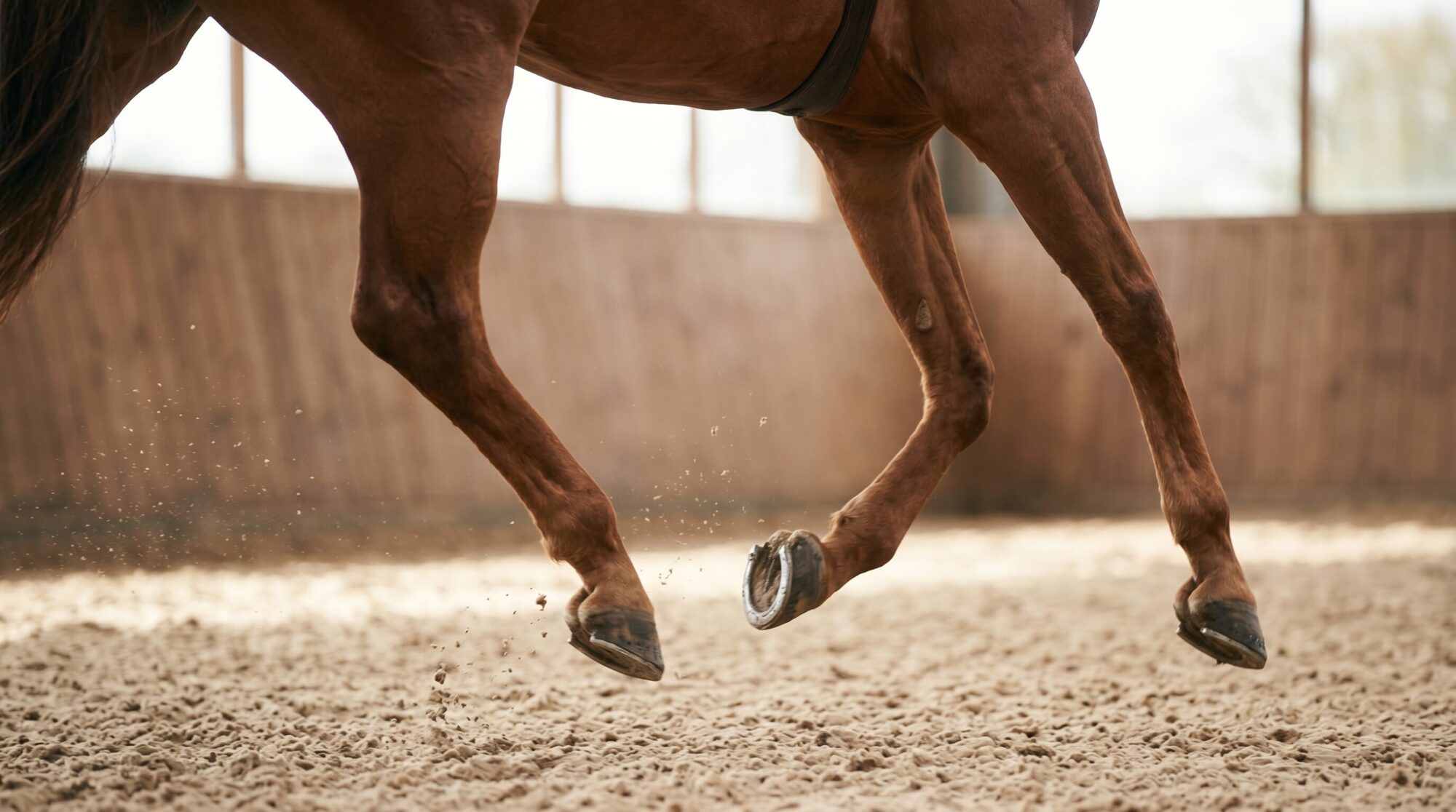
When a horse trots, their legs move in diagonal pairs. When the outside front leg and inside hind leg swing forward, the horse’s barrel actually shifts slightly. Here is how you can train your body to feel this rather than using your eyes:
- Sit the trot first: Before you start posting, sit deeply in the saddle for a few strides. Close your eyes if it is safe to do so. You will feel your hips being gently lifted side to side.
- Wait for the outside lift: When you feel your outside hip being pushed up and forward by the horse’s hind leg, that is your exact moment to rise into your post.
- The “Look at the Ears” trick: If closing your eyes is too intimidating, pick a spot directly between your horse’s ears. You will naturally see the outside shoulder moving forward in your peripheral vision without having to drop your chin.
Demystifying Canter Leads and Smoother Transitions
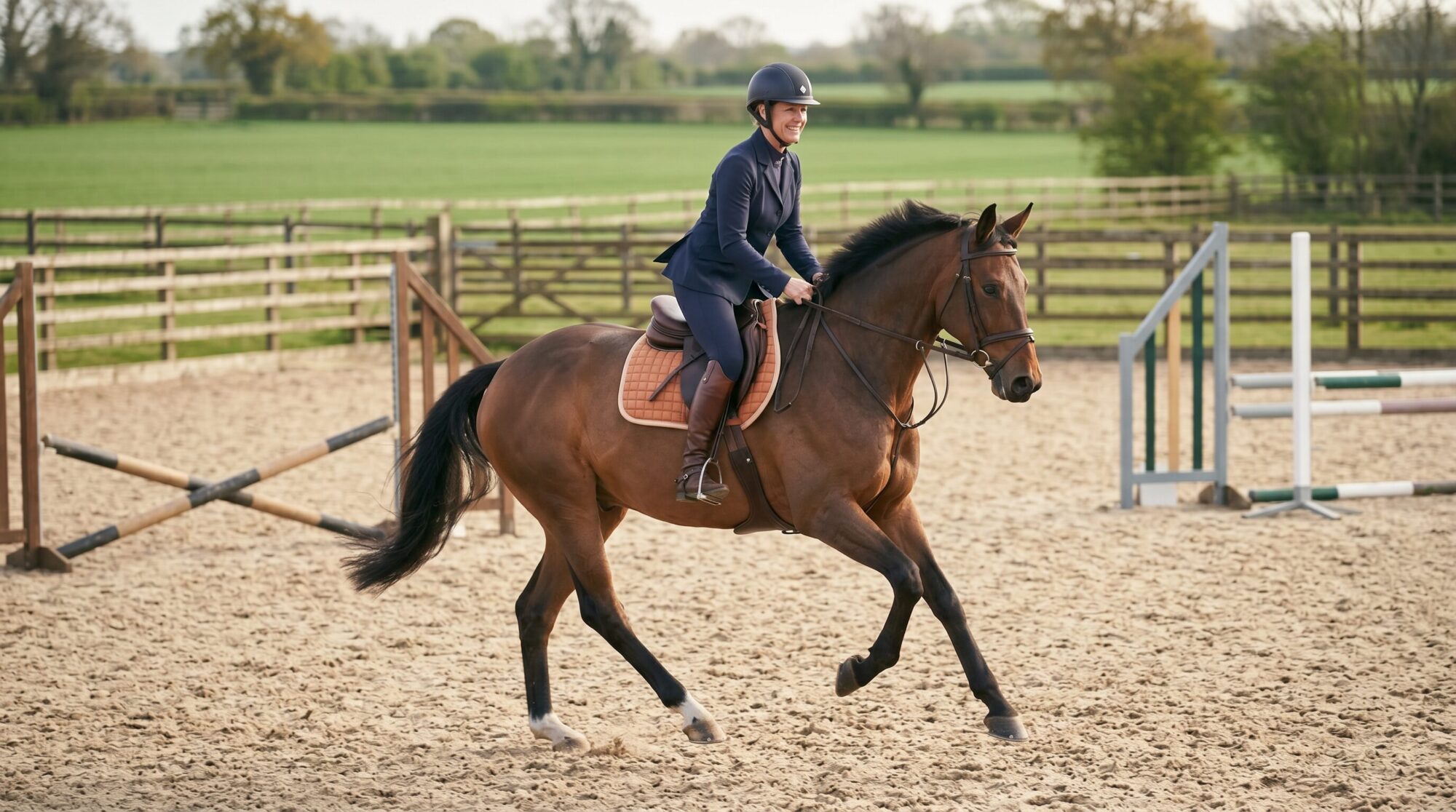
A hallmark of beginner riding is the “running trot.” This happens when a rider simply kicks rapidly to ask for the canter, causing the horse to trot faster and faster until they practically fall into a sloppy, unbalanced canter. Moving past the basics means executing a crisp, quiet transition on the correct lead every single time.
To ask for the correct lead, you have to understand the biomechanics of the canter. A canter departs from the outside hind leg. Therefore, your aids must tell the horse to strike off with that specific leg. To achieve a beautiful, smooth transition, follow these refined steps:
- Prepare with a half-halt: Bring the horse’s attention back to you by lightly closing your fingers on the reins and sitting deep. This rebalances their weight onto their hindquarters.
- Position your legs: Slide your outside leg slightly behind the girth to control the hindquarters and signal that outside hind leg. Keep your inside leg right at the girth to maintain forward momentum and bend.
- Lift and ask: Slightly lift your inside rein to encourage the inside shoulder to elevate, and squeeze with your outside leg. Do not lean forward! Keep your shoulders tall and your seat plugged into the saddle.
By using precise leg placement rather than sheer speed, your horse will step gracefully up into the canter instead of scrambling into it.
Developing a Truly Independent Seat
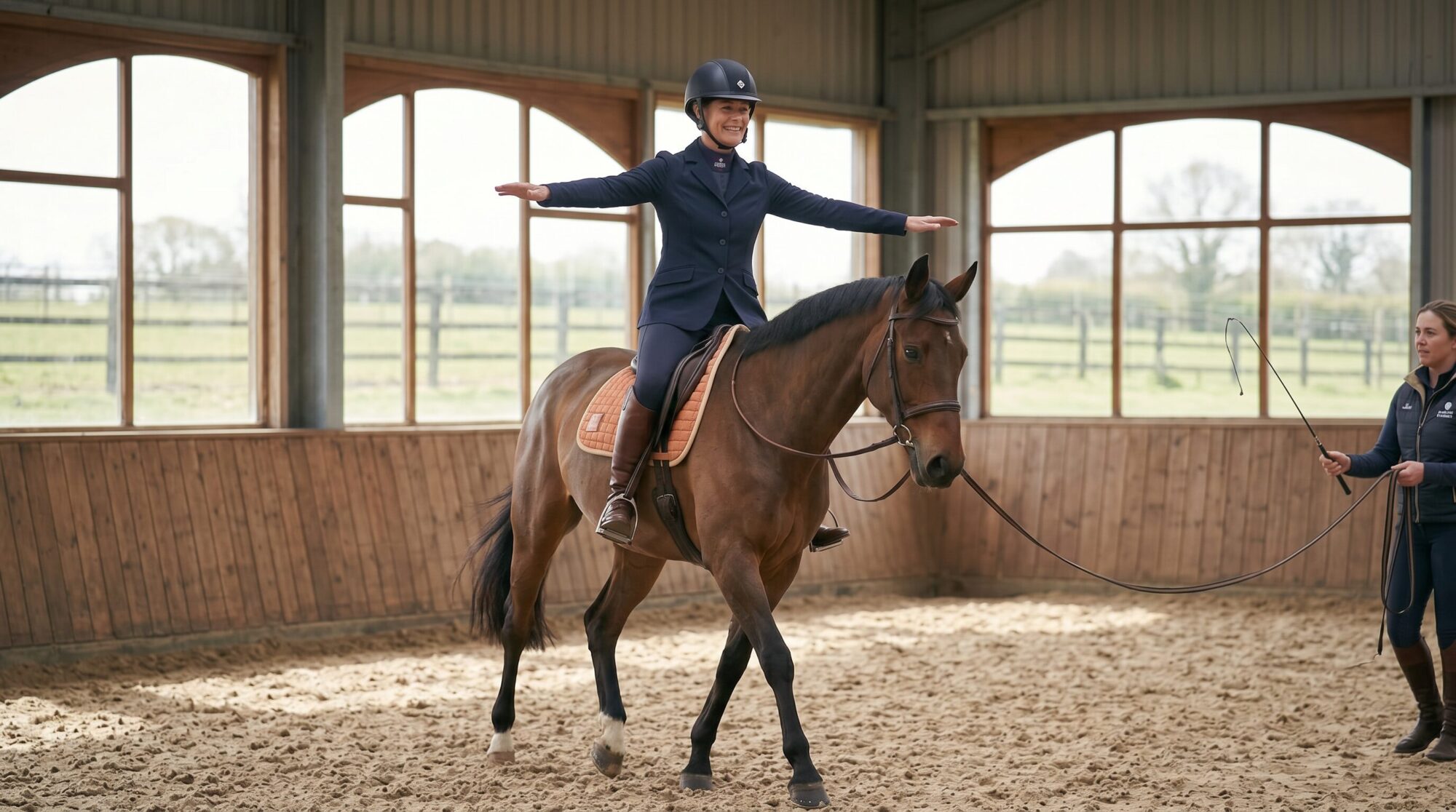
An independent seat is the holy grail of intermediate riding. It means your balance is entirely reliant on your core and your deep seat bones, completely independent of your hands (reins) and your feet (stirrups). If your horse were to suddenly spook, or if your stirrups were to magically disappear, an independent seat ensures your hands stay quiet and your body stays centered.
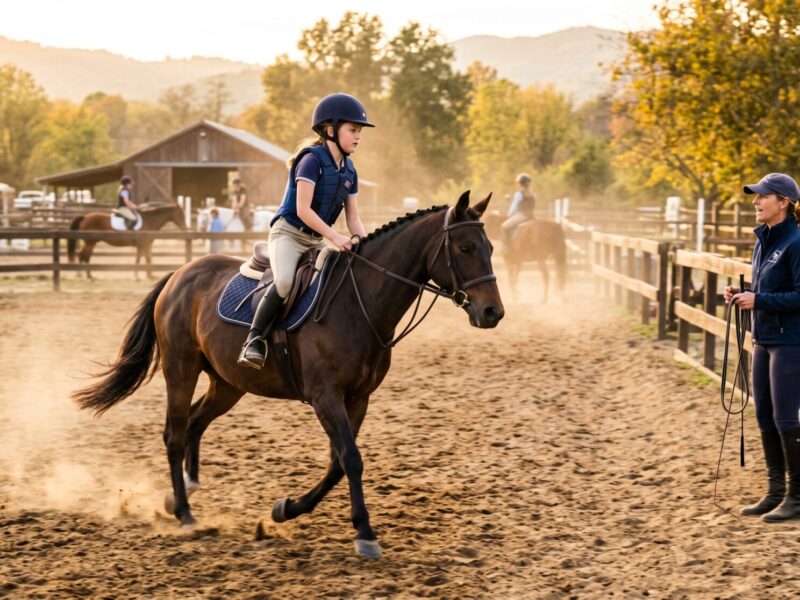
Developing this requires some hard, sweat-inducing work. The most effective way to build an independent seat is through lunge line lessons. Having your trainer control the horse on a lunge line allows you to drop your reins, drop your stirrups, and focus entirely on your body mechanics. You will practice posting without stirrups, which forces you to use your thigh and core muscles rather than pushing off the irons. You will also practice two-point position (jumping position) without leaning on the horse’s neck for support. It is exhausting work, but it will transform your riding faster than any other exercise.
Adapting to Different Horses and Quirks
When you first learn to ride, you are usually paired with a “packer” or a “schoolmaster”—a saintly horse who forgives mistakes, ignores bouncy hands, and knows their job perfectly. As an intermediate rider, you will start riding a wider variety of horses. This is where you learn that riding is not a one-size-fits-all equation.
You might ride a sensitive, forward-thinking thoroughbred one day, and a quiet, push-ride warmblood the next. You must learn to adjust the “volume” of your aids. A squeeze that successfully moves the warmblood forward might cause the thoroughbred to bolt. Conversely, the soft contact you use on a sensitive horse will simply be ignored by a horse who tends to lean on the bit. A true intermediate rider evaluates the horse underneath them in the first five minutes of the ride and adjusts their leg pressure, rein contact, and seat accordingly.
Horse Health: Recognizing Subtle Unevenness
Part of moving past the basics is taking responsibility for the athlete underneath you. Beginners often cannot tell if a horse is limping unless the limp is severe. Intermediate riders need to start recognizing the subtle signs of lameness, stiffness, or unevenness in a horse’s gait. Catching these issues early prevents severe injuries.
When you are trotting, pay attention to the rhythm. The trot should feel like a perfectly even, two-beat metronome: one-two, one-two. If it suddenly feels like one beat is heavier or dropping lower than the other, your horse may be uneven. Here are a few key indicators to watch and feel for:
The Intermediate Plateau (And How to Push Through It)
I want to be completely candid with you: the intermediate stage is notorious for the dreaded “plateau.” When you were a beginner, you made massive, visible progress every single week. You went from walking, to trotting, to jumping in a relatively short timeframe. But in the intermediate phase, progress becomes microscopic. You might spend six months just trying to keep your hands still over a jump, or struggling to get your horse round and on the bit.
This is the stage where many riders feel like they are failing, or that their horse is suddenly misbehaving. The truth is, your horse is not being bad; the work is just getting harder. You are asking for more refinement, and that requires immense patience. When you hit a plateau, lean heavily on your trainer. Ask them to explain the “why” behind the exercises you are doing. Sometimes, stepping back and doing a few basic walk-trot lessons focusing purely on your biomechanics can break through a frustrating plateau. Do not let frustration ruin the ride—progress at this level is about millimeters, not miles.
If nerves are part of what’s holding you back at this stage, Overcoming Fear and Building Confidence in the Saddle covers that directly. And if you’re coaching a newer rider, see Riding Tips for Beginners.
Ready to Elevate Your Riding Journey?
Whether you are battling an intermediate plateau or looking to perfect your independent seat, having the right guidance makes all the difference. Keep pushing past those basics!