Welcome to the Ultimate Horse Property Hunt
If you have ever spent a blistering Saturday afternoon patching a broken fence line while dreaming of your very own perfectly manicured farm, you are exactly in the right place. Hello! I am Cynthia, your resident barn mom and a licensed Realtor specializing in equestrian properties right here in the heart of horse country—Ocala, Florida.
Finding the perfect place for your family and your horses is a uniquely emotional journey. When you are a typical homebuyer, you look at kitchen countertops and bathroom tile. But when you are an equestrian buyer, you are looking at pasture drainage, fence lines, and barn ventilation before you even step foot inside the primary residence. You need a property that keeps your horses safe, makes your daily chores manageable, and holds its value as a real estate investment.
I have mucked my fair share of stalls, and I have also walked hundreds of property lines with buyers. Today, I am putting on both my barn mom boots and my Realtor hat to give you the unvarnished truth about what to actually look for when buying a horse property.
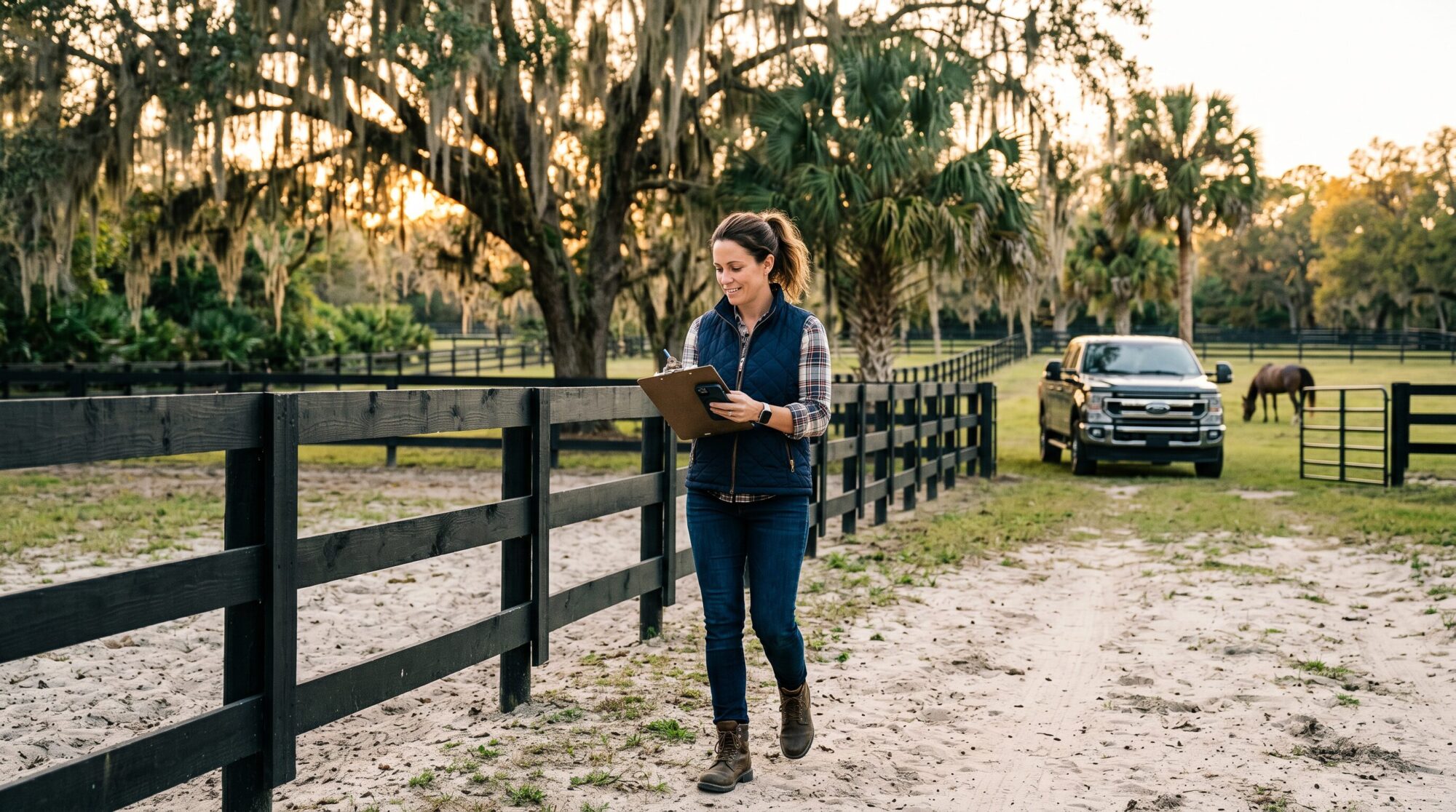
Ready to Find Your Dream Farm?
Whether you are looking for a cozy 5-acre ranchette or a full-scale equestrian training facility, navigating the Central Florida market requires a Realtor who truly understands horses. Let’s find a property that works for you and your herd.
Usable Acreage vs. Total Acreage: The “Dirt” Truth
One of the very first things my real estate clients tell me is, “Cynthia, I want ten acres.” It sounds like a fantastic, round number. But here is the hard truth I have learned from both selling farms and managing my own herd: ten acres is rarely just ten acres. We have to talk about the critical difference between total acreage and usable acreage.
When you look at a property listing, the total acreage includes every square foot within the property lines. However, horses cannot safely graze in a swamp, on a steep, rocky cliff, or in dense, uncleared woods. If a ten-acre parcel has three acres of low-lying wetlands that flood every summer, and another two acres of thick oak hammocks that restrict grass growth, you are really only buying five acres of usable pasture.
You must evaluate the topography and the drainage. Here in Central Florida, we get heavy summer thunderstorms. A property that looks beautiful in January might turn into a muddy nightmare by July. Always ask to see the property’s flood zone maps and pay close attention to the slope of the land. Water should naturally drain away from the barn and the pastures, not pool right where you plan to feed round bales.
The Fencing Reality Check
Fencing is arguably the most critical safety feature of any horse property, yet it is where I see buyers constantly underestimate their budgets. They look at a property with dilapidated barbed wire and think, “Oh, I will just replace that later.” Let me tell you, tearing out old, dangerous fencing and installing safe, horse-friendly perimeters is a massive undertaking.
When touring a property, physically walk the fence lines. Lean on the posts. Are they rotting at the base? Is the wire stretched, or is it sagging? If the property needs completely new fencing before you can unload your trailer, you need to factor those tens of thousands of dollars into your initial purchase budget.

No-Climb Wire
Excellent for keeping predators out and foals in. Look for a sturdy top board to prevent horses from leaning and crushing the wire.
Wood Board
Classic and beautiful, but requires heavy maintenance. Check for chew marks, rot, and loose nails that could cause injuries.
PVC / Vinyl
Visually stunning and low maintenance, but can shatter upon heavy impact. Ensure it is rated specifically for large livestock.
Water and Power: The Farm Lifelines
A beautiful barn is useless if you have to carry buckets of water 200 feet in the freezing cold or the sweltering heat. Access to reliable water and safe electrical power is non-negotiable. When evaluating a property, you need to know exactly where the water comes from and how it gets to your horses.
If the property is on a private well—which most rural properties are—you must order a comprehensive well inspection. You are not just checking to see if water comes out of the faucet; you need to know the Gallons Per Minute (GPM) output. Filling multiple 100-gallon water troughs every day requires a robust well pump. You should also look at how water is distributed. Are there spigots conveniently located near every pasture gate?
For electricity, inspect the barn’s electrical panel. Barn environments are dusty, humid, and full of rodents. Mice love to chew on wiring, which is a major fire hazard. All wiring in a barn should be encased in metal conduit, and all outlets should be GFCI protected and covered with weatherproof boxes.
Barn and Structure Condition
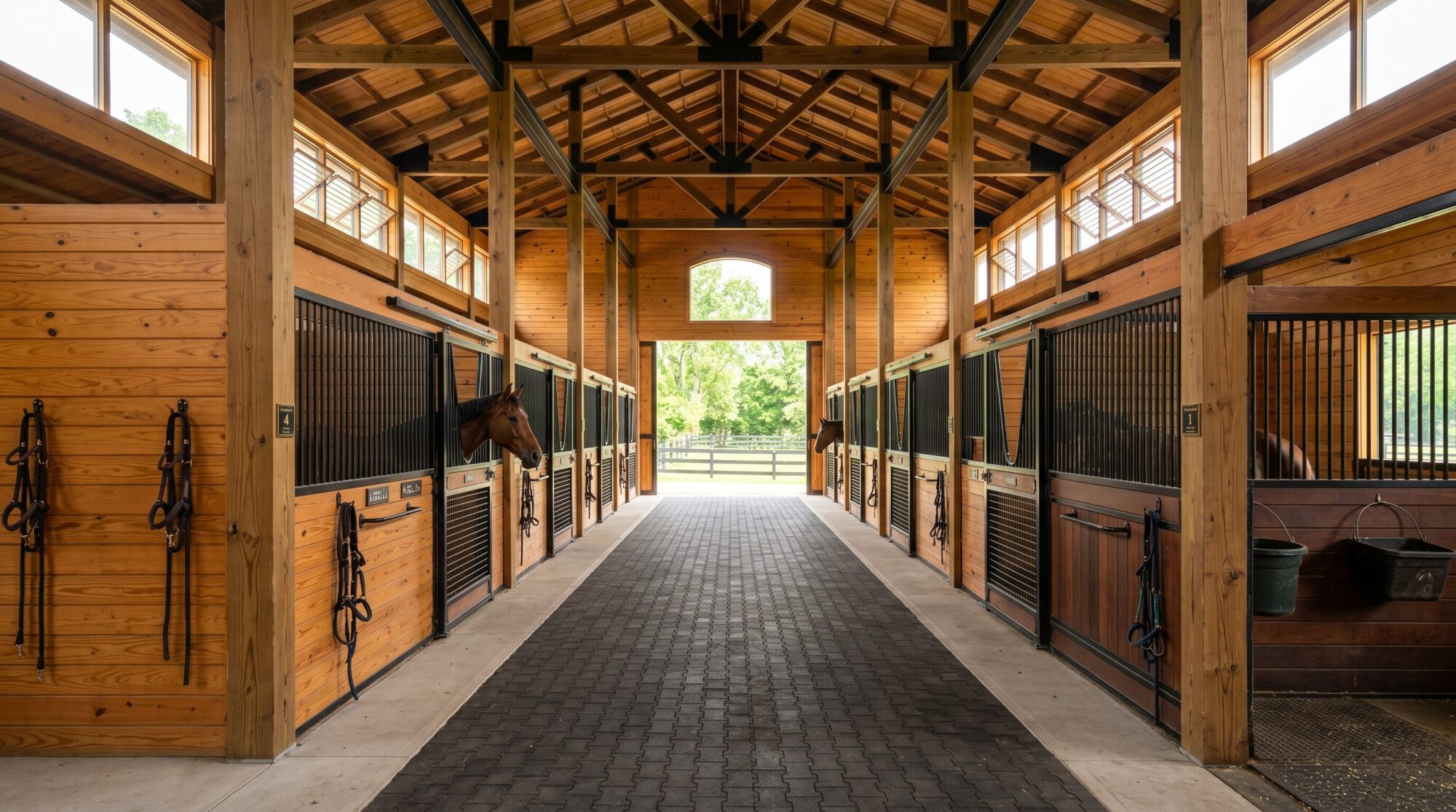
Let’s talk about the barn itself. As a barn mom, I know that a poorly designed barn makes daily chores take twice as long. When I walk through a barn with clients, my eyes immediately go to three things: the roof, the ventilation, and the footing.
First, look for water stains on the ceiling or rafters, which indicate roof leaks. Replacing a barn roof is a major expense. Second, consider the ventilation. In a warm climate like Ocala, a barn that traps heat and ammonia fumes is a recipe for respiratory issues. You want high ceilings, ridge vents, and a layout that catches the prevailing breeze. Finally, check the stalls. Are they a standard 12×12 size? What is under the shavings? Dirt floors require constant leveling, while concrete floors require thick, expensive rubber mats to prevent joint issues.
Footing and Arena Considerations
If you plan on riding, training, or giving lessons, an existing riding arena is a massive selling point. Building a proper arena from scratch can cost anywhere from twenty to fifty thousand dollars, depending on the size and the materials.
If the property already has a ring, do not just look at the top layer of sand. The secret to a great arena is the base. A failing base will allow rocks to push up to the surface and cause deep, dangerous bogs after a rainstorm. Drag your boot through the footing. It should be consistent, level, and well-drained. If you are buying raw land with the intention of building an arena, make sure the zoning allows for the extensive grading and earth-moving required.
Location, Vets, and the Equestrian Community
Owning a horse property is a lifestyle, and that lifestyle requires a supporting cast of characters. You might find a gorgeous farm at a bargain price, but if it is two hours away from the nearest large-animal veterinarian, you are putting your horses at risk during an emergency.
When evaluating a property’s location, consider the logistics of your daily and monthly routine:
- How far is the nearest equine veterinary clinic or surgical center?
- Is the property within the service radius of reputable farriers?
- Where is the closest feed and tack store, and do they deliver to this area?
- Are there local trails, or will you need to trailer out every time you want to ride?
- Can an 18-wheeler safely access your driveway to deliver hay?
Zoning, HOAs, and Deed Restrictions
This is where my Realtor experience really comes into play. Just because a property looks rural, and just because the neighbor has a goat, does not mean you are legally allowed to keep horses there. Zoning laws and deed restrictions are the silent dream-killers of equestrian real estate.
Many counties have strict ordinances regarding the number of large animals permitted per acre. For example, a zoning code might require a minimum of two acres for the first horse, and one additional acre for each subsequent horse. Furthermore, you must check for Homeowners Association (HOA) rules or deed restrictions. These covenants are tied to the land and can dictate everything from the type of fencing you can install to whether or not you are allowed to park a horse trailer in your driveway. Never close on a property without thoroughly reviewing the restrictions.
The “Small Ranchette” Sweet Spot (5-15 Acres)
I want to briefly touch on a trend I am seeing constantly in the market: the rise of the “small ranchette.” Many first-time farm buyers envision themselves on forty sprawling acres. However, unless you are running a large-scale boarding or breeding operation, managing that much land is a full-time job.
For the average barn mom who wants to keep two to four horses at home and still have time to actually ride them, properties in the 5 to 15-acre range are the absolute sweet spot. This size offers enough pasture for rotation, room for a modest barn and arena, and enough buffer from neighbors, all without requiring you to spend your entire weekend on a tractor. It is a highly desirable property size, meaning it holds excellent resale value.
The Ultimate Horse Property Checklist
To help you stay organized during your property tours, I have compiled this quick-reference checklist. Print this out and bring it with you to every showing.
Not sure whether to board or buy in the first place? See Boarding vs. Buying: How to Know When It’s Time. And if you’re weighing locations, here’s why Ocala is the Horse Capital of the World.