I wish I had known about David Kessler’s work the day my daughter’s first lease ended. We had done everything “right” — we knew going in it was temporary, we talked about the goodbye ahead of time, we thought we were prepared. And then the actual last day came, and none of that preparation touched how much it hurt. I remember driving home from the barn that afternoon thinking, we didn’t lose a horse — why does this feel like we did? I didn’t have a name for what we were both feeling. I just thought we needed to get busy and move on to the next thing. Looking back, I wish someone had told me that grief doesn’t check whether you technically qualify for it before it shows up.
Nobody warns you that grief shows up in more places than a funeral. It shows up in a boarding barn parking lot after you’ve signed the papers to sell. It shows up the first Saturday after a lease ends, when you have nowhere to be and no one to brush. It shows up when you move to a new barn and realize you’re mourning the old one even though every horse in it is still alive and well.
We don’t really have a word for that kind of grief. There’s no card for it, no casserole, no one asking if you’re okay. Just a horse-shaped absence and the quiet assumption that you should be fine, because technically, nothing died.
Go Deeper: David Kessler’s Sixth Stage of Grief
Everything in this post is rooted in Kessler’s work — the idea that grief doesn’t end, it finds meaning. If you’re carrying a loss that doesn’t fit neatly into what people expect, his book is worth the read.
The Grief Nobody Prepares You For
Barn moms carry at least three versions of this grief, and we rarely talk about any of them out loud:
- Death. The most obvious one, and still the one people understand the least. There’s no “acceptable” timeline for how long you’re allowed to grieve an animal.
- The end of a lease. You built a relationship with a horse who was never legally yours, and then one day the paperwork ends and so does your daily access to a creature you loved.
- Moving away. A new job, a new barn, a new town — and suddenly the horse you rode every day, the friends at the rail, the whole rhythm of your week, is just gone.
Each of these gets treated like it shouldn’t really count as loss. And yet anyone who has lived through one of them knows it absolutely does.
Why Running From It Doesn’t Work
David Kessler, a grief researcher who spent years working alongside Elisabeth Kübler-Ross (the psychiatrist behind the five stages of grief), has spent his career studying exactly this. His own son died unexpectedly, and even with decades of grief expertise behind him, he found himself sitting in a grief support group unable to say the words out loud.
One of his core ideas is simple but easy to forget: your grief isn’t what keeps you stuck. Running from it is. Barn moms are especially good at running — we throw ourselves into the next horse, the next lesson, the next project, because staying busy feels a lot safer than sitting with how much something hurt.
The problem is that grief you outrun doesn’t disappear. It just waits for you somewhere quieter, usually at a worse time.
Anger Is Often Pain Wearing a Disguise
If you’ve felt irrationally angry after selling a horse, after a lease falling through, after a barn closing or a move upending everything — that anger usually isn’t really about the logistics. It’s grief, showing up in a form that feels more manageable than sadness.
Anger at yourself for “not seeing it coming.” Anger at a trainer, a buyer, a landlord, a job that moved you. Anger feels active, like something you can do something about. Grief just feels like something that happened to you. It’s worth asking, gently, whether the anger you’re carrying is actually pain that hasn’t found its real name yet.
Your Triggers Are a Map, Not a Warning
A certain smell of fly spray. A song that was playing during a long trailer ride. Driving past your old barn’s turnoff. A halter you still haven’t been able to give away. These moments can knock the wind out of you months, even years, later, and it’s easy to treat them as a sign that something is wrong with you for still feeling this.
It isn’t. Those triggers are a map pointing straight to whatever still needs tending. The goal isn’t to avoid them until they stop happening — it’s to notice what they’re pointing at, and let yourself actually feel it when they do.
The Sixth Stage: Finding Meaning
Most people know the five stages of grief — denial, anger, bargaining, depression, acceptance. Kessler eventually added a sixth: meaning. Not “getting over it.” Not “moving on.” Meaning — finding a way to carry what happened forward instead of leaving it behind.
For a barn mom, that might look like the specific way you now check a young horse’s legs because of what you learned from the one you lost. It might be the friendship with another barn mom that only exists because you were both leasing horses at the same barn that closed. It might just be that you love harder and more consciously now, because you know exactly how much it can cost. That’s not the grief going away. That’s the grief becoming something you can actually live with.
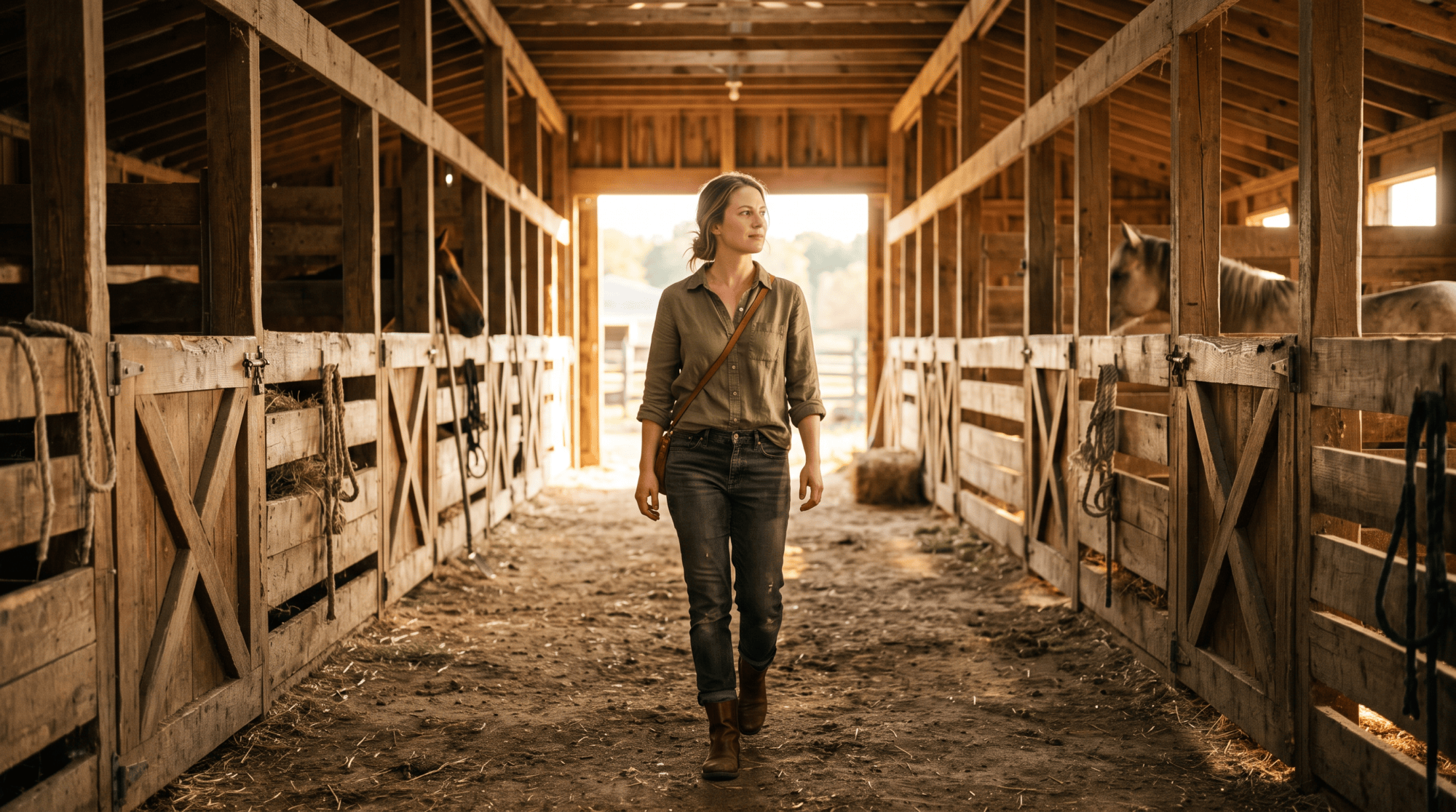
If You’re Grieving a Horse Right Now
- Give yourself permission, even without a death. A lease ending or a move counts. You don’t need a funeral to justify how much this hurts.
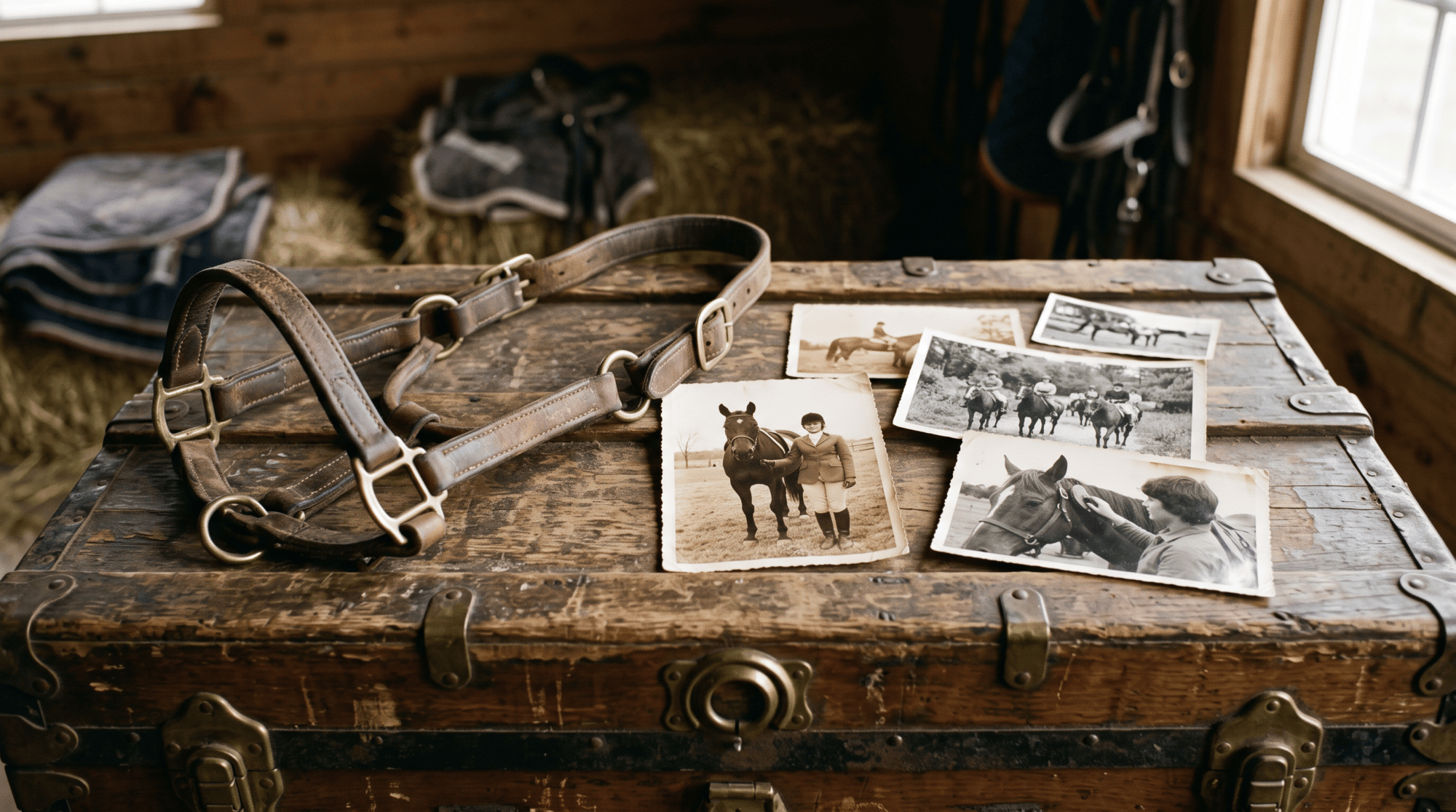
- Keep something, on purpose. A halter, a photo, a horseshoe. A physical object to hold the memory instead of carrying all of it internally.

- Say it out loud to someone who gets it. A barn friend, a partner, a blog on the internet — naming it out loud takes some of its weight off.
- Let the triggers happen. When one hits, stop for a minute instead of pushing through. You don’t have to make it mean anything yet.
- Don’t rush toward meaning. It comes eventually, on its own timeline. You can’t force your way to the sixth stage — you just eventually notice you’ve arrived.
The Bottom Line
If you’re grieving a horse right now — because you lost one, because a lease ended, because life moved you somewhere new — you’re not being dramatic, and you’re not alone in it. This is real grief, and it deserves real space.
You loved something enough for this to hurt. That’s not a problem to fix. That’s just what it costs to love a horse in the first place.
If you’re looking for something to keep
I make a ceramic horse memorial ornament — a small, quiet way to have them on the tree every year instead of tucked away in a box. No pressure at all; it’s just here if it would help.