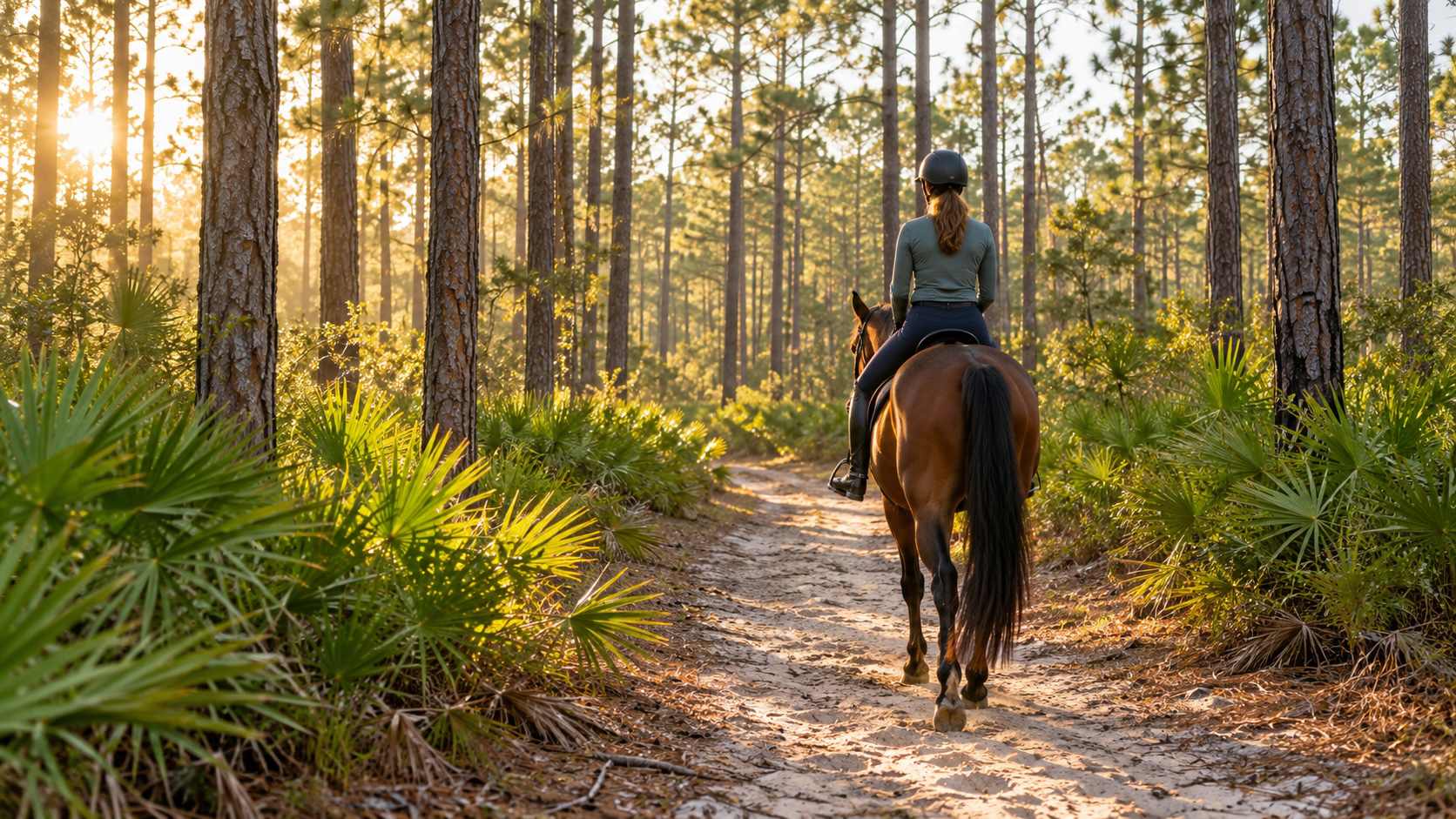
Somewhere around your third lap of the same arena, you start looking at the horizon and thinking, “There has to be more than this.” If you live in Marion County — or you’re thinking about moving here — the answer is sitting right on the east side of the county: the Ocala National Forest.
So, can you ride horses in the Ocala National Forest? Yes. The forest has designated horse trails and trailheads where you can park a rig and ride, and it’s one of the big reasons trail riders fall in love with this area. But it’s not a “show up and wing it” kind of place. It’s big, it’s sandy, it’s wild, and there are rules. Here’s what I’d want a friend to know before they load up — and what to think about if you’re dreaming of a horse property close enough to ride there all the time.
Dreaming of a Horse Property Near the Trails? Let’s Talk.
Whether it’s a family home or an equestrian property here in the Ocala area, I’ll give you an honest answer for your situation.
What Riding in the Ocala National Forest Is Actually Like
First things first: this isn’t a groomed park with tidy little bridle paths. The Ocala National Forest is a huge stretch of pine woods, scrub, palmetto, lakes, and springs, and a lot of it feels genuinely remote. That’s the magic. It’s also the part people underestimate.
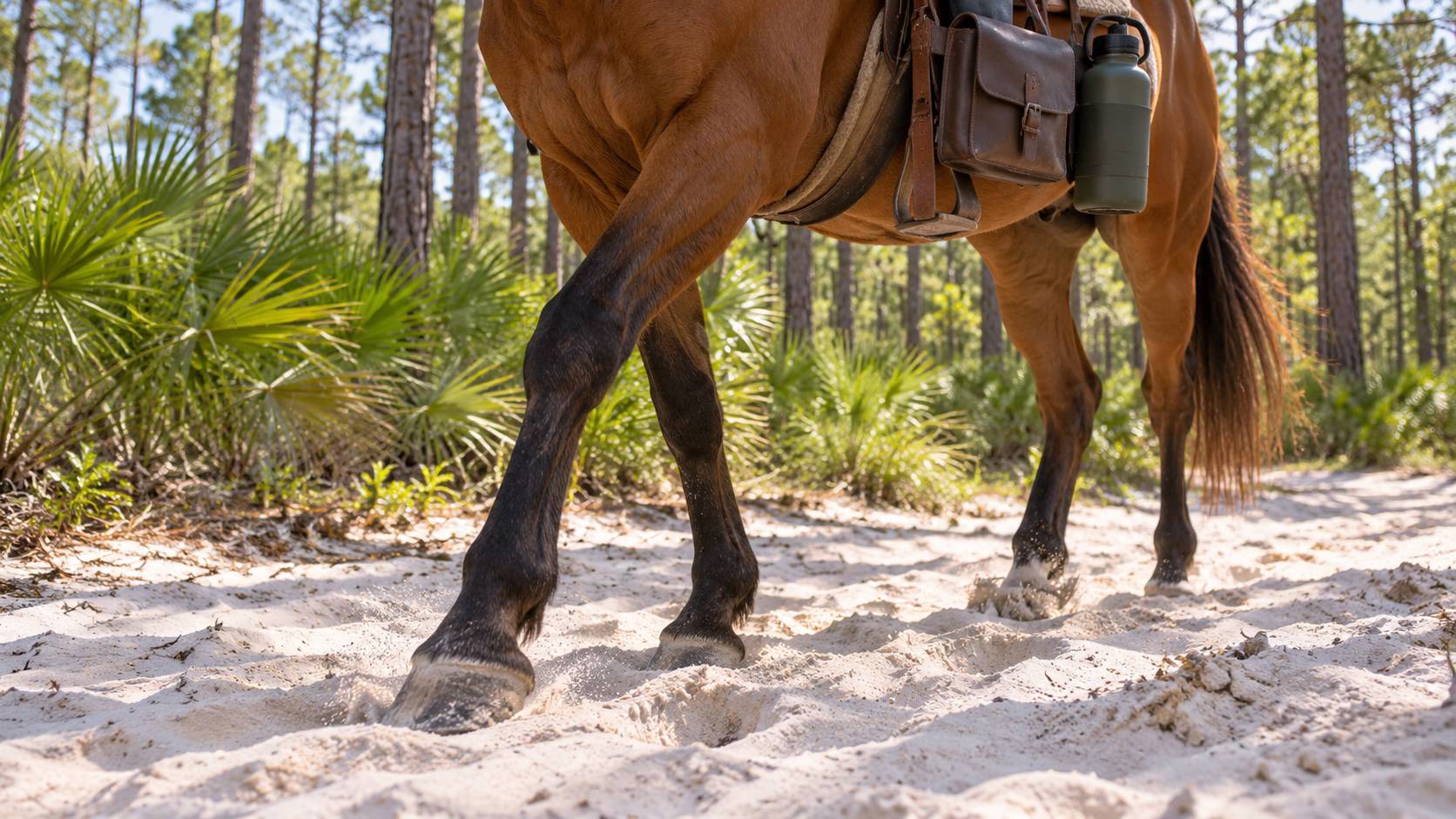
The footing is mostly sand — and in plenty of spots it’s the deep, soft, sugar-sand kind that makes a horse work a lot harder than they do on your farm’s packed dirt. A horse that’s fit for a one-hour lesson may not be fit for a long day of sand. So many of us learned that one the sweaty way.
You’ll also share the forest with wildlife (yes, including black bears), other riders, hikers, and, depending on the area and season, hunters and off-road vehicles. None of that is a reason to stay home. It’s just a reason to go in prepared.
What surprised me most out there was how green it was, and all the wildlife. It doesn’t feel like you’re a short drive from town. It feels like a whole different world.
Where Do You Ride — and How Do You Find the Trails?
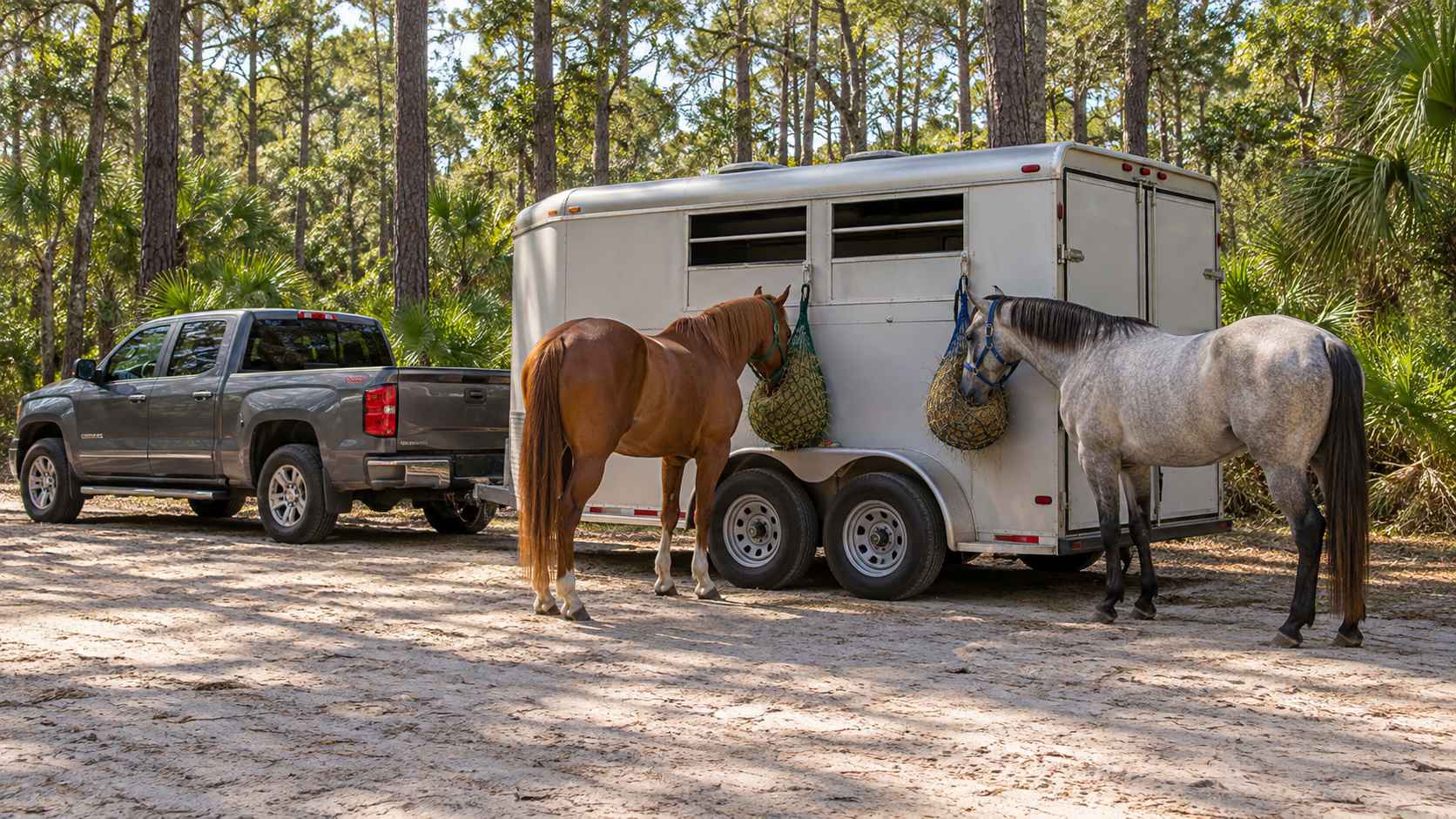
The forest has designated equestrian trails and trailheads with room for trucks and trailers. Trail conditions, closures, and which areas are open to horses can change — storms, prescribed burns, and maintenance all play a part — so I’m not going to hand you a map from memory that might be out of date by the time you read this.
Instead, here’s where to get the current info:
- The USDA Forest Service. The Ocala National Forest is managed by the U.S. Forest Service as part of the National Forests in Florida. Their official site (fs.usda.gov/florida) is the place to check trail maps, trailhead details, alerts, closures, and any fees or passes.
- The ranger stations. A phone call to the local ranger district before your first trip is worth it. Ask what’s open, what’s wet, and whether any burns or hunts are scheduled.
- Local riding friends and trail clubs. The people who ride out there every month know which trailheads have the best shade, where the footing gets deep, and which loops are good for a green horse.
Paperwork, Rules, and Safety Before You Load Up
Here’s the not-fun-but-important part. Florida generally requires horses on public lands to have proof of a current negative Coggins test, and you should carry that paperwork with you on every ride. Requirements, fees, and pass rules are set by the agencies and can change, so check the Forest Service site before you go rather than trusting what somebody said at the feed store in 2019.
Hunting is allowed in parts of national forests during certain seasons. Season dates are set by the Florida Fish and Wildlife Conservation Commission (myfwc.com) and change every year, so look them up. During hunting season, blaze orange on you and your horse is a very good idea.
The Trail Day Checklist
- ☐ Coggins paperwork (and health records, if you’re crossing county or state lines)
- ☐ Checked the Forest Service site for closures, burns, and fees
- ☐ Checked FWC hunting season dates — blaze orange packed if needed
- ☐ Offline map downloaded; someone at home knows your plan
- ☐ Plenty of water for you and your horse (sand + Florida heat = thirsty)
- ☐ Basic equine first aid kit and a hoof pick
- ☐ Halter and lead rope under the bridle, in case you need to tie or lead
- ☐ Bug spray — for both of you
- ☐ A riding buddy. Seriously. Don’t ride the forest alone.
Thinking About Buying Near the Forest? Here’s What to Ask
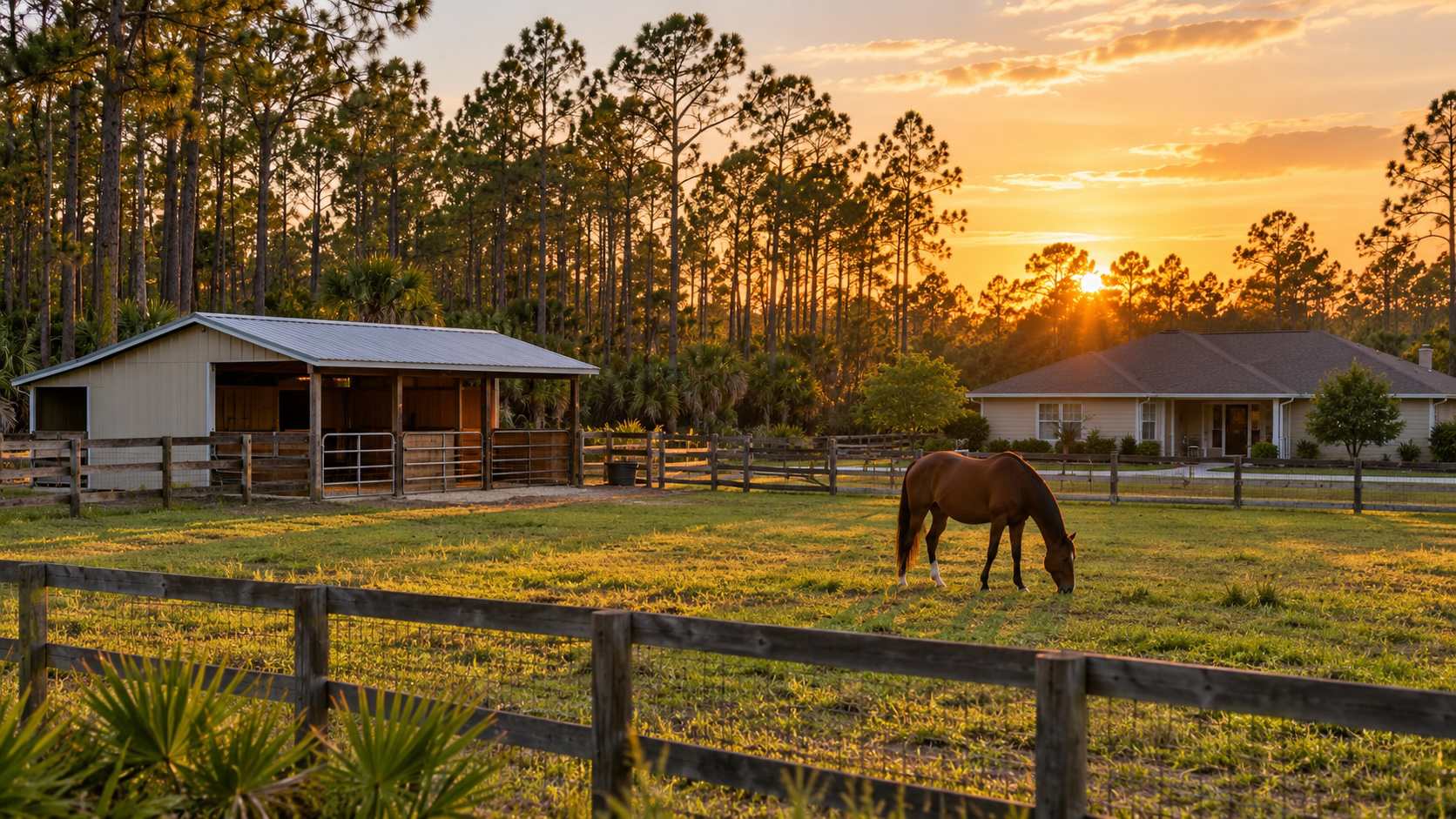
This is where my two worlds collide. A lot of folks who fall in love with forest riding start wondering, “What if I lived close enough to do this every weekend?” East Marion County — areas like Fort McCoy, Silver Springs, and out toward Salt Springs — puts you a lot closer to the forest than living out by the World Equestrian Center or in town.
That trade-off is real, though. Being near the forest usually means being farther from the show grounds, the big tack stores, and some of the equine vets and farriers that are clustered on the west side of Ocala. Neither side is “better.” It just depends on whether your family’s horse life is mostly trails or mostly shows.
If you’re house-hunting with trail riding in mind, here are the questions I’d want you asking:
- How far is the drive to the trailhead you’d actually use? “Near the forest” can mean ten minutes or forty-five. Drive it with a trailer in mind.
- Can you park and turn around a truck and trailer on the property? You’d be amazed how many lovely properties fail this one.
- What’s the footing and drainage like? Sandy soil drains well, but it also means thinking about sand colic, hay feeding setups, and pasture that may need more help to grow.
- Are there deed restrictions or HOA rules on horses? Never assume. Get it in writing.
- Well, septic, and power? Rural properties out this way are often on well and septic. Your inspection should cover both.
- Who’s your vet and farrier going to be? Ask whether they travel to that side of the county before you fall in love with the house.
If you want the full rundown on evaluating a farm, my horse property buying checklist walks through barns, fencing, and pasture in detail. And if you’re still deciding whether you’re ready to bring your horse home at all, start with boarding vs. buying.
And honestly, one of my favorite things about this side of the county is seeing all the people out enjoying the trails. It’s a real community of trail riders, and it’s a big part of what makes living near the forest special.
Is the Forest a Good Place for Kids and Green Horses?
It can be — with the right horse and the right plan. Kids on steady, been-there-done-that trail horses often have the time of their lives out there. A young or spooky horse meeting its first deer, bicycle, or rustling armadillo in the palmettos? That can go sideways fast.
A few ideas that help:
- Start with a short loop near the trailhead, not an all-day adventure.
- Pair a green horse with a calm, experienced buddy horse.
- Ride in cooler months or early mornings — Florida heat and deep sand are a tough combo.
- Have kids wear helmets every single time. No “it’s just a trail ride” exceptions.
Riding out in big open country is one of those things that makes the whole horse-family life feel worth it. It’s also one of the reasons so many people end up moving here — I wrote more about that in why Ocala is the Horse Capital of the World.
The Bottom Line
Yes, you can ride horses in the Ocala National Forest, and if you’re a trail-loving horse family, it’s a huge perk of living in Marion County. Check the Forest Service for current trails, closures, and fees, carry your Coggins, respect hunting season, and bring a buddy. And if you’re thinking about buying a place close enough to ride out there regularly, think about the trailer, the drive, the footing, and the vet before you think about the kitchen.
If that’s the dream, I’d love to help you find the right spot.
Have you ridden in the Ocala National Forest? Tell me your favorite trailhead (or your best “my horse saw a bear” story) in the comments!