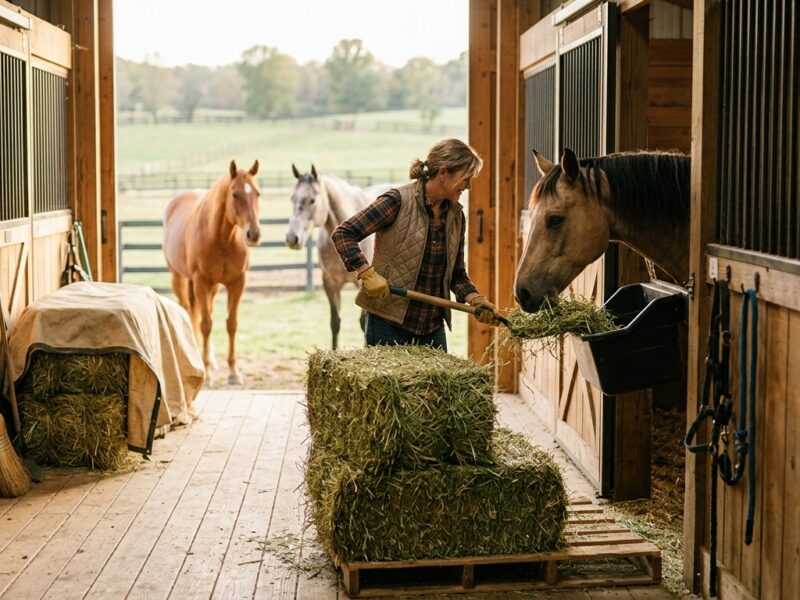
Nobody handed me a pamphlet when we got into horses. No one sat me down and said, “Hey, here’s what your life — and your bank account — are actually going to look like.” And honestly? I think most horse people do that on purpose. Because if they told you the real numbers upfront, half of us would have run the other way.
So let me be that person for you. The one who tells you the truth.
Whether you’re thinking about buying your kid’s first horse or you’re already in it and just trying to figure out where all your money went — this is the honest breakdown. Real numbers. No fluff.
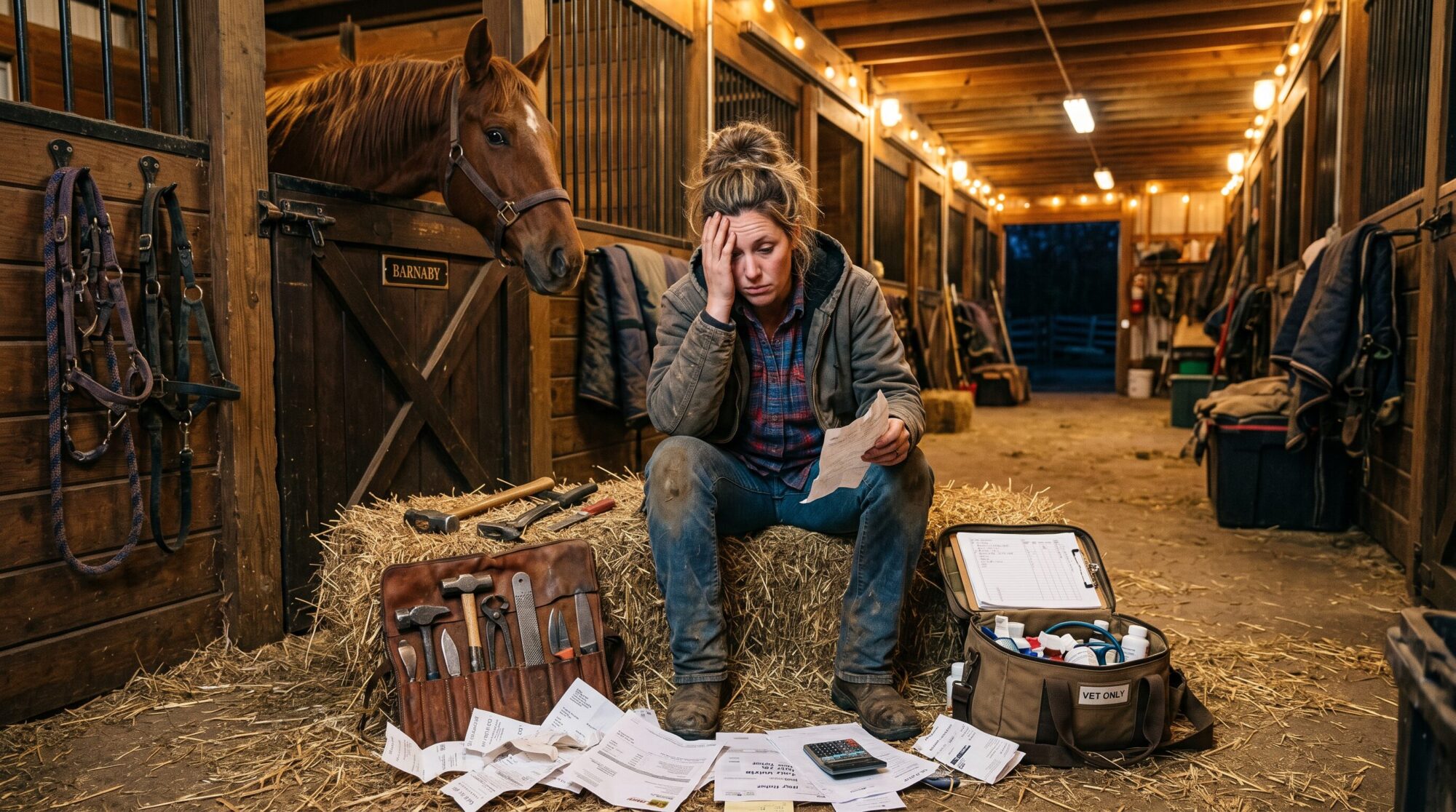
The Purchase Price Is Just the Beginning
Let’s start with the obvious one — actually buying the horse. Prices can range from a few hundred dollars for an older or rescue horse all the way to tens of thousands for something trained and show-ready. For most families just getting into horses for lessons and local shows, a solid beginner horse is realistically going to run you $3,000 to $15,000.
And then — before that horse ever sets foot on your property — you need a pre-purchase exam (PPE). Please, please don’t skip this. I cannot stress it enough.
The base exam ($250–$450) covers a full physical, a neurological check, and a thorough lameness evaluation. Sounds reasonable, right? Here’s where it gets real:
- Farm call / travel fee: $50–$200 depending on how far the vet has to drive
- X-rays: $50–$95 per view. A basic set of front feet and hocks runs $400–$600. A full comprehensive set — neck, back, stifles, all fetlocks — can push your x-ray bill alone over $1,500–$2,000
- Bloodwork and drug testing: Basic bloodwork is around $150. A full drug screen to check for hidden sedatives or pain maskers runs $200–$500 (yes, this is a thing people do)
- Coggins test: $50–$100
- Ultrasound or scoping: $200–$400+ if anything needs a closer look
What you’re actually going to spend: A standard PPE for a mid-level riding horse with x-rays and bloodwork typically lands between $1,000–$1,800. For a higher-level or competition horse? Budget $2,500–$3,500+ easily.
Add in transport to your barn ($200–$800 depending on distance) and you can see how quickly you’re several thousand dollars in before you’ve even bought a bag of grain.
Boarding: The Bill That Never Goes Away

Unless you have your own property, boarding is going to be your biggest monthly expense — every single month, forever, rain or shine.
What you pay depends on where you live and what’s included:
- Basic pasture board: $200–$500/month
- Full care board (stall, hay, grain, daily turnout): $500–$1,500/month
- Full training board (includes regular training rides): $1,500–$3,500+/month
This is your baseline. Every month. Before anything else happens.
The Farrier: Mark It on Your Calendar
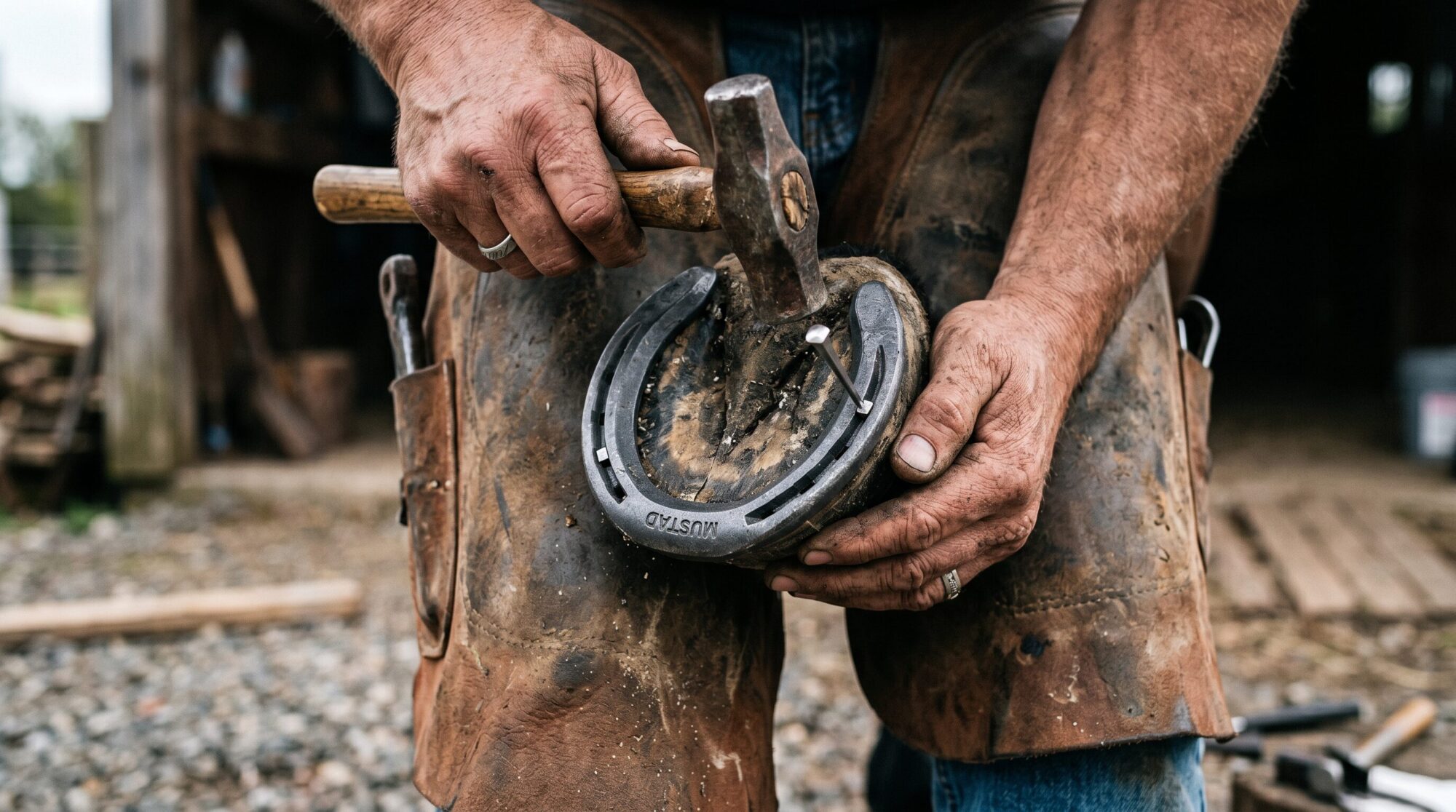
Every 6–8 weeks, the farrier is coming. There is no skipping it, no pushing it off, no “we’ll do it next month.” Neglected hooves cause real health problems and you will pay for it later in vet bills.
- Trim only: $50–$100
- Front shoes: $150–$250
- Full set of shoes: $250–$450
Averaged out monthly, you’re looking at $150–$350/month just for feet. Plan for it like a subscription you can’t cancel — because you can’t.
Vet Bills: The Routine Stuff (and the 10pm Phone Calls)
Routine annual care includes a wellness exam, vaccinations in spring and fall, a Coggins test, and a dental float every year or two. Budget roughly $500–$800/year just for the basics.
And then there’s the emergency fund. Horses are absolute pros at hurting themselves at the worst possible time — a Friday night, right before a big show, when you just paid a massive bill for something else. Colic, mystery lameness, a cut that definitely needs stitches — it’s not a matter of if, it’s when.
Most experienced horse people keep $2,000–$5,000 sitting in an emergency fund at all times. Horse insurance is also worth looking into, especially for a horse with real value — it typically runs $50–$150/month depending on what you need covered.
Lessons and Training
If your kid is taking regular lessons (and they should be, especially as a beginner), that’s another real monthly number:
- Group lessons: $40–$80 each
- Private lessons: $65–$150 each
At one to two lessons a week, you’re looking at $300–$500/month in lesson fees. If your horse needs a trainer too, add another $500–$1,500/month on top of that.
Tack, Supplies, and All the “Little Things”
This is the category that sneaks up on everyone. You need a saddle, bridle, saddle pad, helmet, boots, grooming supplies, fly spray, blankets, and about fifty other things that seem small until you add them up.
Getting set up from scratch can easily run $1,000–$3,000 depending on discipline and quality. Ongoing monthly supplies — fly spray, grooming products, supplements, replacement gear — add another $75–$150/month.
If you want quality gear without paying full price, I put together a full guide to affordable horse tack on Amazon — everything I’d actually use, without the tack shop markup.
👉 See My Budget Riding Gear Picks
The Real Monthly Number
Here’s what one horse — not competing heavily — actually looks like per month:
| Expense | Monthly Cost |
|---|---|
| Board | $1,000–$3,500 |
| Farrier (averaged) | $150–$350 |
| Vet (averaged) | $60–$150 |
| Lessons | $300–$500 |
| Supplies & tack | $75–$150 |
| Total | $1,585–$4,650/month |
That’s $19,000–$55,800+ per year. And that’s before show season.
So Why Do We Keep Doing It?

Because no spreadsheet captures what happens to a kid at the barn.
The horse doesn’t care if they had a bad day at school. It won’t cooperate just because they want it to. It teaches patience and grit and responsibility in a way that nothing else really does. And somewhere along the way, it stops being just your kid’s thing and starts being yours too.
The money is real. The sacrifices are real. Go in with your eyes open, build that emergency fund before you need it, and budget honestly from the start.
And then enjoy every single muddy, expensive, beautiful minute of it.
What’s the horse expense that caught you most off guard? Drop it in the comments — I’d love to know I’m not the only one who didn’t see it coming. And if this helped you plan better, share it with someone who’s about to take the leap!