

If you’ve spent any time scrolling through tack shop catalogs, you’ve probably noticed there’s a training aid for just about everything — whips, poles, mirrors, simulators, you name it. It’s easy to feel like you need all of them to get better. The truth is, a handful of well-chosen tools can do more for your riding than a tack room full of gadgets ever will.
As an English rider, the aids that actually move the needle are the ones that give you honest feedback — about your position, your horse’s response, and how the two of you are working together. Here are five training aids I think are genuinely worth the space in your trailer, and why each one earns its spot.
1. A Dressage Whip
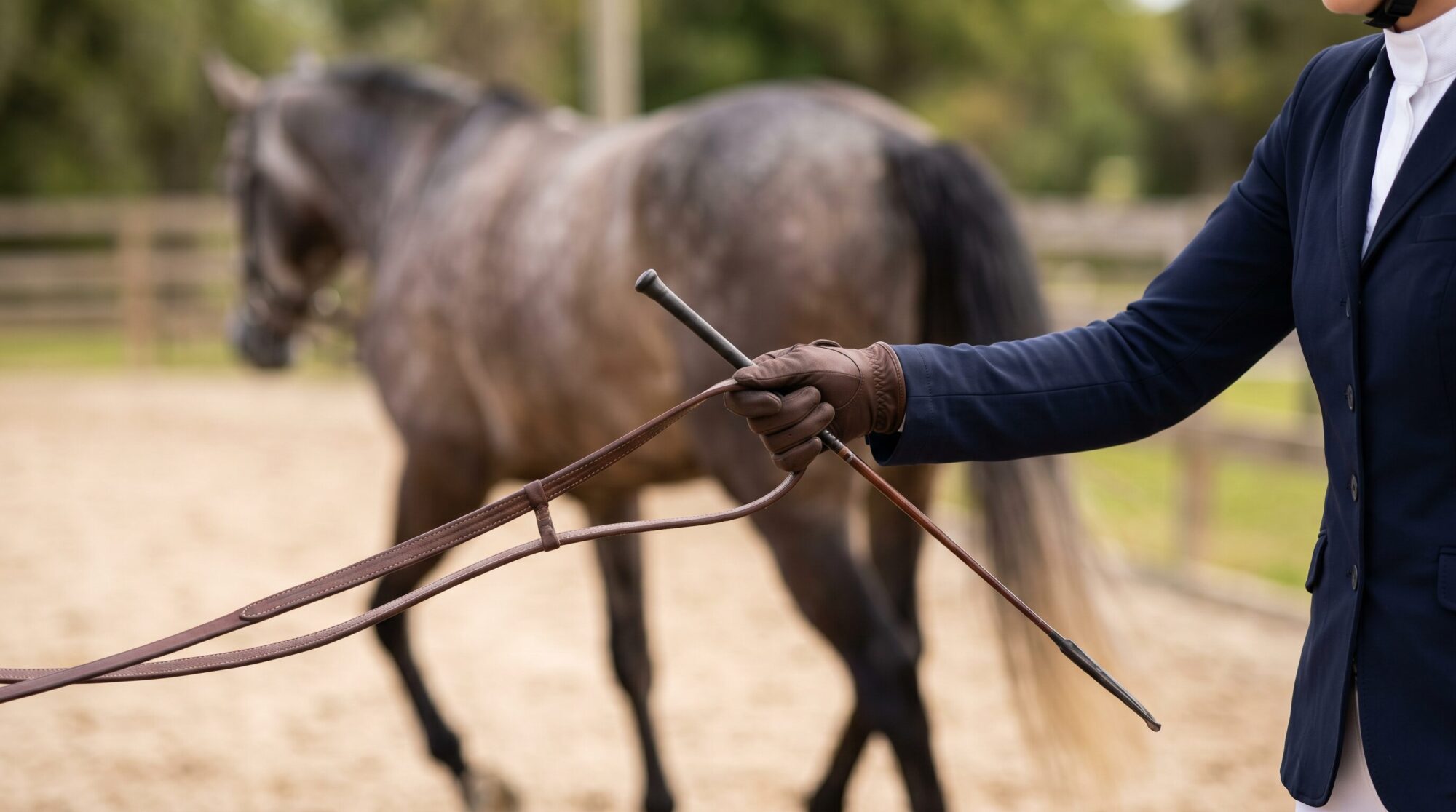
A dressage whip isn’t about punishment — it’s a tool for clarity. Used correctly, it’s a quiet extension of your leg aid, helping reinforce “go forward” or “step under” cues without you having to nag with your heel over and over. For riders working on lateral work or simply trying to sharpen up a lazy response to leg, a dressage whip can shortcut a lot of frustration.
Look for one that’s long enough to reach behind your leg without you having to shift your hand position — most riders do well with a 39 to 43 inch whip. It should always be paired with a light, asking contact, never a sharp correction.
2. Ground Poles and Grid Work
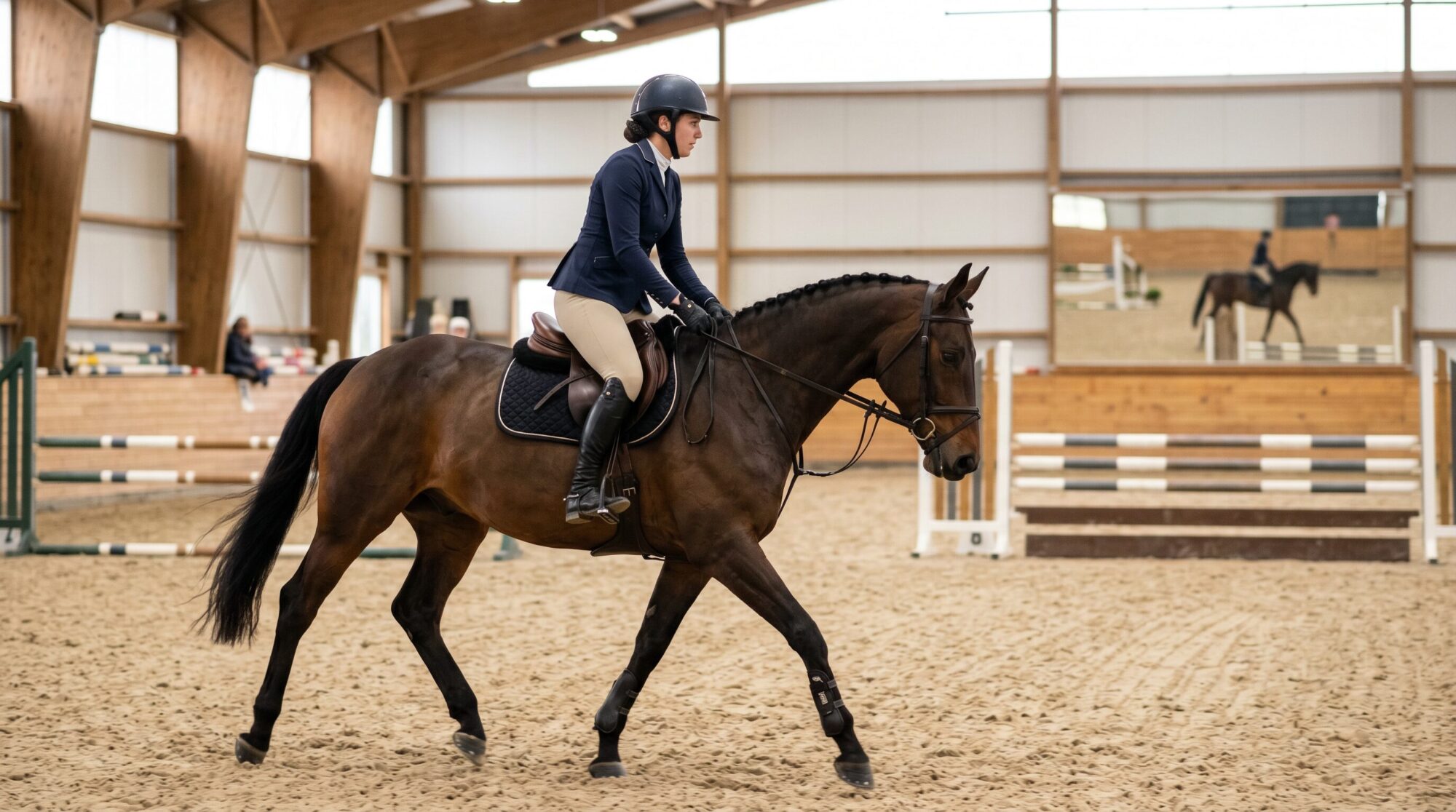
Ground poles are about as low-tech as it gets, and that’s exactly why they work. Whether you’re laying out a simple trot-pole pattern or building a small jumping grid, poles force both you and your horse to think about rhythm, stride length, and timing in a way that’s hard to fake.
Grid work in particular is fantastic for building a horse’s confidence and athleticism over fences, while teaching the rider to wait for the jump instead of riding ahead of it. You don’t need a fancy set — a handful of plain poles, rearranged into different patterns, will keep you busy for months of exercises.
3. An Arena Mirror
It is genuinely hard to know what your position looks like from the saddle. A mirror set up at the end of the arena gives you instant feedback on things a trainer would otherwise have to call out from the rail — a collapsed hip, a tipped shoulder, hands that have crept up too high.
If a full-size arena mirror isn’t in the budget or the space, even a portable mirror you can prop up for flatwork sessions is enough to catch the habits that are hardest to feel, especially in sitting trot or two-point.
4. A Riding Simulator (or Simply Filming Yourself)
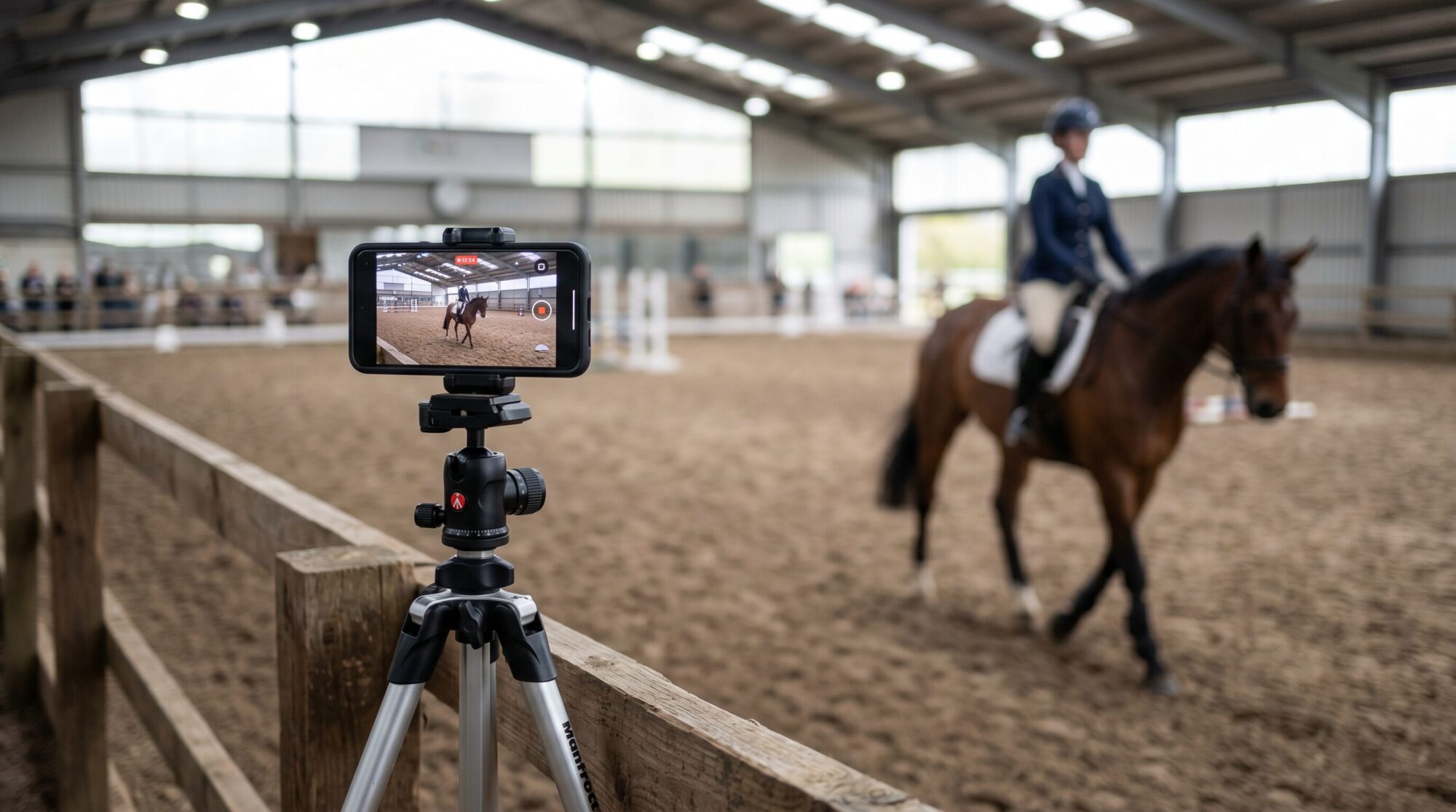
Mechanical riding simulators are a great option if you have access to one through a barn or training facility — they let you isolate and feel your position without worrying about a live horse’s reaction. But if that’s not realistic for your budget, a phone propped on a tripod does almost the same job after the fact.
Filming a lesson or a solo schooling session and watching it back is one of the most humbling — and useful — things you can do as a rider. You’ll catch things on video that you’d never feel in the moment.
5. Trot and Canter Poles for Rhythm Work
Separate from a jumping grid, a simple line of evenly spaced poles set for trot or canter is one of the best tools for teaching a rider to feel — and hold — a consistent rhythm. Horses that rush or that drag through their gaits often settle into a much more even tempo once poles are introduced, because the spacing does the correcting for you.
This is also a low-stress way to introduce a green horse to “thinking through” ground obstacles before you ever point them at a fence. As your horse gets stronger, you can gradually widen or narrow the spacing to ask for a bigger or more compact stride.
Introducing a New Aid Without Overwhelming Your Horse
Any new tool — even something as simple as a pole on the ground — is new information for your horse, and it pays to introduce it gradually. Walk your horse over poles before you trot them. Let them see and sniff a mirror before you ask for a quiet halt next to it. Carry a whip on a few rides without using it before you ever ask for a real response with it.
Rushing this step is the most common reason a training aid gets blamed for “not working,” when really the horse just never had a calm, low-pressure introduction to it.
Common Mistakes Riders Make With Training Aids
A few habits tend to undercut the value of even the best tools:
- Relying on the whip instead of refining the leg aid: The whip should reinforce your leg, not replace it.
- Setting poles once and never adjusting them: Spacing should change as your horse’s stride and balance develop.
- Only checking the mirror, never checking in with feel: Use the mirror to calibrate what a correct position feels like, then ride without it and see if you can hold that feeling.
- Filming once and never again: A single video is a snapshot. Filming regularly is what actually shows progress over time.
Choosing What’s Right for You
You don’t need every tool on this list right away. Start with whatever addresses your biggest sticking point — a whip if your horse is dull to the leg, poles if rhythm is the issue, a mirror or video if you’re working blind on position. Add from there as your training needs change. Poles and a phone tripod are the cheapest places to start if budget is tight; a mirror or simulator can wait until you’ve outgrown what the basics can teach you.
Once you’ve got your training aids sorted, round out your kit with the right saddle pad for your discipline or a breakdown of what tack is worth splurging on.
Building Your Tack Room?
Check out my top training aid pick on Amazon to start building a smarter tack room.