
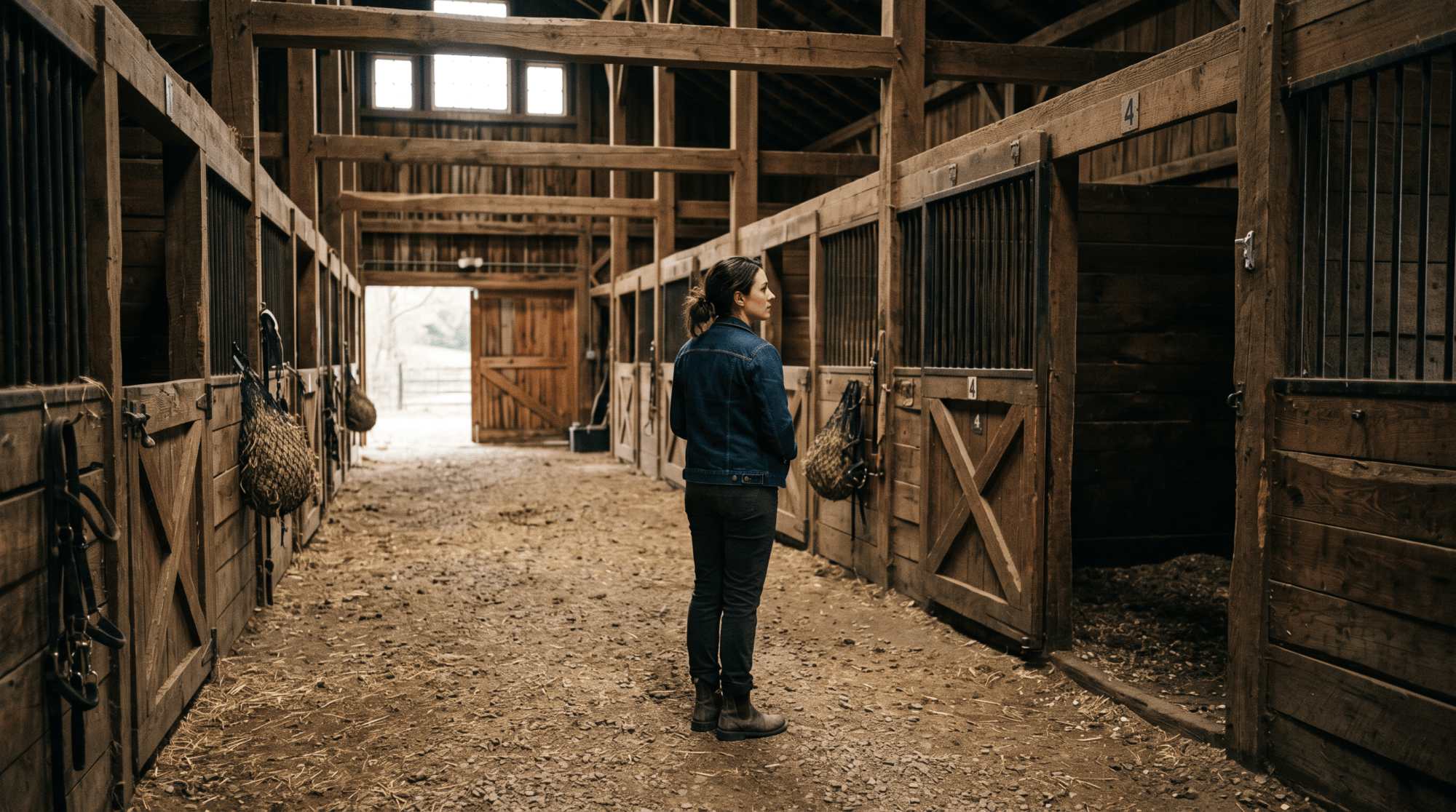
There’s a very specific kind of quiet that happens after the trailer pulls out of the driveway.
Not the good quiet. The other kind — where the barn is exactly as full as it was yesterday except for one stall, and you keep finding yourself walking toward it out of habit before you remember. You did everything right. You found a good home, you asked the right questions, you cried in the tack room where nobody could see you. And still, somehow, you feel like you did something wrong.
Nobody warns you about that part.
I should say up front: I’ve never had to sell a horse. But I’ve sat with barn friends who have, and I got a much smaller taste of it when our lease ended and my daughter couldn’t hold him or ride him again. There was nothing to grieve on paper — nobody died, nothing went wrong — and it still knocked the wind out of both of us. So when I say I understand a piece of this, I mean a piece. The rest of what’s here comes from the barn moms who have actually lived it.
Why Selling Hurts Differently
When a horse dies, the grief is clean, in a terrible way. It happened to you. Nobody expects you to justify it.
Selling is different, because you chose it. Somewhere in the middle of the sadness is a voice asking whether you actually had to, whether you tried hard enough, whether a better horse person would have found a way. That’s not grief anymore. That’s guilt wearing grief’s clothes, and it’s a much harder thing to sit with.
And because it was a decision, people feel free to have opinions about it in a way they never would about a loss. The barn aisle comments. The raised eyebrow from someone who doesn’t know your vet bills, your work schedule, or how many nights you laid awake doing the math before you finally made the call.
The Reasons Are Almost Always Good Ones
Here’s what I’ve noticed about barn moms who sell: the reason is almost never careless. It’s usually one of these, and every single one of them is legitimate:
- Money ran out. Board went up, or the vet bill came, or a job changed. Keeping a horse you cannot afford is not love — it’s a slower kind of harm to the horse.
- Your kid outgrew him. The pony who was perfect at nine is not the horse who can carry a fourteen-year-old over bigger fences. That’s the pony doing his job well, not failing at it.
- It wasn’t the right match. Sometimes a horse and a rider are both good and still wrong together. Forcing it usually ends with someone getting hurt.
- Life moved. A move, a divorce, an illness, a kid who quit riding. Life doesn’t check the horse’s schedule first.
- Safety. If someone is genuinely getting hurt, ending that is the responsible call, not the cowardly one.
Notice that not one of those is “I stopped caring.” That’s never the reason. It’s never once been the reason.

The Lies the Guilt Tells You
Guilt is a bad narrator. It says things that feel true at 2am and fall apart in daylight:
“I gave up on him.” You didn’t give up. You made a decision with the information and resources you actually had, not the ones you wish you had.
“I sold him for money.” You sold him because the money wasn’t there. Those are opposite things.
“He’ll think I abandoned him.” This one hurts the worst and holds up the least. Horses are extraordinarily present animals. He is not lying awake replaying it. He is figuring out the new turnout schedule and deciding which person in the new barn has treats.
“A real horse person would have found a way.” Real horse people sell horses. Professionals sell horses constantly. The fantasy that a good owner keeps every horse forever is a story we tell that quietly hurts a lot of people.
Doing Right By the Horse (What’s Actually in Your Control)
You cannot control how you feel about it. You can control the parts that actually determine the horse’s life, and this is where your energy is genuinely well spent:
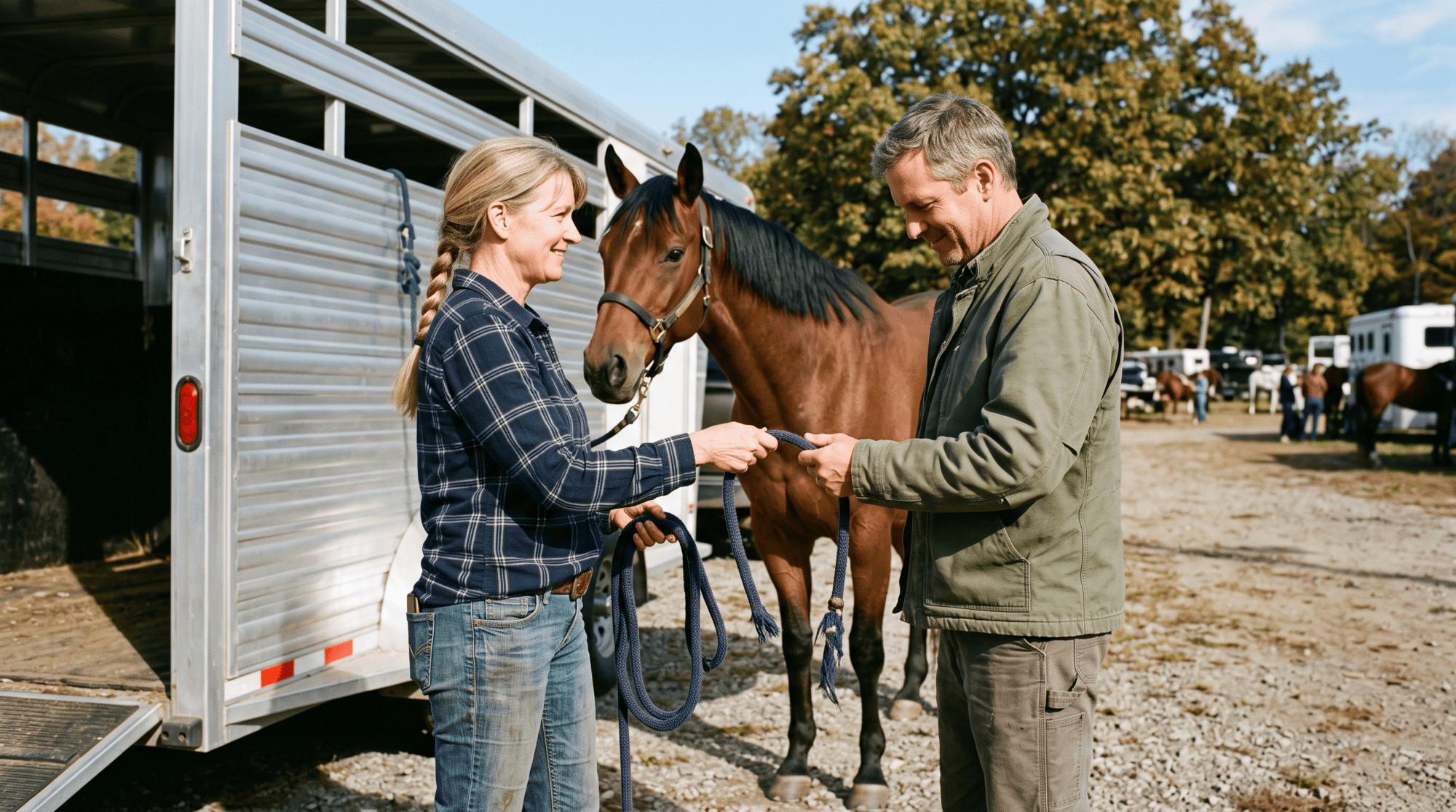
- Vet the buyer like you’d vet a babysitter. Ask where he’ll live, what his job will be, who their vet and farrier are. Ask to see the barn.
- Be honest about him. Every quirk, every soundness issue, everything he doesn’t like. Honesty is what keeps him from being resold in six months to someone who wasn’t prepared.
- Consider a right of first refusal written into the sale — meaning if they ever sell him, you get the option first. It won’t always be honored, but it’s worth asking for.
- Decide in advance how much contact you want. Some people want photos forever. Some people need a clean break to heal. Both are allowed, and you’re permitted to change your mind.
Give It the Time It Deserves
Selling a horse is a real loss, and it’s allowed to take real time. Not a weekend. Not “you’ll feel better once the board bill stops.” You’ll probably still get a lump in your throat when a similar-looking horse walks past you at a show a year from now, and that doesn’t mean you made the wrong call. It means you loved him.

If the guilt is loud right now, it’s worth knowing that grief over a horse — any kind of horse goodbye, not just death — is real grief and deserves the same space. And if you’re carrying this on top of everything else, the mental load of barn mom life is heavy enough without adding self-blame to it.
The Bottom Line
You made a hard decision for good reasons and it hurt, which is exactly what it looks like when a responsible person does something difficult. The guilt isn’t evidence that you did wrong. Usually it’s evidence of how much you cared about getting it right.
Have you had to sell a horse? I’d love to hear how you got through it — leave a comment, and share this with another barn mom who’s carrying this one quietly right now.


One thought on “Selling a Horse: The Guilt Nobody Warns You About”
Comments are closed.