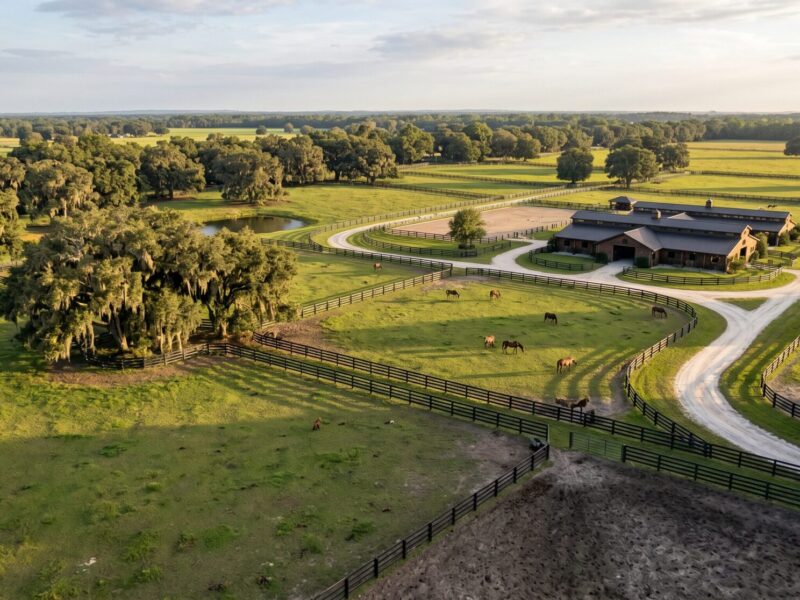
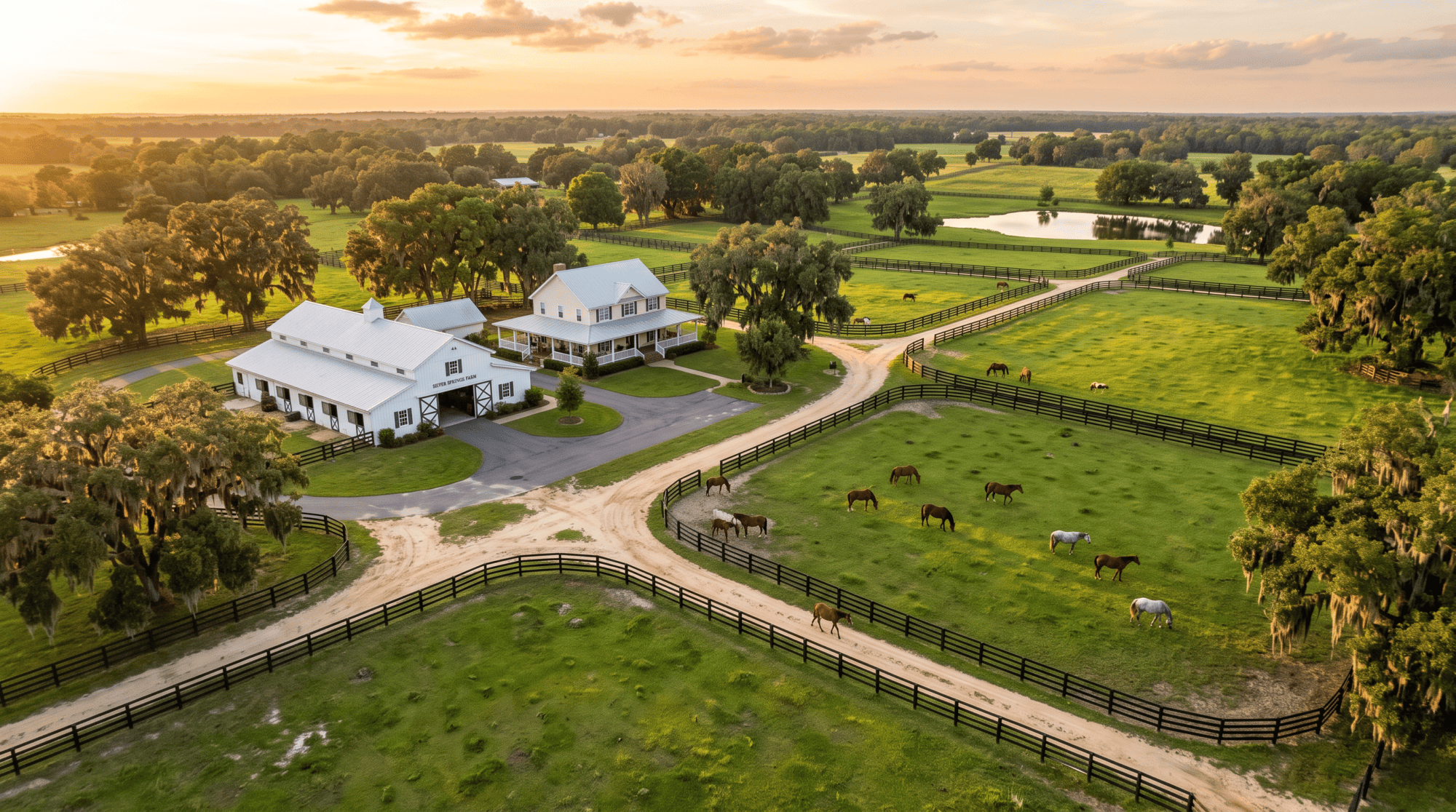
This is the very first question almost every equestrian buyer asks me, usually before we’ve even scheduled a showing: what does a horse property actually cost around here? It’s a fair question, and it deserves a real answer instead of the usual “it depends” runaround — so here’s my honest, working range as a Realtor who sells these properties in Marion County every day, plus exactly what moves that number up or down.
Want an Exact Number for Your Search?
Ranges are a starting point. I’ll pull real comps for the acreage, barn setup, and area you’re actually considering.
The Honest Range
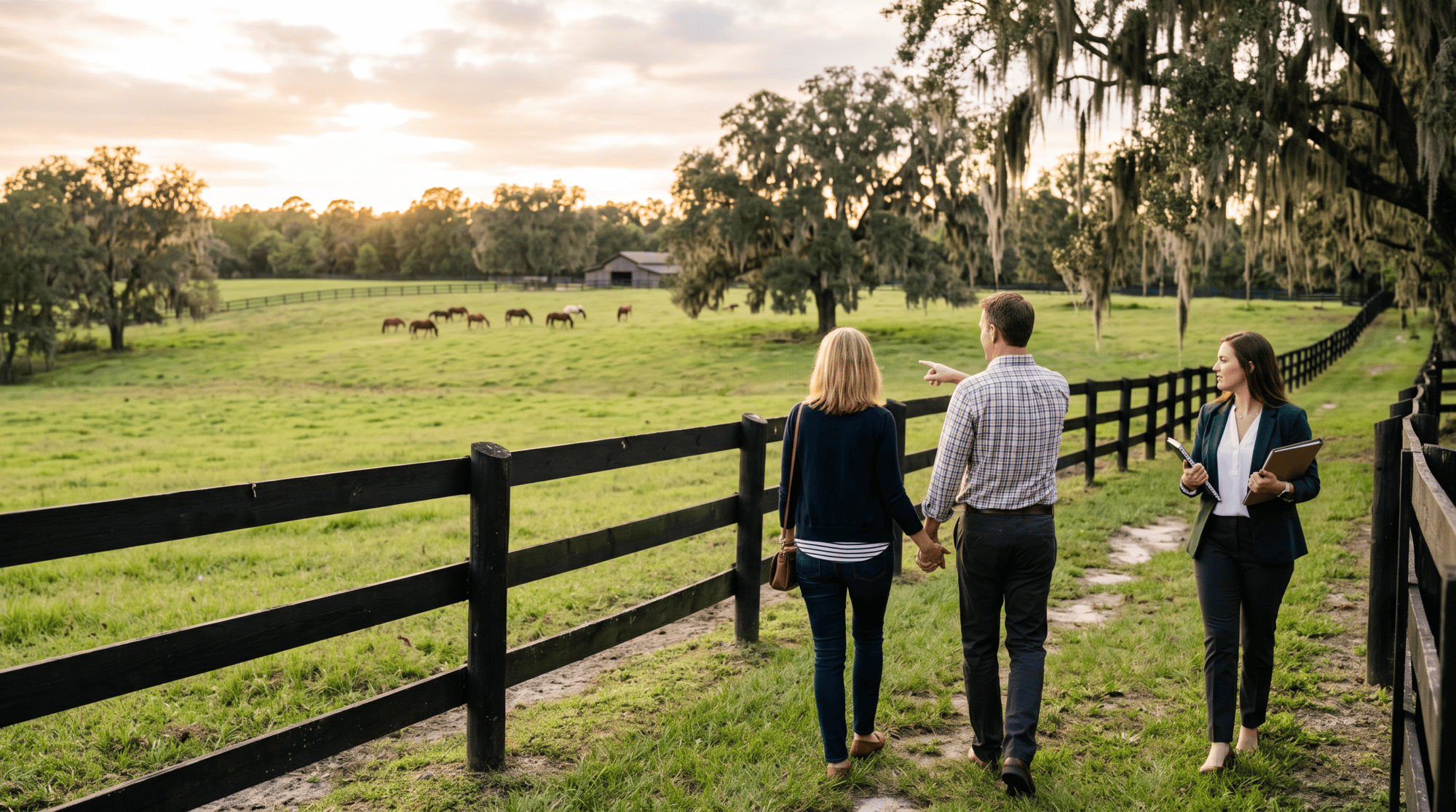
For a genuinely usable horse property — real pasture, a functional barn, safe fencing, not just a house that happens to sit on rural-zoned land — most Marion County buyers I work with land somewhere between the high $300,000s and $1M+, with a lot of the actual activity concentrated in the $450,000 to $750,000 range for a solid, move-in-ready 5 to 15 acre setup. Below that range you’re usually looking at a fixer — older barn, fencing that needs replacing, a house that needs work. Above it, you’re paying for either a much larger operation, a show-quality arena, or proximity to the World Equestrian Center.
That’s a wide range on purpose. The number moves a lot based on a handful of specific factors, which matter more here than square footage of the house does.
What Actually Moves the Number
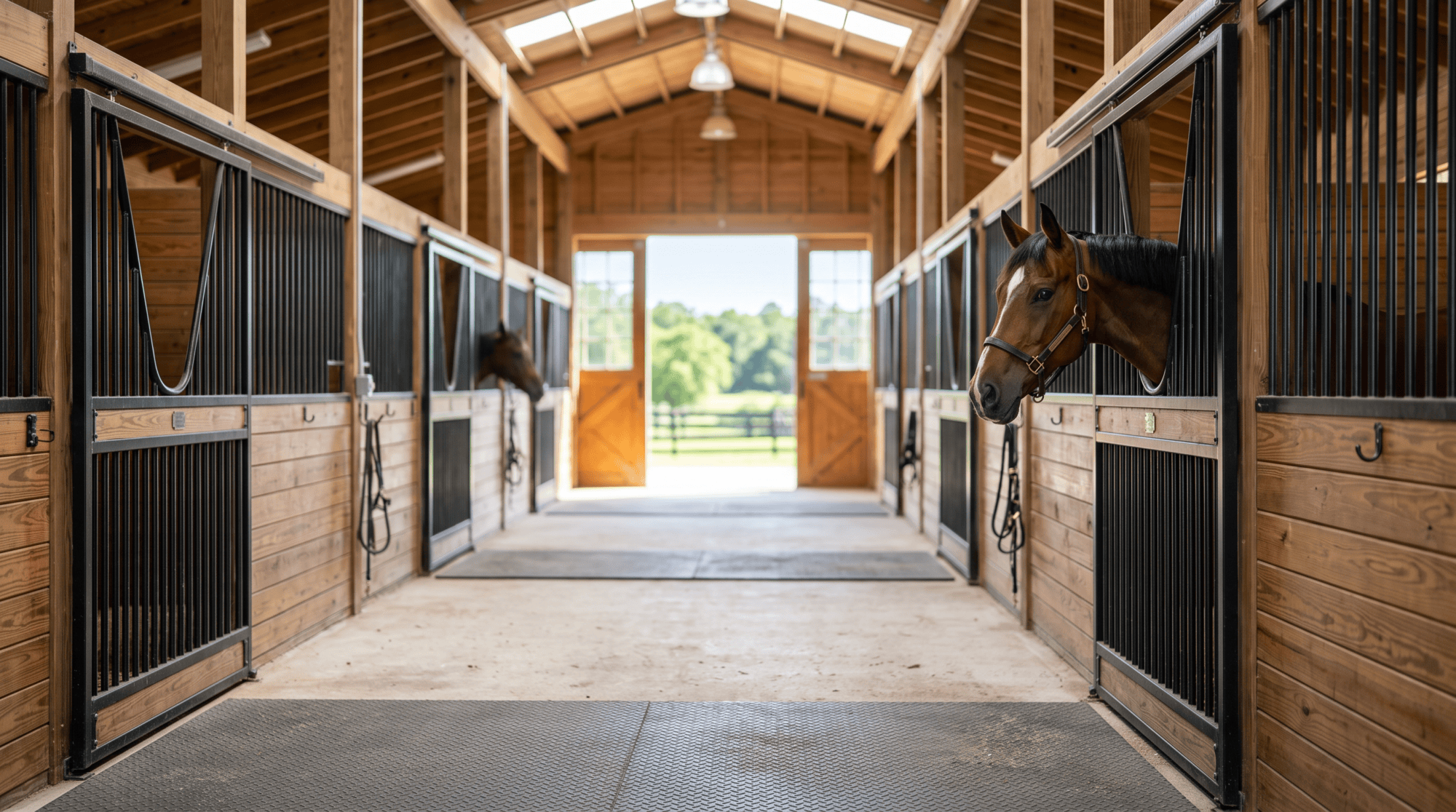
Your First-Year Horse Property Cost Checklist
That 10-20% cushion doesn’t disappear into thin air. When I walk buyers through a horse property, these are the four places first-year money almost always goes — and they’re worth sizing up before you make an offer, not after the horses are moved in.
☐ Fencing
- Walk the entire perimeter, not just the pretty stretch along the driveway
- Push on the posts — wood rots at ground level, and Florida termites are always hungry
- Look for broken boards, sagging wire, and any gap a horse could get a hoof or head through
- Test every gate: does it swing, latch, and close without dragging?
- Note whether pastures are cross-fenced for rotation or it’s one big field
☐ Arena Footing
- Look at it after a rain — standing water means drainage problems underneath
- Check the depth; footing that’s too deep or too shallow is hard on legs
- Watch for rocks, roots, or base material working up through the sand
- Ask how old the footing is and when it was last topped off or dragged
- Plan for dust control — our sandy soil drains beautifully, but arena sand still breaks down and shifts over time
☐ Barn Updates
- Ventilation: fans, open eaves, a real cross breeze. Florida summers are no joke
- Electrical: have the wiring checked for rodent damage and anything not up to code — this is where barn fires start
- Stall mats: are they there, and are they lying flat or curling and cracked?
- Water: working hydrants or automatic waterers, with no leaks
- Roof: look for water stains on the rafters and in the hay storage area
- Lighting in the aisle and stalls for those early-morning and late-night checks
☐ Well and Septic
- Get the well water tested for the house and the horses
- Ask the age of the well pump and pressure tank — a barn puts heavy demand on a well
- Order a septic inspection, even if the seller says it was “just pumped”
- Find out where the tank and drain field are, so horses, trailers, and the manure pile stay off them
- Make sure the barn wash rack doesn’t drain into the septic system
None of these is a dealbreaker on its own. But problems in two or three of these areas add up to real money — and that belongs in the conversation about your offer price, not as a surprise in month three.
What Does It Cost to Build a Riding Arena?
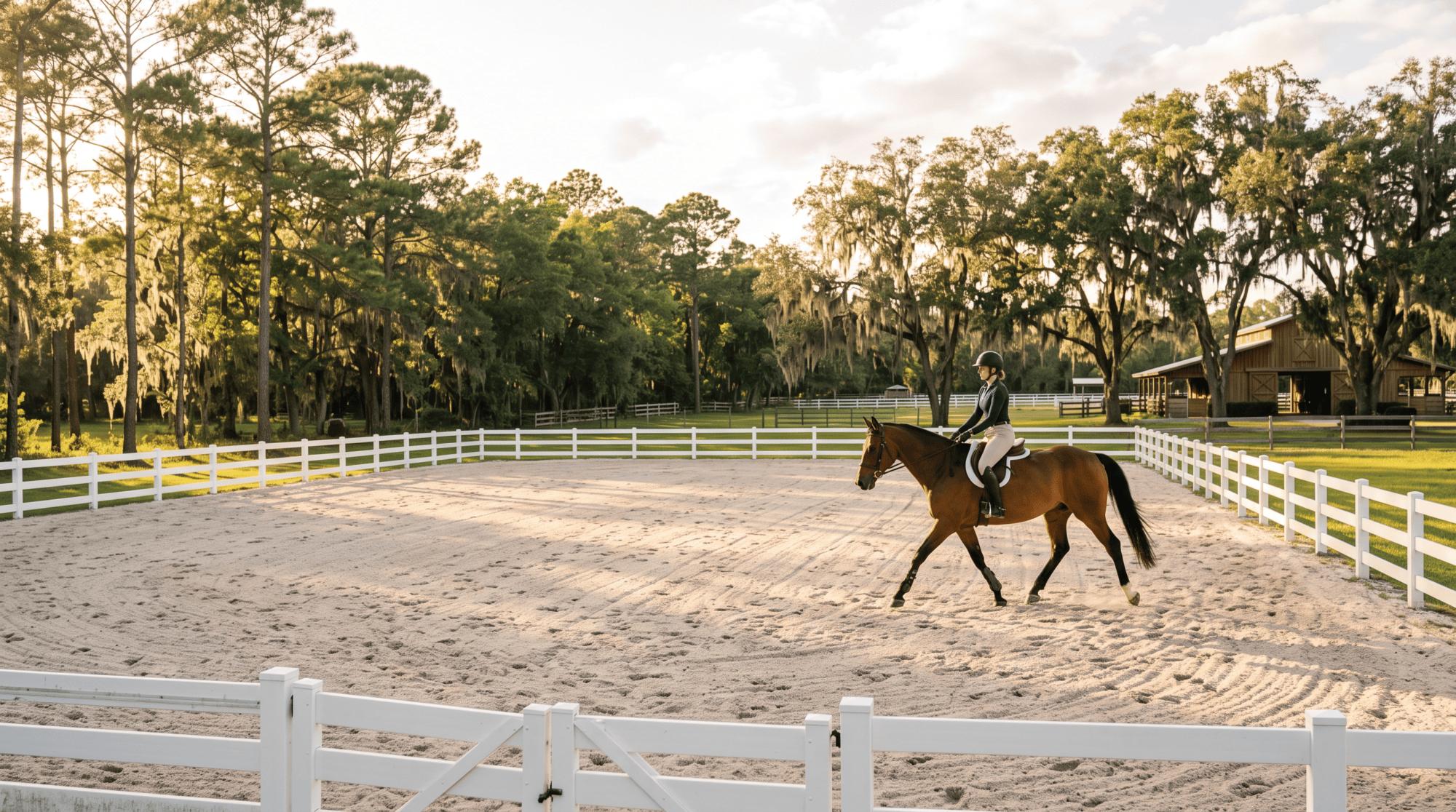
If the property you love doesn’t have an arena, this is usually the next question. Here’s how the cost breaks down.
Outdoor Arena: $20,000–$50,000
For a standard outdoor riding arena, $20K–$50K is a realistic budget. That money goes to two main places:
- Site preparation — land clearing, grading, and excavation so the arena sits level and water drains away from it instead of pooling in it.
- Core materials — the compacted sub-base everything sits on, plus the sand footing on top.
Arena size, perimeter fencing, and footing quality push you toward the higher end. Skimping on the base is the classic mistake: it’s the part you can’t see, and the most expensive part to fix later.
Covered or Indoor Arena: $100,000–$500,000
Once you add a roof, it’s a different project entirely. Covered and fully indoor arenas typically run $100K–$500K, depending on size, open versus enclosed sides, lighting, and footing. Here in Florida, a covered arena buys you shade in July and a place to ride through the afternoon thunderstorms — which is exactly why a property that already has one carries a real premium.
The Bottom Line
Marion County horse properties span an enormous range, but the sweet spot most families actually buy in is the $450,000-$750,000 window for a solid, functional 5-15 acre setup. The fastest way to get a real number instead of a range is a conversation about your specific must-haves — usable acreage, barn condition, and how close you need to be to shows and vets.
For more on what to actually inspect once you’re touring, see my horse property buying checklist, and if you’re still deciding whether to board or buy, this post walks through that decision. New to the area? Here’s why Ocala is the Horse Capital of the World — and what to know before you move.