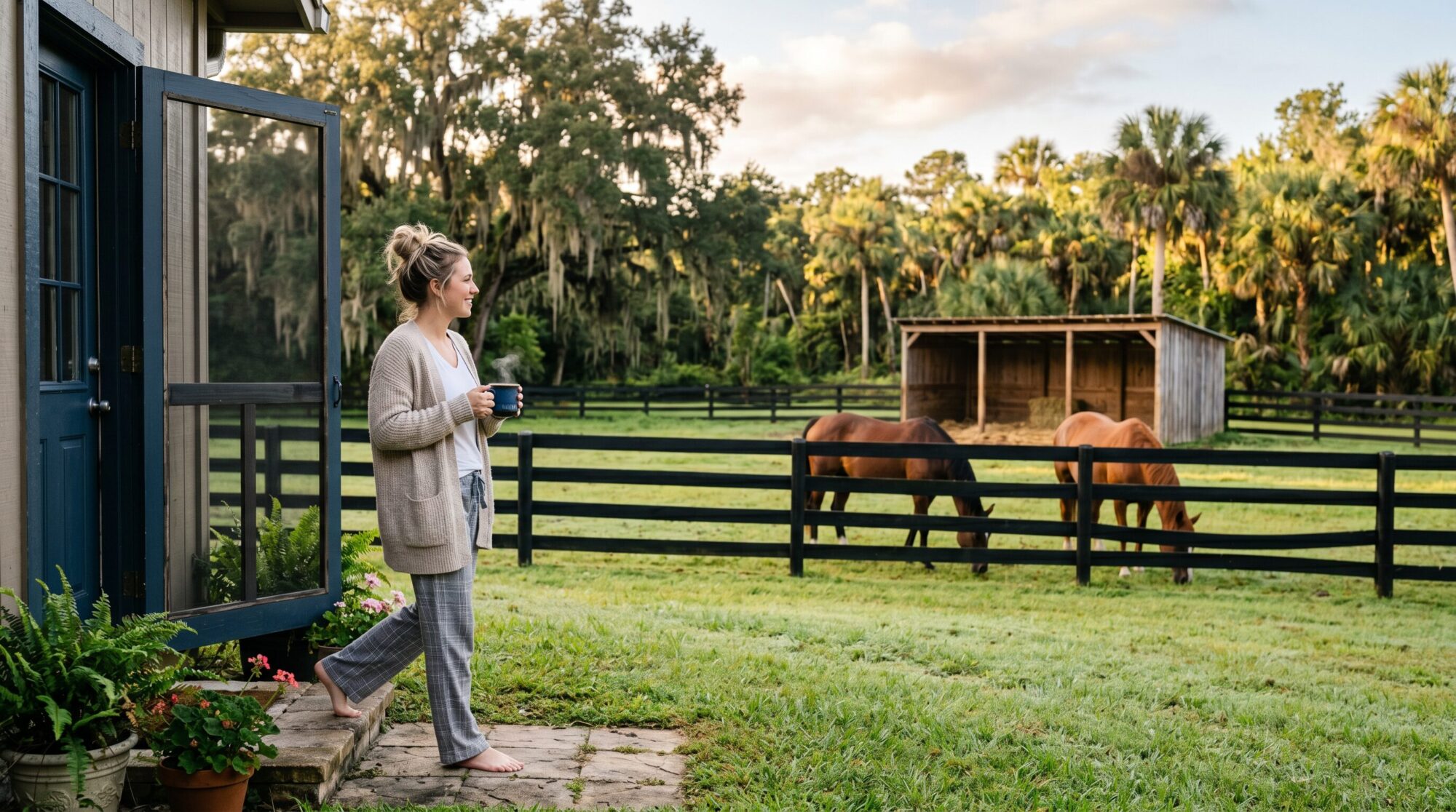
Hi, I’m Cynthia. As a barn mom, a lifelong equestrian, and a licensed Realtor specializing in horse properties here around Ocala, Florida, I spend my days talking to riders who are standing at a very specific, very familiar crossroads. You love your horse, you love riding, but lately, the boarding life just isn’t fitting your family the way it used to. You start driving past farm-for-sale signs and catching yourself daydreaming about walking out your back door in your pajamas with a cup of coffee to feed your own horses.
But daydreaming is one thing; making the ultimate leap from boarding to buying is entirely another. It is the biggest lifestyle shift an equestrian family can make.
If you are searching for a clear answer on when to make the transition, here is the honest truth: You know it is time to buy your own horse property when your desire for total control over your horse’s care, your family’s access, and your daily routine finally outweighs the convenience of having someone else do the morning chores. It is the moment when the hidden costs of boarding—both financial and emotional—become heavier than the responsibility of owning the land yourself.
Deciding to bring the horses home is thrilling, but it is not a decision to make lightly. Let’s break down the real signs it might be time to buy, the honest trade-offs of farm ownership, and how the numbers actually stack up.
Ready to Bring the Horses Home?
If you have decided that the farm life is exactly what your family needs, having a Realtor who understands the unique requirements of horse properties makes all the difference. Whether you are looking for a small backyard setup or a professional training facility here in Central Florida, I can help you find the perfect fit.
The Tipping Point: Real Signs It’s Time to Buy
For most of my clients, the decision to buy a farm does not happen overnight. It is usually a slow build-up of small frustrations that eventually lead to a breaking point. Here are the most common signs that you have genuinely outgrown the boarding barn lifestyle.
1. Rising Board Costs Are Eating Your Budget
Boarding fees have skyrocketed over the last few years. Between the rising costs of premium hay, grain, bedding, and farm labor, facility owners have no choice but to pass those expenses down to boarders. If you have two or three horses, you might be looking at a monthly board bill that is equal to, or even higher than, a healthy mortgage payment. When your board check starts feeling like an investment in someone else’s equity rather than a sustainable monthly expense, it is a strong financial indicator that you should look into property ownership.
2. You Want Total Control Over Care and Routine
Every horse is unique, but large boarding barns have to operate on standardized schedules to survive. Maybe your senior horse needs soaked feed four times a day, or your easy-keeper needs a dry lot, but the barn only offers group pasture turnout. When you find yourself constantly compromising on what you know is best for your horse’s diet, turnout schedule, or blanketing routine because of “barn rules,” the appeal of managing your own feeding program becomes incredibly strong.
3. You Want Unlimited Access for Your Kids
This is a huge one for my fellow barn moms. When you board, pony time is often limited to scheduled lesson days, designated barn hours, or times when you can actively supervise. You might have to navigate busy arenas or share cross-ties with trainers. When you own your own farm, your kids can walk out to the paddock to brush their pony after school, graze them in the front yard, or practice showmanship in the driveway on a Tuesday evening. The barn becomes an extension of your family home, not just an appointment on your calendar.
4. You Are Exhausted by Barn Drama
Let’s be completely candid—where there are groups of passionate people, there is inevitably politics. Passive-aggressive group texts, clashing training philosophies, competition for the best arena times, and unsolicited advice can drain the joy out of riding. If you find yourself driving to the barn feeling anxious about who is going to be there, rather than excited to see your horse, it might be time to build your own private sanctuary.
The Honest Trade-Offs of Farm Ownership
As much as I love selling equestrian real estate, I always have a very grounded conversation with my buyers before we start touring properties. Leaving the boarding barn means leaving behind a massive safety net. When you buy a farm, you are not just buying real estate; you are taking on a second full-time job.
You Become the On-Call Staff
At a boarding facility, if a water pipe bursts at 5 AM on a Sunday, the barn manager handles it. If a horse colics at midnight, the night-check staff makes the first call to the vet. When the horses live in your backyard, you are the barn manager, the maintenance crew, and the night watchman. You have to be prepared to step out into freezing rain to fix a fence or hold a horse for the farrier during your lunch break.

The Upfront Costs Are Significant
It is crucial to understand that buying a horse property is not a quick financial shortcut, even though the monthly board payments stop. You will need a substantial down payment. If you are buying raw land or a fixer-upper, you will need capital for safe fencing, a functional barn, water run to the paddocks, and a tractor. Even turnkey equestrian properties require ongoing investments in arena footing and equipment.
Manure Management is Your Problem Now
At a boarding barn, the muck gets wheeled away and magically disappears. On your own property, manure management requires an actual strategy. Whether you are composting it, spreading it, or paying a service to haul it away, you will spend a surprising amount of time thinking about, moving, and managing manure.
A Realistic Monthly Cost Comparison
Many riders mistakenly believe that bringing their horses home will immediately save them thousands of dollars a month. While the cost-per-horse drops significantly, the base cost of operating a property adds up quickly. Below is a realistic breakdown of how boarding compares to owning.

The math shifts heavily depending on the number of horses you own. If you have one horse, boarding is almost always cheaper. If you have three or four horses, the thousands of dollars you spend on board each month can absolutely justify the mortgage on a small farm—as long as you are willing to provide the free sweat equity to keep the place running.
Honest Questions to Ask Yourself Before Taking the Leap
Before you start calling a Realtor, pour yourself a cup of tea, sit down with your family, and ask these three critical questions. Being brutally honest here will save you a lot of heartache later.
Do you have the daily time?
Owning a farm dictates your daily schedule. You cannot sleep in past feeding time, and you cannot skip evening chores because you had a long day at the office.
What is your backup plan?
You will eventually get the flu, want to take a family vacation, or have to travel for work. Finding reliable, trustworthy farm sitters is a logistical hurdle you must prepare for in advance.
Is this a true lifestyle commitment?
Farm ownership isn’t just about having a place to ride; it’s about embracing land stewardship. Make sure your passion extends to property upkeep, not just the hours in the saddle.
If you answered those questions with confidence and excitement, rather than dread, then congratulations—you are probably incredibly ready to transition from a boarder to a farm owner. The work is hard, the hours are long, but the reward of hearing your horses quietly munching hay in your own backyard under the moonlight is unmatched.
Setting Up Your Search Strategy
Once you are certain that farm ownership is your next step, your focus needs to shift toward finding a property that fits both your equestrian needs and your family’s lifestyle. Not all real estate is created equal when it comes to housing livestock.
- Zoning is everything: You must ensure the county zoning allows for the number of horses you intend to keep. Just because a property has acreage does not mean it is legally zoned for livestock.
- Check the soil and drainage: A beautiful pasture in the dry season can turn into a dangerous, muddy swamp during seasonal rains. Look for high, dry land with good runoff.
- Evaluate existing infrastructure: Retrofitting a non-horse barn into a safe equestrian facility is often more expensive than building from scratch. Pay close attention to ceiling heights, ventilation, and structural integrity.
- Proximity to resources: Think about your commute to the feed store, the availability of large-animal veterinarians in the area, and how far you will have to haul to reach trails or showgrounds.
Once you’re ready to tour properties, my full horse property buying checklist covers exactly what to inspect at every showing. And if you’re still deciding on a location, here’s why Ocala consistently tops the list for equestrian families.