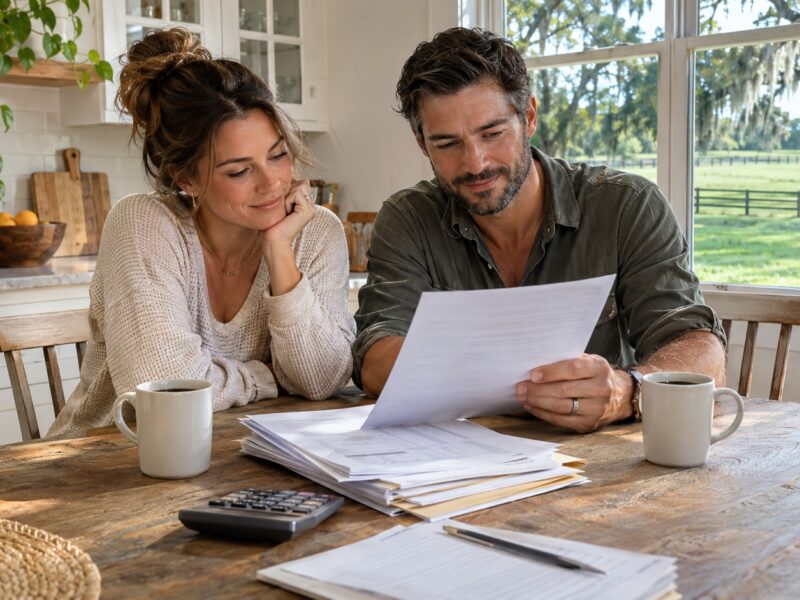
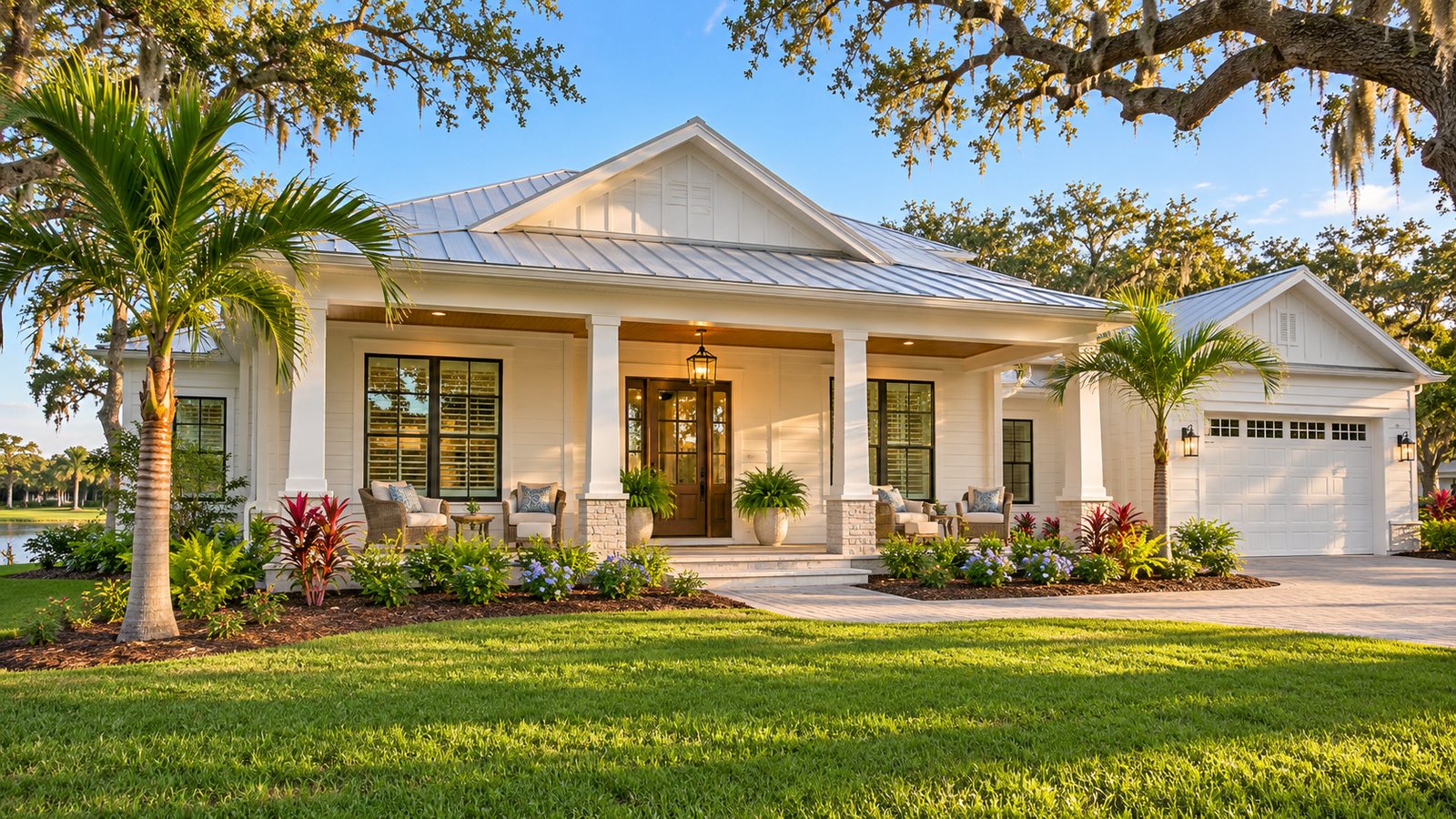
You’re driving home from the feed store, you see the balloons and the “Now Open” flags, and before you know it you’re standing in a model home kitchen running your hand over a quartz island you absolutely did not plan on falling in love with today. A friendly sales rep hands you a brochure and asks you to sign in. Totally normal. Also the exact moment a lot of buyers accidentally make their first mistake.
So here’s the direct answer: before you visit a model home in Ocala, know that the builder’s sales rep works for the builder, not you; bring your own agent (or at least check the builder’s agent registration policy) from the very first visit; get pre-approved with a lender you choose; and plan on inspections even though the house is brand new. Everything else — upgrades, lot premiums, contracts, timelines — is easier to handle once those pieces are in place.
Thinking About Building New? Let’s Talk First.
Whether it’s a new build in a subdivision or a home on acreage for your horses here in the Ocala area, I’ll give you an honest answer for your situation.
If you’re still deciding whether new is even the right fit, start with my post on whether to buy new construction or an existing home. This post is about what comes next: the actual process of buying from a builder.
Who Does the Builder’s Sales Rep Actually Work For?
The builder. Always. The folks in the model home are usually lovely and helpful, and their job is to sell the builder’s homes on terms that work for the builder. That’s not sneaky — it’s just how it works.
Here’s the part that catches people: many builders have a registration policy. That means if you want your own agent to represent you, the agent may need to be with you (or registered) on your first visit. Walk in alone and sign the guest book, and some builders will treat you as unrepresented from then on. Policies vary, so ask before you sign anything — even the guest sheet.
People often assume they can’t have their own agent on a new build, or that it’ll cost them a fortune. How buyer-agent compensation works varies by builder and by deal, so ask that question up front and get the answer in writing.
Here’s how I explain it to my buyers: many builders set aside part of their marketing budget to work with buyers’ agents, because agents bring them buyers. So on a lot of new builds, the builder may cover your agent’s compensation, but it varies by builder and by community, so we confirm it in writing before you commit to anything. It also helps to know that today, when you work with a Realtor, you’ll sign a written buyer representation agreement before touring homes, new or resale. It spells out how your agent gets paid, so you know up front whether anything could ever come out of your pocket, and there are no surprises later.
Move-In Ready vs. Building From Scratch
When you visit a new community, you’ll usually hear about two kinds of homes:
- Move-in ready (often called “spec” or “inventory” homes): The builder already built it, or it’s well underway. Finishes are mostly chosen for you. The upside is speed and certainty — what you see is what you get.
- To-be-built or custom: You pick the lot, the floor plan, and your finishes. More choices, more waiting, and more moving parts.
Timelines on a to-be-built home depend on the builder, permits, materials, and the weather (hello, Florida summer). Ask the builder for their current estimated timeline, ask what happens if it slips, and plan your lease or current-home sale with some breathing room.
A lot of buyers love the part where they pick their own finishes and know they won’t have to update anything for a while. That’s a real perk. Just go in knowing that every “yes” in the design center has a price tag attached — which brings us to the fun part.
Upgrades, Lot Premiums, and What’s Actually Negotiable
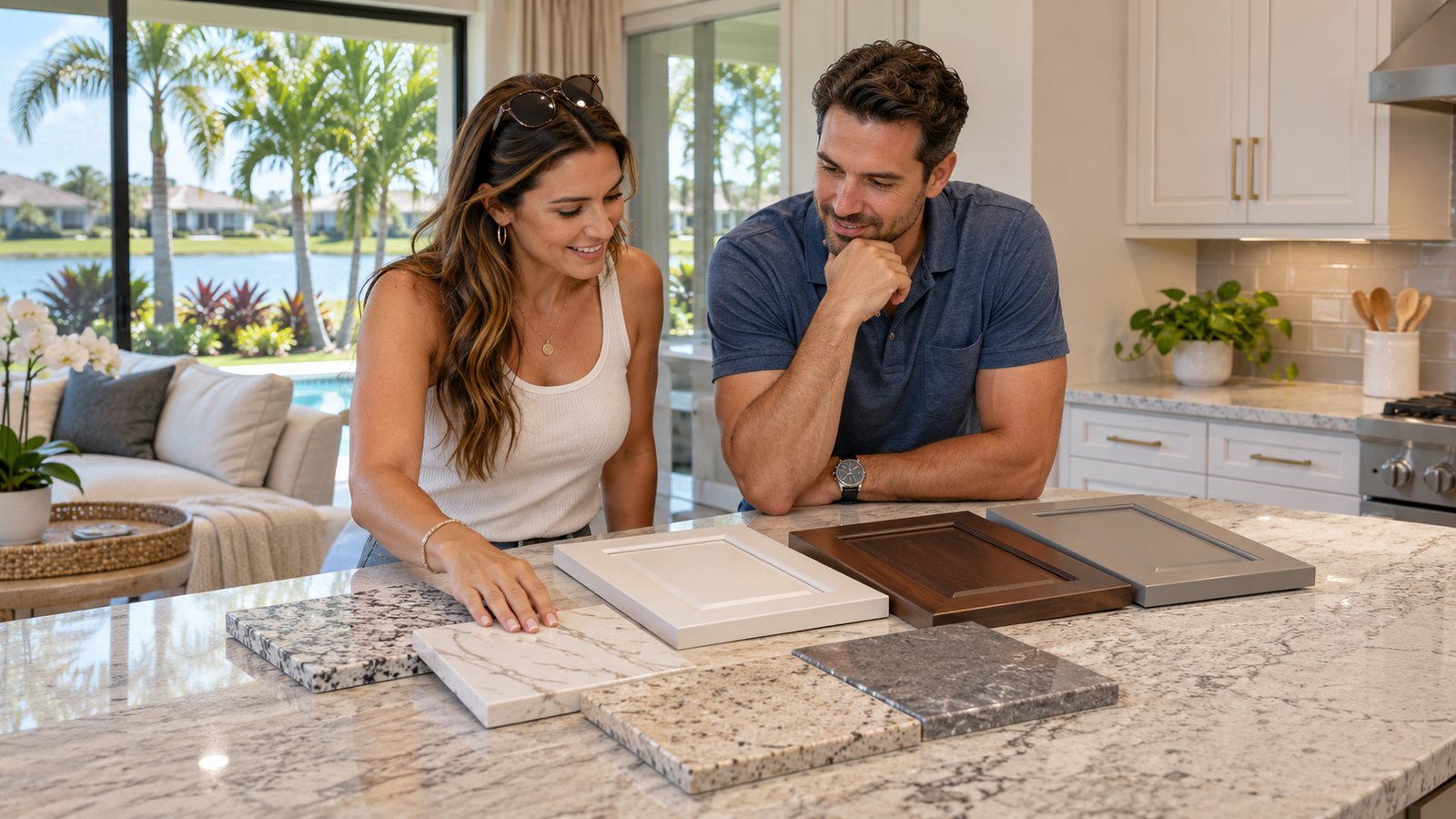
That gorgeous model home is usually dressed in upgrades. The brochure price is for the base house — the model is the “after” photo.
- Lot premiums: Some lots cost more than others — think bigger lots, corner lots, lots backing up to green space or water. Ask which lots carry a premium and why.
- Upgrade packages: Builders often bundle upgrades. Sometimes that’s a good deal, sometimes it’s paying for things you don’t care about. Ask for the itemized options list.
- Not everything is negotiable: Many builders hold firm on base price to protect values in the community, but may have more flexibility on things like upgrades or closing cost help. Policies vary a lot, and that’s exactly where having someone on your side helps.
A good rule: decide which upgrades matter to you before you set foot in the design center.
Yes, You Still Need Inspections on a Brand-New Home
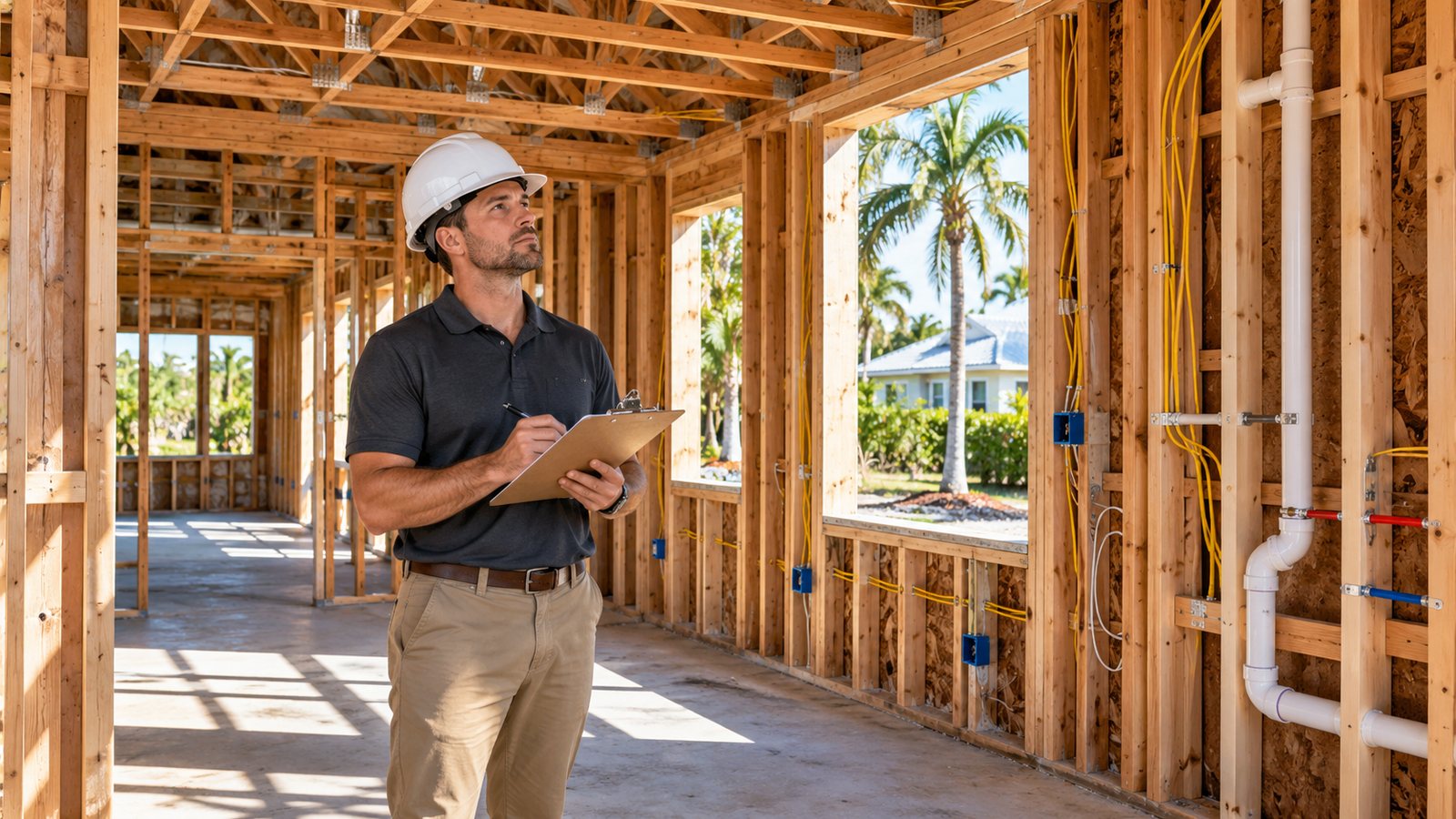
“Why would I inspect a house nobody’s lived in?” I hear this all the time. Because new doesn’t mean perfect. Lots of trades come through on a schedule, and things get missed.
Many buyers consider three inspection points:
- Pre-drywall: Before the walls are closed up, an inspector can look at framing, plumbing, electrical, and insulation — the stuff you’ll never see again.
- Final (before closing): A full inspection once the home is finished, so issues can go on the builder’s punch list before you get the keys.
- Before the warranty ends: A check-up before your builder warranty period runs out, so anything that’s popped up gets reported while it’s still covered.
Ask the builder up front whether they allow third-party inspections at each stage and how to schedule them. Most reputable builders expect it.
Builder Contracts and the Builder’s Preferred Lender
Builder contracts are usually the builder’s own form, written to protect the builder. Before you sign, read (or have someone review) what it says about:
- Deposits — how much, when they’re due, and whether they’re refundable
- Construction delays — what happens if the home isn’t done on time
- Changes — whether you can change selections after signing, and the cost
- The warranty — what’s covered, for how long, and how to file a claim
Then there’s the preferred lender. Many builders offer incentives if you use their in-house or affiliated lender. Sometimes that’s a great deal; sometimes the loan terms aren’t as good as what you’d get elsewhere. Details change by builder and over time, so get a written quote from the builder’s lender and from a lender you chose, and compare the whole picture, not just the incentive headline.
If you haven’t gotten pre-approved yet, that’s step one — here’s what to do first before looking at houses. And so the budget doesn’t surprise you later, read up on the hidden costs of buying a house in Florida.
The Horse Question: Subdivision New Build or Acreage?
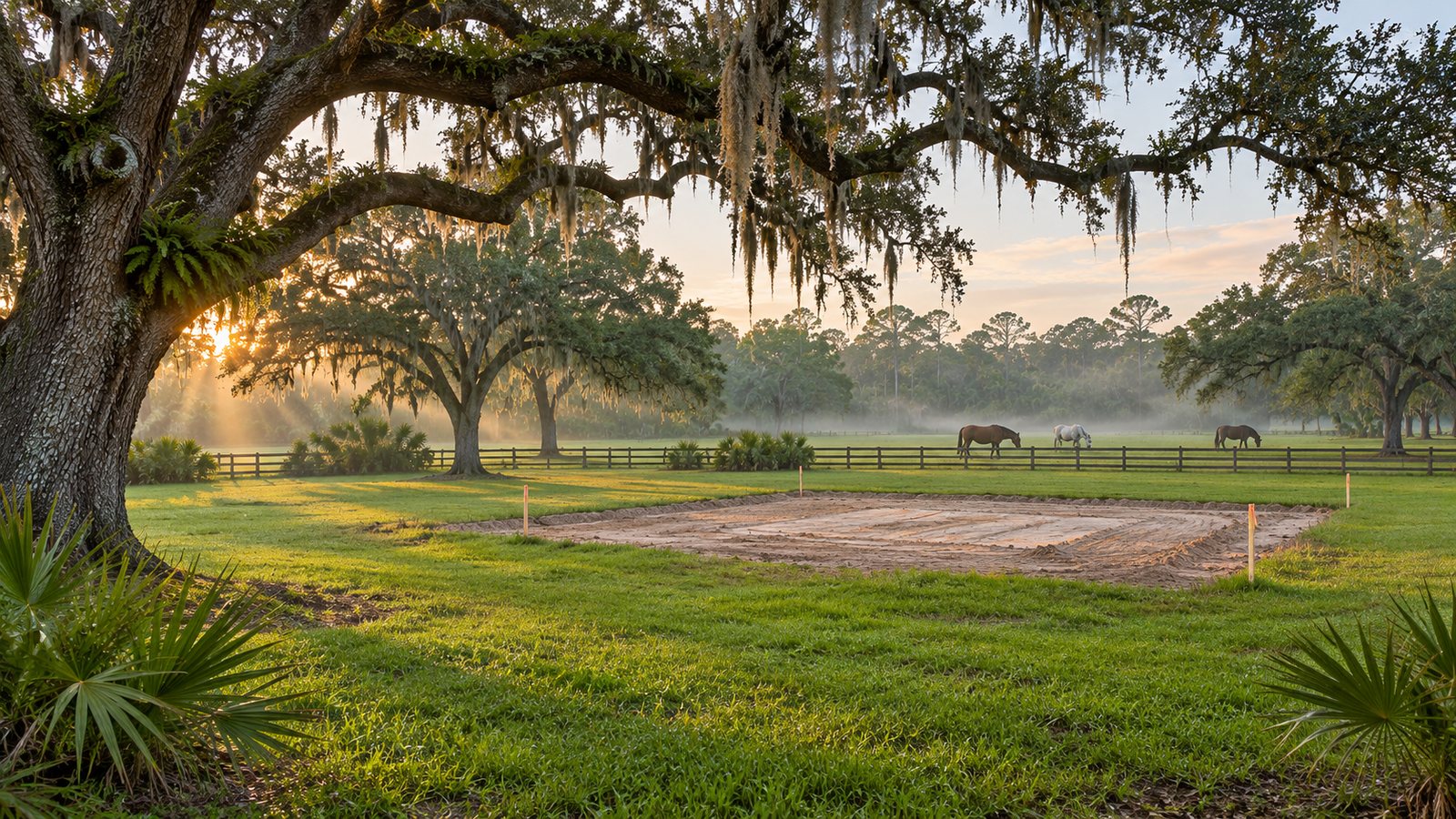
Here’s where it gets very Ocala. A lot of new communities have HOA rules or deed restrictions that don’t allow horses (or limit livestock in general). If you have horses — or a kid who is definitely getting a horse someday — read the community’s restrictions before you fall for a floor plan. Ask the builder for the HOA documents and deed restrictions, and read them yourself.
That’s why so many horse families end up weighing two paths: a new build in a subdivision while boarding nearby, or buying acreage and building their own home and barn. Building on land usually means a different loan setup — my post on how construction loans work walks through it.
And a gentle warning from experience: buyers who build barns and fencing from scratch tend to underestimate all of it — time, cost, and the number of decisions. Fencing, footing, water, drainage, the barn itself… it adds up. Go in with eyes open and a cushion in the budget.
I’ll happily show you any area or community you want to see, subdivision or acreage — you decide what fits your family and your horses.
Around Ocala, this decision almost always comes down to the gap between the sticker price and what the whole lifestyle really costs each month. Picture a horse family who qualifies for a nice mortgage and finds a pretty piece of land. Here’s what they often run into:
- The cash-out-of-pocket surprise. The home loan usually won’t cover the barn, the cross-fencing, running water out to the paddocks, or the tractor. Paying cash for all of that right after closing can wipe out your savings, and then you’ve got beautiful land, nowhere covered to ride when the summer storms roll in, and no emergency cushion.
- Riding time vs. maintenance time. Raw or lightly improved acreage can mean spending your weekends mowing pastures, dragging the arena, and fixing fence instead of riding.
For some families, the better fit is a new build in a subdivision, keeping a healthy cushion in the bank, and boarding nearby at a barn with a covered arena and trails. For others, the land is worth every bit of the work. Neither answer is wrong. The point is to run the real numbers, the whole lifestyle and not just the mortgage, before you decide.
Your Model Home Visit Checklist
Screenshot this before you go:
- ☐ Contact your agent before the first visit
- ☐ Ask about the builder’s agent registration policy before signing in
- ☐ Get pre-approved with a lender you chose
- ☐ Ask which features in the model are upgrades
- ☐ Request the itemized upgrade list and lot premium list
- ☐ Ask for the builder’s current estimated timeline for to-be-built homes
- ☐ Confirm third-party inspections are allowed (pre-drywall and final)
- ☐ Get the warranty details in writing
- ☐ Compare the preferred lender’s offer with your own lender’s quote
- ☐ Read HOA documents and deed restrictions — especially if horses are in your future
Free Guide: Moving to Ocala with Horses
Thinking about relocating to the Ocala area with your horses? Get my free relocation guide: what each horse area offers, a horse property checklist, financing tips, and a move-with-horses checklist.
The Bottom Line
Buying new can be a really fun way to buy a home. Just remember the builder’s team is on the builder’s side, so bring your own person from day one, get pre-approved on your terms, inspect even though it’s new, and read the contract and the HOA rules before you sign. Do that, and the model home magic stays magic instead of turning into a headache.
Have you toured a model home lately? Did you fall for the upgrades too? Tell me in the comments — and if you’ve got a question about building new around Ocala, drop it there and I’ll answer.