
Saddle pads get overlooked more than almost any other piece of tack. Riders will agonize over a saddle fitting for weeks, then grab whatever pad happens to be clean in the trunk. But the pad is doing real work — cushioning your horse’s back, wicking sweat, and helping the saddle sit where it’s supposed to. The right one is different depending on what you’re actually doing in the saddle.
Here’s how saddle pad needs change across the major English disciplines, and what to actually look for in each.
Dressage Pads: Thin, Sleek, and Close-Contact
Dressage pads are built to disappear. Riders in this discipline want to feel as much of the horse’s movement as possible, so these pads tend to be thin and minimally padded, with just enough material to protect the horse’s back and keep the saddle from shifting. Many dressage pads add a bit of extra cushioning right under the saddle’s panels, where the most pressure sits, while staying slim everywhere else.
If close contact and a quiet seat are your priority, resist the urge to size up to a thicker pad — it can actually interfere with how your saddle was fitted to your horse.
Hunter/Jumper Pads: Shock Absorption First
Jumping puts a different kind of stress on a horse’s back — repeated impact rather than steady contact. Pads for hunters and jumpers are usually built with foam or gel inserts to absorb that shock, plus extra cushioning around the withers to prevent pressure points on landing.
Breathability matters here too. A pad that traps heat during a long course of fences or a hot summer schooling session is going to leave your horse’s back damp and uncomfortable by the end of the ride.
Eventing and Cross-Country Pads: Built to Stay Put
Eventing pads have to handle everything dressage and jumping pads deal with, plus the extra demands of galloping and cross-country jumps. These pads are typically reinforced in high-stress areas and designed with a secure, non-slip fit so they don’t shift mid-course. Look for pads that stay anchored even when your horse is working hard and sweating heavily — a pad that creeps backward during a cross-country round is more than just annoying, it can affect saddle stability at the worst possible moment.

Saddle Pad vs. Half Pad: What’s the Difference?
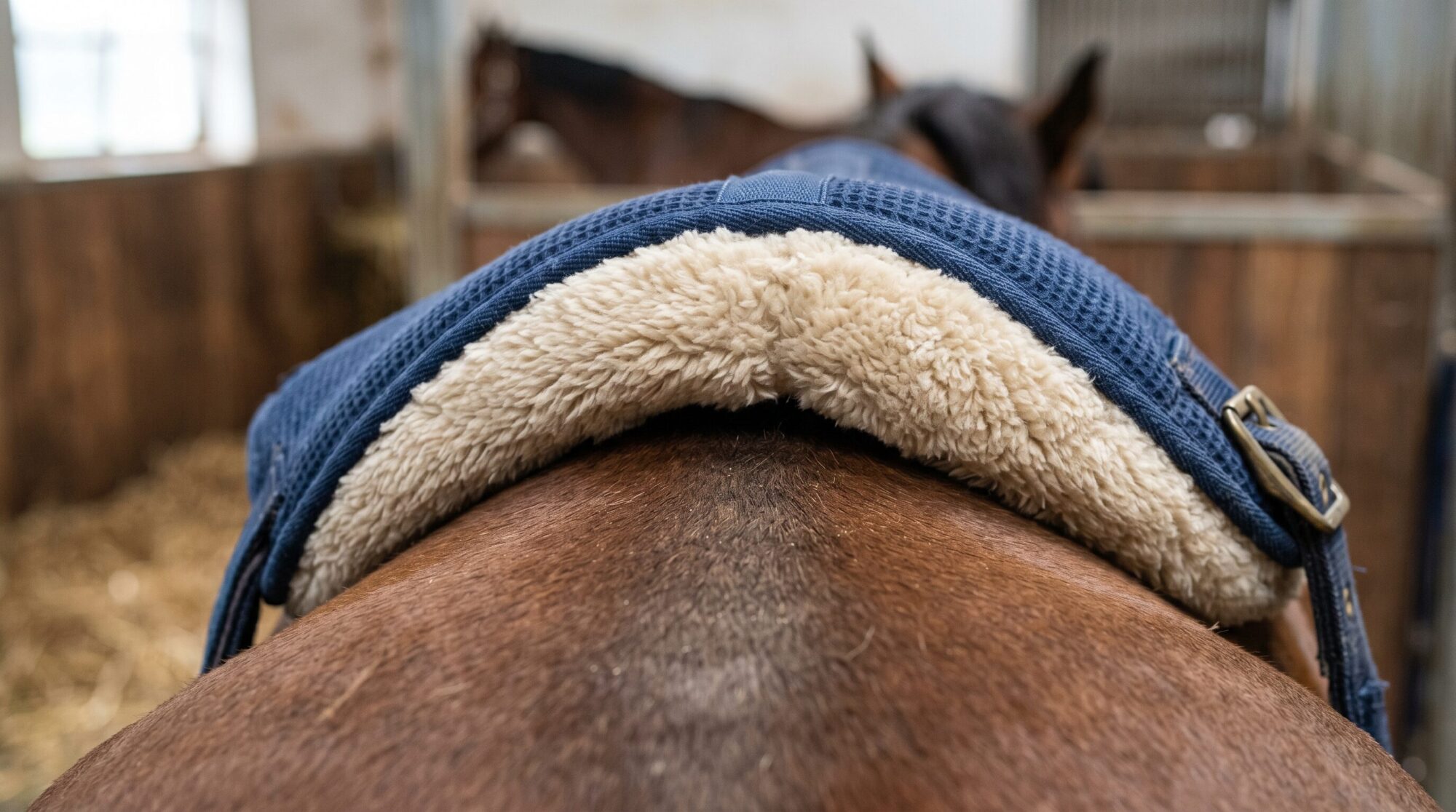
It’s easy to confuse the two, but they do different jobs. A full saddle pad sits between the horse’s back and the saddle every single ride — it’s your baseline protection and the piece you genuinely cannot ride without. A half pad is an extra layer, usually sheepskin or foam, added on top of your regular pad for additional cushioning or to fine-tune saddle fit, often for an older horse, a horse coming back from time off, or a saddle that’s slightly imperfect for that particular horse’s back.
If your saddle already fits well, you may never need a half pad. If you’re noticing soreness, a dip in performance, or your saddle fitter has flagged a minor fit issue, a half pad can buy you time and comfort while you sort out a longer-term fix.
How to Tell When It’s Time to Replace Your Pad
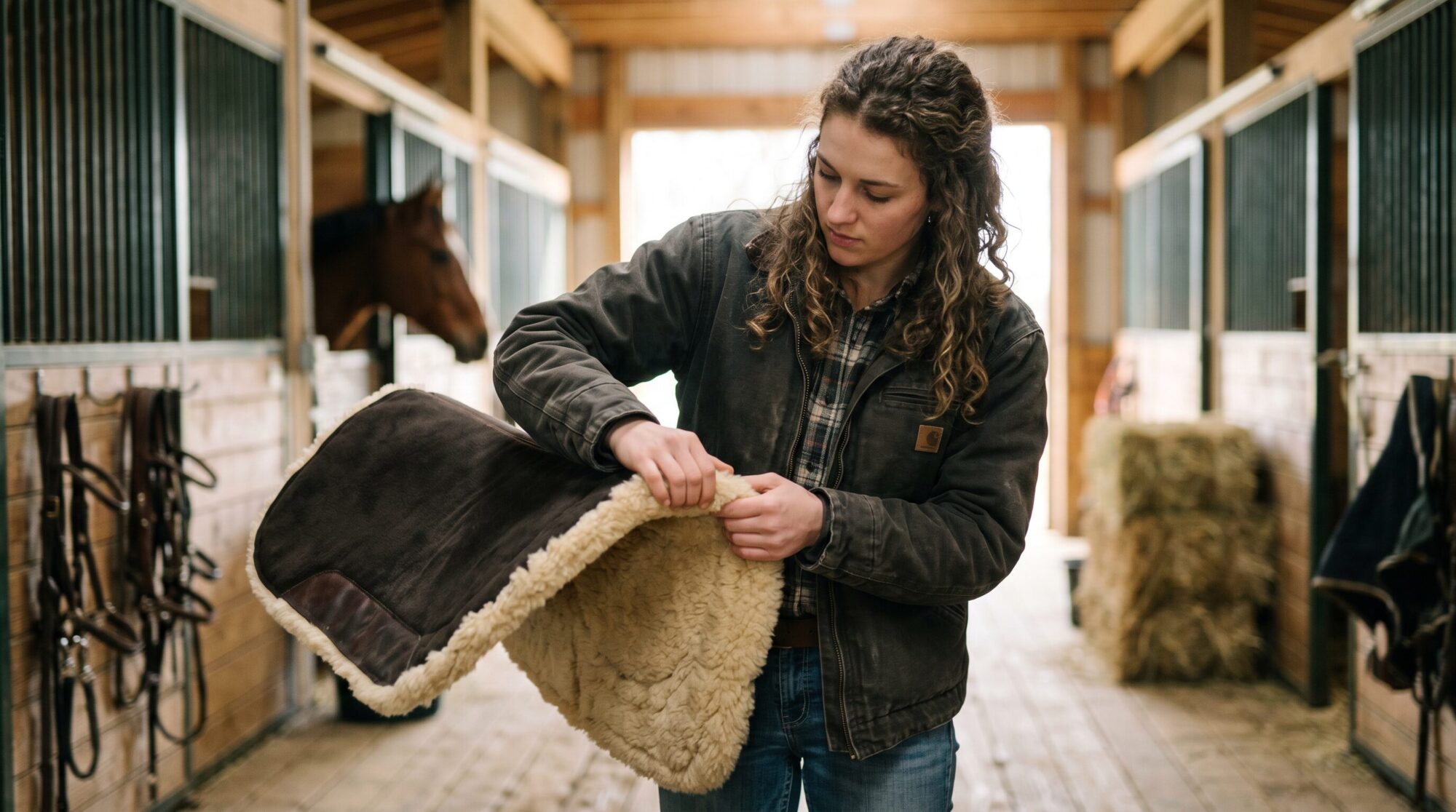
Saddle pads wear out quietly. A few signs it’s time for a new one:
- The padding stays flattened after you fluff or reshape it — it’s no longer springing back to absorb pressure.
- You notice new rubs or dry patches in the sweat pattern after a ride, which can signal uneven pressure from compacted padding.
- The fabric is thinning or fraying at the billet straps or girth loops, which affects how securely the pad stays in place.
- It no longer matches your saddle’s shape if you’ve changed saddles, even if the pad itself is in decent condition.
What to Actually Look For, Regardless of Discipline
No matter which pad style fits your riding, a few things matter across the board:
- Moisture-wicking material: Keeps your horse’s back dry and helps prevent rubs and sores.
- Good grip: A pad that slides under the saddle will undo even the best saddle fit.
- Correct thickness for your horse: Horses with more sensitive backs often need extra cushioning, while a horse with a well-padded back may do better with a thinner pad and closer contact.
- A shape that matches your saddle: A dressage-cut pad under a jump saddle (or vice versa) will bunch, slip, or leave you without the coverage you actually need.
Quick Reference by Discipline
The Bottom Line
The perfect saddle pad is the one that matches your saddle’s shape, your horse’s back, and what you actually ask your horse to do. It doesn’t have to be the most expensive option on the shelf — it has to fit, breathe, and stay put. Get those three things right, and your horse will thank you for it.
For the rest of your kit, see training aids that actually help or what tack is worth splurging on.
Shopping for a New Pad?
Check out the saddle pad I personally recommend for English riders.