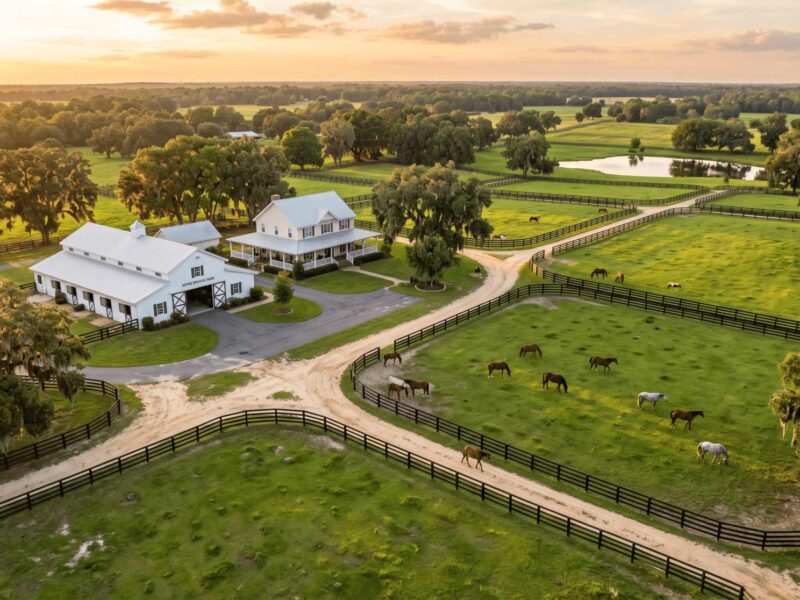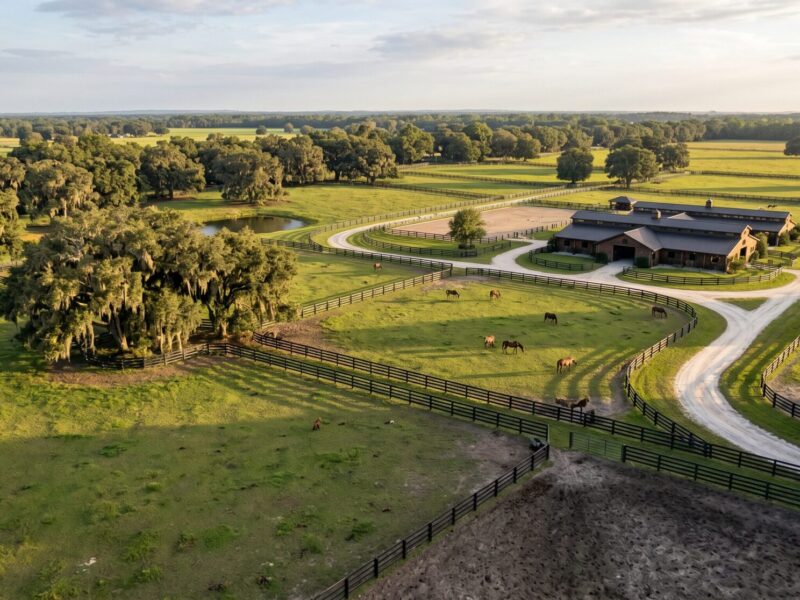
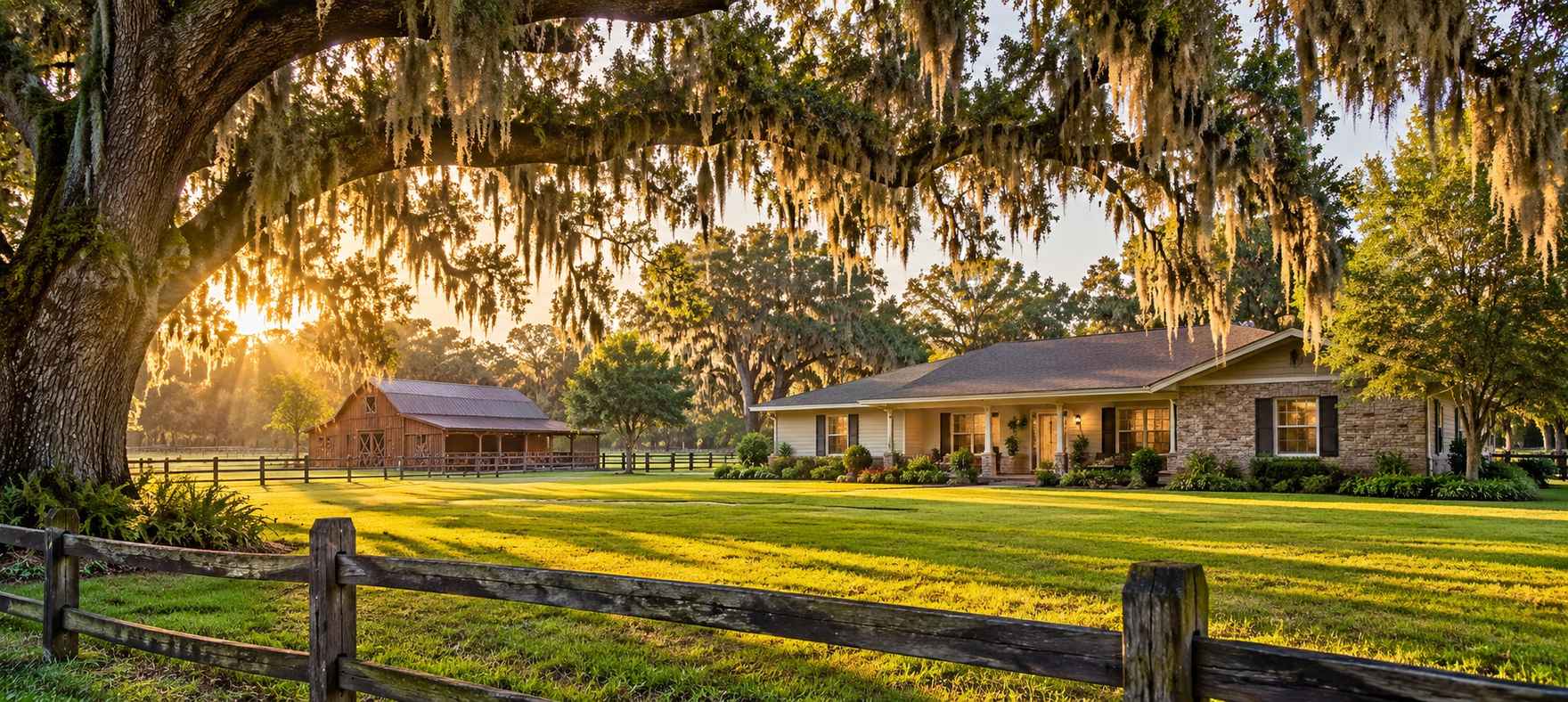
Here’s a question I hear a lot, usually from a young family scrolling listings out past the city limits: “Wait — can we really buy a house here with no down payment?” Sometimes, yes. That’s the USDA loan, and in a county as rural as ours, it’s one of the most underused tools out there.
So, who qualifies for a USDA loan in Marion County? In plain English: you need to be buying a home you’ll actually live in, in an area USDA considers eligible (a lot of Marion County outside the denser parts of Ocala may be), with a household income under the limit for our county and household size, plus credit and debt numbers a lender is comfortable with. If you check those boxes, you may be able to buy with little or nothing down. The catch for us horse people? It’s a home loan, not a farm or business loan — and that matters once barns and acreage enter the chat.
Wondering If a USDA Loan Could Work for You? Let’s Talk.
Whether it’s a family home or a little place with room for horses here in the Ocala area, I’ll give you an honest answer for your situation — and connect you with lenders who actually do USDA loans.
What Is a USDA Loan, Anyway?
A USDA loan (officially the USDA Rural Development Guaranteed Housing Loan) is a mortgage backed by the U.S. Department of Agriculture. You don’t get the loan from the USDA — you get it from a regular approved lender, and the USDA guarantees it. That guarantee is what lets lenders offer such friendly terms.
The big headline is that eligible buyers may be able to finance the whole purchase price with no down payment. For a lot of families, saving up a down payment is the thing standing between them and owning — so this is a big deal.
It’s not totally free, though. There’s an upfront guarantee fee (which can usually be rolled into the loan) and an annual fee that’s paid monthly, a bit like mortgage insurance. Both fees are set by the USDA and can change from year to year, so rather than quote a number that may be out of date, I’d point you to the source: check the current rates on the USDA Rural Development website, or ask your lender for today’s numbers.
The program was created to help people buy homes in rural and small-town areas. And honestly? A whole lot of Marion County is exactly that.
The Four Things That Decide If You Qualify

I like to think of USDA eligibility like getting a horse ready for a show — you need every piece in place, not just most of them. Here’s the checklist:
- ✅ The property is in an eligible area. USDA keeps an official eligibility map. You type in the address, and it tells you yes or no. More on this below, because it’s the part that surprises people most.
- ✅ Your household income is under the limit. Limits are set by county and household size, and USDA counts the income of everyone in the household — not just the people on the loan. Those limits are updated every year, so the easiest way to check is the USDA eligibility tool — enter your household size and income, and it tells you right away whether you’re under the limit for Marion County.
- ✅ It’s your primary residence. No vacation homes, no rentals, no “we’ll live here in a few years.” You need to move in and live there.
- ✅ Your credit and debts work for a lender. USDA has guidelines, and individual lenders often add their own requirements on top. Credit score requirements vary from lender to lender and can change, so ask any lender you’re considering what score they look for on USDA loans.
There are a couple of smaller ones too — like generally not already having a decent home you could live in, and being a U.S. citizen or eligible non-citizen — but those four are where most of the yes-or-no happens.
Which Parts of Marion County Count as “Rural”?
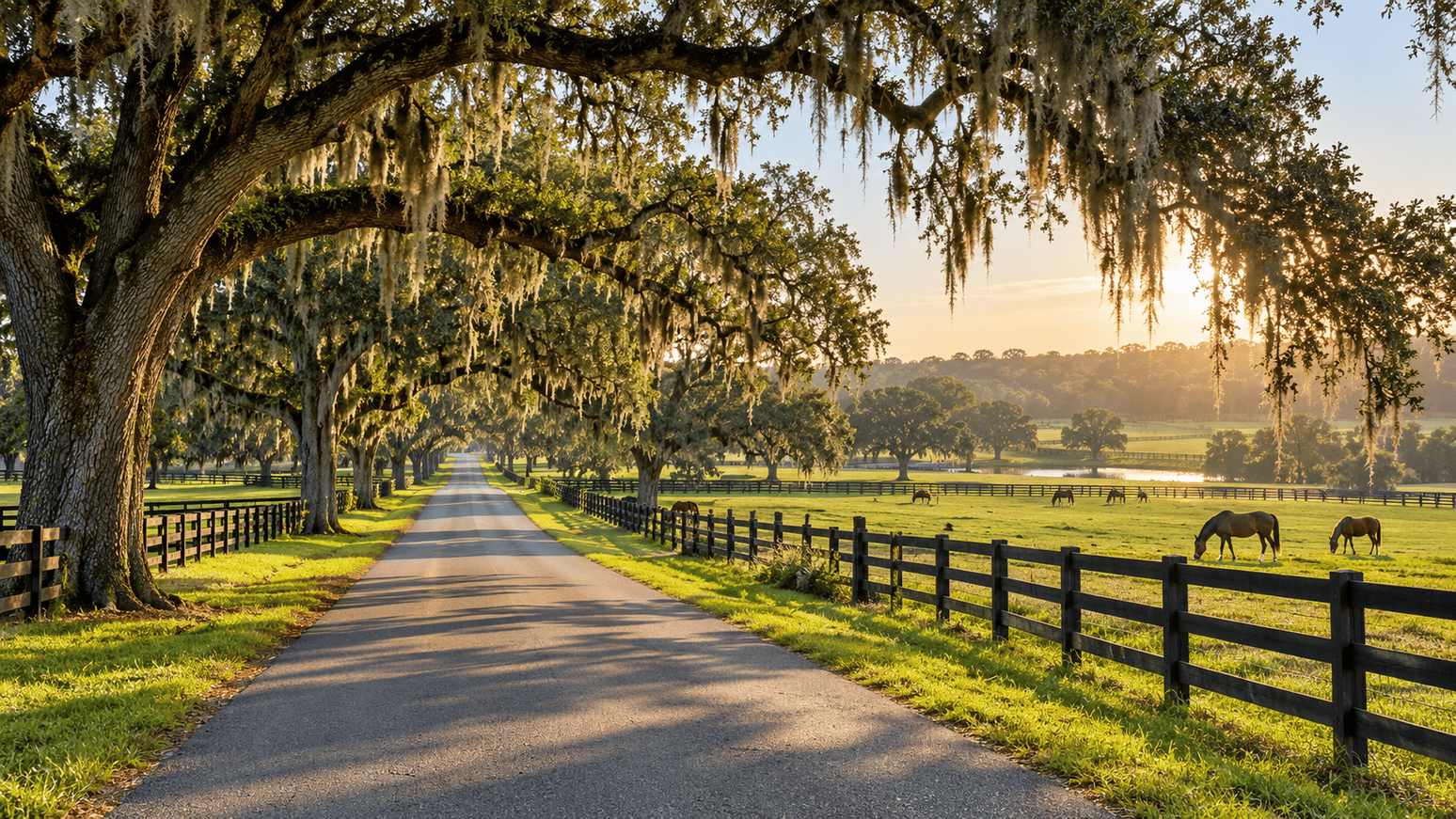
This is where people get surprised in both directions. Some folks assume “Ocala area” means nothing qualifies. Others assume everything outside downtown does. Neither is quite right.
In general, the denser, more built-up parts in and around the city of Ocala are less likely to qualify, while many of the smaller communities and rural stretches around the county may. But the only answer that counts is the official USDA eligibility map — and the map can change over time, so check every specific address you’re serious about.
If you’re new to the area and trying to figure out where you even want to be, my post on why Ocala is the Horse Capital of the World (and what to know before moving here) is a good place to start.
Can You Use a USDA Loan for a Horse Property?
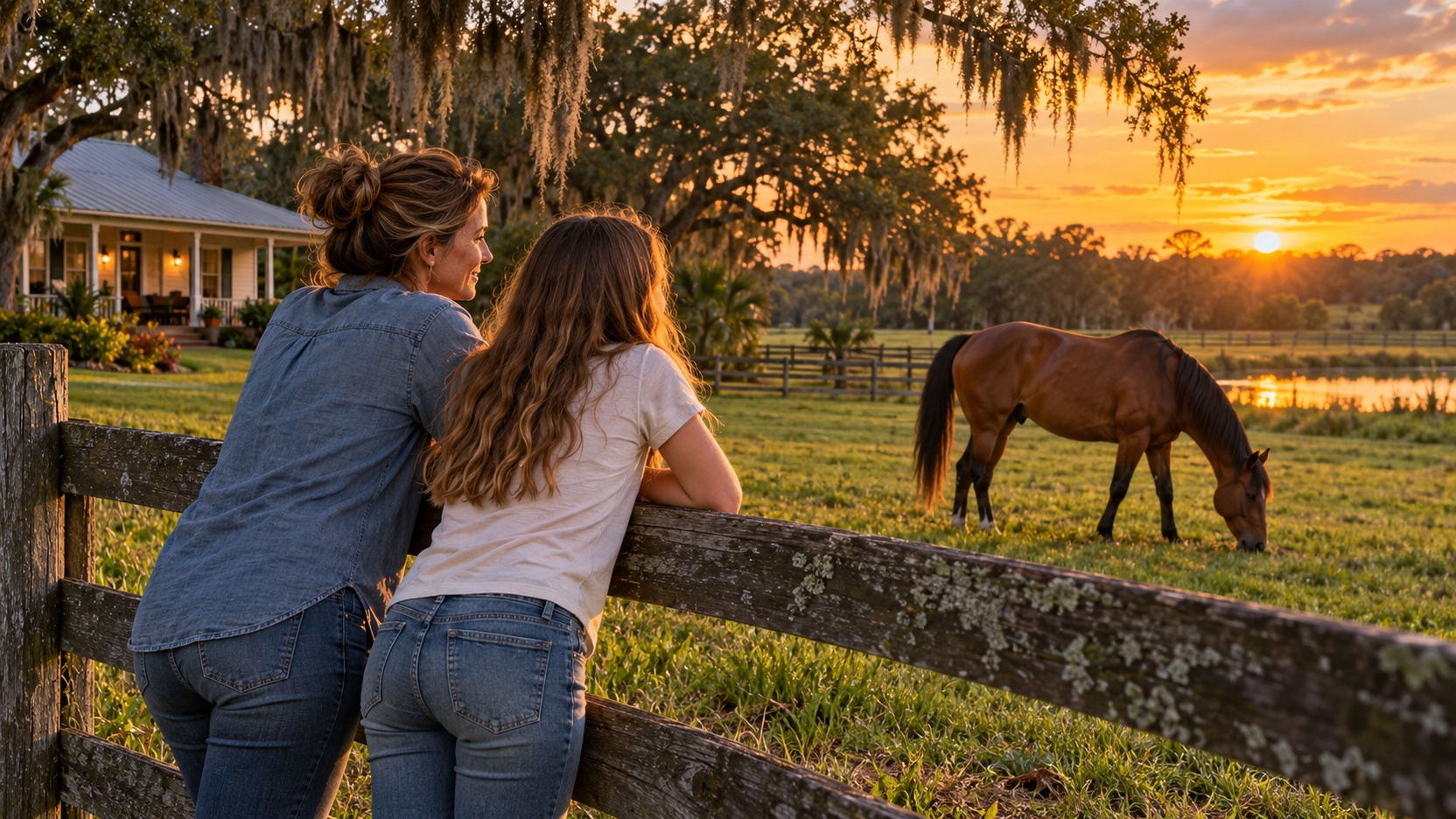
Okay, here’s the part my fellow barn moms actually want to know. The honest answer: sometimes, with limits.
A USDA home loan is meant for a home. The property can sit on some land, and it can have outbuildings — but the land and buildings generally need to be typical for the area and not the main source of the property’s value. And it can’t be set up as an income-producing operation. So:
- A house on a few acres with a small barn for your own horses? That may be possible, depending on the property and how the appraisal looks.
- A working boarding, breeding, or training facility? That’s a business, and a USDA home loan isn’t built for it. You’d be looking at other financing.
- Big acreage where the land is worth way more than the house? That can get tricky with the appraisal and the lender’s guidelines.
Here’s how it works in practice. Under USDA’s Section 3555 guidelines — the rulebook lenders follow for these loans — local lenders look at acreage and barns through two main lenses. First, the property has to be predominantly residential in character: it should look and work like a home that happens to have some land, not a farm with a house on it. Second, it can’t include income-producing elements. A barn for your own horses is a very different thing, in a lender’s eyes, than a barn that helps pay the mortgage.
And here’s something that surprises a lot of buyers: there’s no official acreage limit on a USDA loan. But don’t read that as a free pass. Underwriters still check a few things to make sure the property isn’t really a commercial farm:
- “Typical for the area.” Lenders lean heavily on the appraiser to show the acreage is normal for the local market. If a home sits on 15 acres but everything around it is on 1- to 2-acre lots, the underwriter will likely flag it.
- Land-to-value balance. The value of the land shouldn’t overwhelmingly outweigh the value of the home. The whole point is to finance a house you’ll live in, not a big piece of land with a house attached.
- No commercial agriculture. The land can’t be actively used for commercial farming or any other income-producing purpose.
What about the barn itself? Barns, stables, workshops, and even silos are generally allowed, as long as they meet strict non-commercial guidelines:
- The “hobby farm” rule. Outbuildings are perfectly acceptable when they’re used strictly for personal use, like housing your own horses, storing your own equipment, or keeping hay for your own animals.
- No commercial design. The building can’t be designed primarily for, or dedicated to, making money.
So many of us dream of bringing the horses home — that moment of looking out the kitchen window and seeing them in the paddock. If that’s you, it’s worth reading boarding vs. buying: how to know when it’s time to get your own horse property before you decide on a loan type. And when you start touring, keep my horse property buying checklist handy.
The Fine Print People Miss
A few things trip up USDA buyers more than anything else:
- The whole household’s income counts. Grown kids living at home with jobs, a parent who moved in — their income can count toward the limit even if they’re not on the loan.
- The home has to meet basic condition standards. Major fixer-uppers can be a problem, because the house needs to be safe and livable.
- Not every lender does USDA loans well. Pick someone who does them regularly. It makes the process so much smoother.
- Timing can be longer. Because there’s an extra layer of review, USDA loans can take a bit longer to close than some other loan types. Build that into your contract timeline — I’ve broken down a typical USDA timeline below.
- You still have closing costs. No down payment doesn’t mean no money at closing. In some cases sellers can help with costs — that’s something we’d talk through when writing an offer.
What a Typical USDA Closing Timeline Looks Like
That state review step is the reason I always build a little extra breathing room into a USDA contract. It’s usually fine — but it’s the one piece nobody local can speed up.
If you’re curious what buying out here can really cost overall, I broke that down in what it costs to buy a horse property in Marion County.
How to Find Out If You Qualify (Without the Stress)
Here’s the order I’d do it in:
- Check a few addresses on the USDA eligibility map. Get a feel for which areas you like that also qualify.
- Talk to a lender who does USDA loans. They’ll look at your income, household size, credit, and debts and tell you if you’re in range.
- Get pre-approved. That way, when the right place pops up, you can move.
- Tell your agent you’re using USDA. It changes which listings make sense and how we write the offer.
Here’s why I love this loan. A young family had been renting outside of Dunnellon for years, sure they’d need to save a big down payment before they could ever buy. When they finally asked about it, they found out the area qualified for a USDA loan, which meant they could buy with zero down. A few months later, they were unpacking boxes in their own home, with a backyard big enough for the kids to run and a garden they’d been dreaming about.
The Bottom Line
A USDA loan can be a genuinely great way to buy a home in Marion County, especially if you’ve been stuck on the down payment. If the address is eligible, your household income is under the limit, it’ll be your primary home, and your credit works for a lender — you might be closer to owning than you think.
If horses are part of the plan, just go in with clear eyes: a house with room for your own horses may work, but a horse business needs a different loan. Either way, ask early, check the map, and work with people who know rural Florida property.
Have you looked into a USDA loan, or are you trying to figure out how to bring the horses home? Tell me where you’re at in the comments — I read every one.