
We once had a warmblood gelding named Comit who contracted EPM. He spent 40 days in the vet hospital, and in the end, we had to put him down. And I’ll be honest about the other part, too: if we hadn’t had insurance, we would have been in a lot of debt.
I’m not sharing that to scare anyone. I’m sharing it because insurance is something most of us don’t think about until we’re sitting in a vet hospital — and by then, it’s too late to buy it. If you’ve ever lain awake wondering how you’d handle a big vet emergency, this post is for you. Horse insurance isn’t the fun part of owning horses. Nobody posts their policy paperwork on Instagram. But understanding your options before an emergency is one of the kindest things you can do for your horse, your family, and your future self.
A quick note: I’m a barn mom, not an insurance agent. Use this as a starting point, then talk to an equine insurance specialist about your specific horse.
Keep Your Horse’s Records Claim-Ready
Insurance companies ask for health history and vet records. My Barn Management Spreadsheet keeps your horse’s health records in one place — so you’re not digging through old texts and emails on the worst night of the year.
The 4 Main Types of Horse Insurance

Horse insurance isn’t one thing — it’s a handful of different coverages that work together. Here’s what each one actually does.
1. Mortality Insurance
This is the foundation most other coverage builds on. Mortality insurance pays the insured value of your horse if he dies from a covered illness, injury, or accident — and, depending on the policy, if humane euthanasia becomes necessary or if he’s stolen. The premium is usually based on a percentage of the horse’s insured value, which is why a young, talented show horse costs more to insure than a sweet old lesson pony.
2. Major Medical and Surgical Coverage
This is the coverage that helps with the vet bills themselves — surgery, hospitalization, diagnostics, and treatment for covered illnesses and injuries. With many insurers, major medical is an add-on that requires a mortality policy first. Some companies also offer surgical-only or colic-surgery-only coverage, which can be a more budget-friendly middle ground.
3. Loss of Use
If your horse survives an injury or illness but can never do his job again — never jump again, never go back in the show ring — loss of use coverage can pay a portion of his insured value. It’s usually the hardest coverage to qualify for and comes with strict requirements, so read this section of any policy very carefully.
4. Liability Insurance
This one isn’t about your horse’s health at all. Liability coverage protects you if your horse causes injury or damage to someone else — say he gets loose, ends up on the road, and damages a car. Don’t assume your homeowner’s policy covers this; many exclude horses entirely. A quick call to your agent can save you a very big surprise.
“Doesn’t My Barn’s Insurance Cover My Horse?”
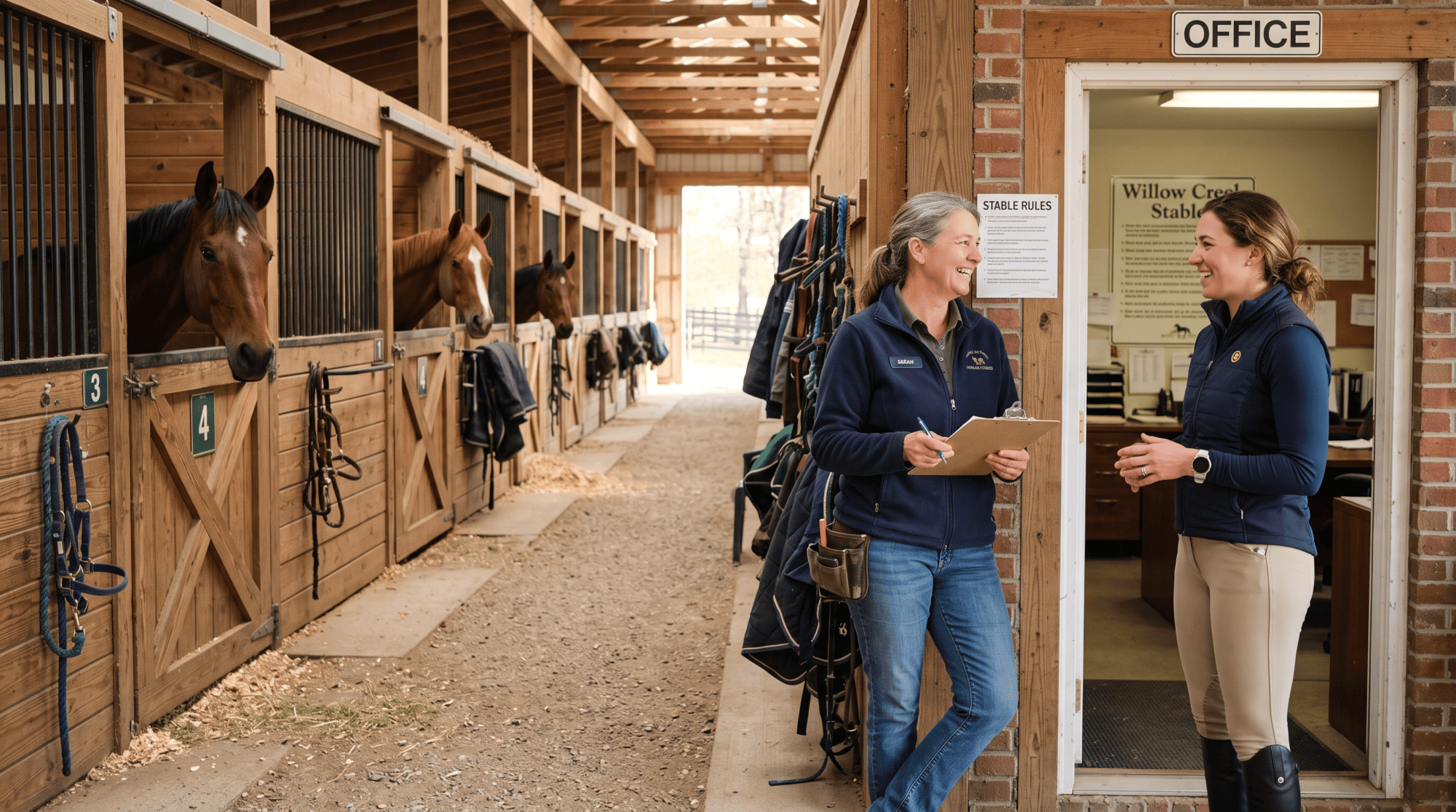
This is one of the most common misunderstandings in the boarding world. Many boarding barns carry care, custody, and control coverage (often called CCC), which protects the barn if a horse is hurt because of the barn’s negligence while in their care. That’s not the same as insuring your horse. It won’t pay for your horse’s colic surgery, and it won’t pay you his value if he passes away from an illness.
Next time you’re chatting with your barn manager, it’s completely fair to ask what their policy covers — and what it doesn’t. A good barn will be glad you asked.
Is Horse Insurance Worth It?
There’s no one right answer, and anyone who tells you otherwise is probably selling something. Here’s how a lot of barn moms think it through:
- Could you pay for emergency surgery tomorrow without it wrecking your family’s finances? If the honest answer is no, medical coverage deserves a serious look.
- What is your horse worth financially? A horse with a significant purchase price or show record is a bigger financial risk to leave uninsured.
- How old is your horse? Many insurers limit the coverage they’ll write for older horses, so the options you have today may not be there in a few years.
- Do you have an emergency fund instead? Some families choose to “self-insure” by setting money aside every month. That works — as long as the money actually stays set aside.
If you’re still building a realistic picture of your monthly horse budget, my breakdown of the real cost of owning a horse is a good place to start.
Questions to Ask Before You Sign a Policy
- ☐ What exactly is excluded — including anything noted on the pre-purchase exam?
- ☐ Does medical coverage require a mortality policy?
- ☐ Is there a deductible, and is it per incident or per year?
- ☐ What’s the annual limit on medical coverage?
- ☐ What do I need to do before euthanasia — who do I call, and how quickly?
- ☐ What records will I need to file a claim?
- ☐ Does coverage change as my horse gets older?
- ☐ Can the insured value change as my horse’s training or show record changes?
The Hard Part Nobody Talks About
Here’s the part that’s hard to write. Insurance matters most on the worst days of horse ownership — the colic that doesn’t turn around, the injury that can’t be fixed. Making a phone call to an insurance company while you’re standing in the barn aisle heartbroken feels impossibly cold.
That’s exactly why the paperwork is worth doing now, on a calm, ordinary day. Future you, on the hardest day, will only have to focus on your horse. And if you’re in one of those seasons right now, please be gentle with yourself. I wrote about the grief of losing a horse and the guilt that comes with selling one for exactly this reason.
The Bottom Line
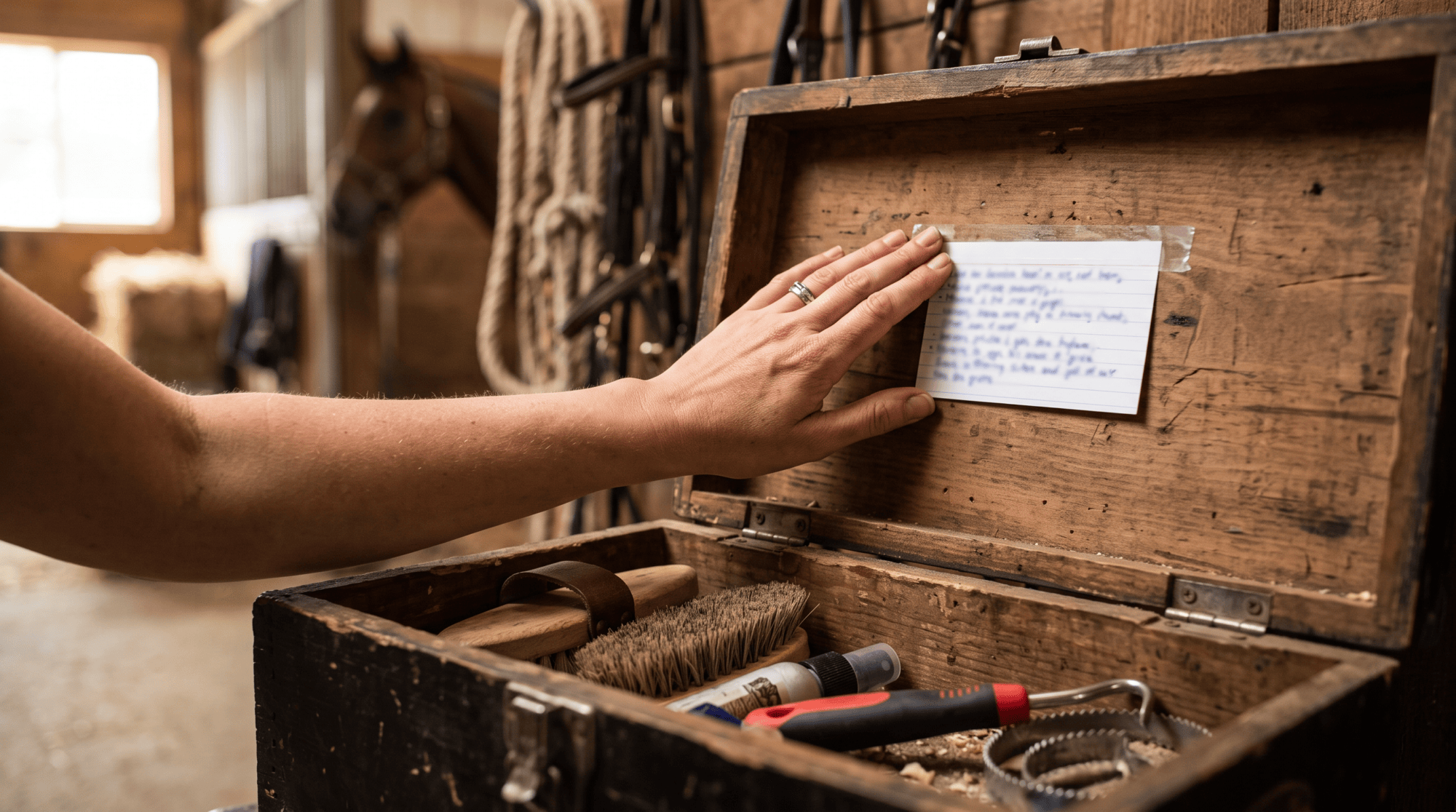
Horse insurance won’t make the hard days easy, but it can take the money panic out of them. Learn the four main coverage types, ask your barn what their policy really covers, and read the exclusions before you sign. Then tape that phone number inside your tack trunk and go enjoy your horse.
Do you insure your horse, or do you keep an emergency fund instead? I’d love to hear what works for your family in the comments.